Selecting the right car
Buying any vintage car is daunting. But buying a 6½ litre Bentley, with the intention of stripping it down and rebuilding it into your dream is something else entirely. It isn’t just about the financial leap; it’s about having confidence that the underlying car was right for the project
Over the years, I’d owned plenty of “nearly” cars. Wonderful machines that came close, but never quite ticked every box. This time, I knew there could be no compromises. It had to be right, from the tyres up.
That’s why I leaned heavily on the expertise of David Ayre, William Medcalf, and Claire Hay's written report. With their knowledge and sharp eyes, I was able to dismiss countless tempting but unsuitable “starting points” and narrow my search down to just a select few worth investigating in real depth.
How I came to own YF 2186
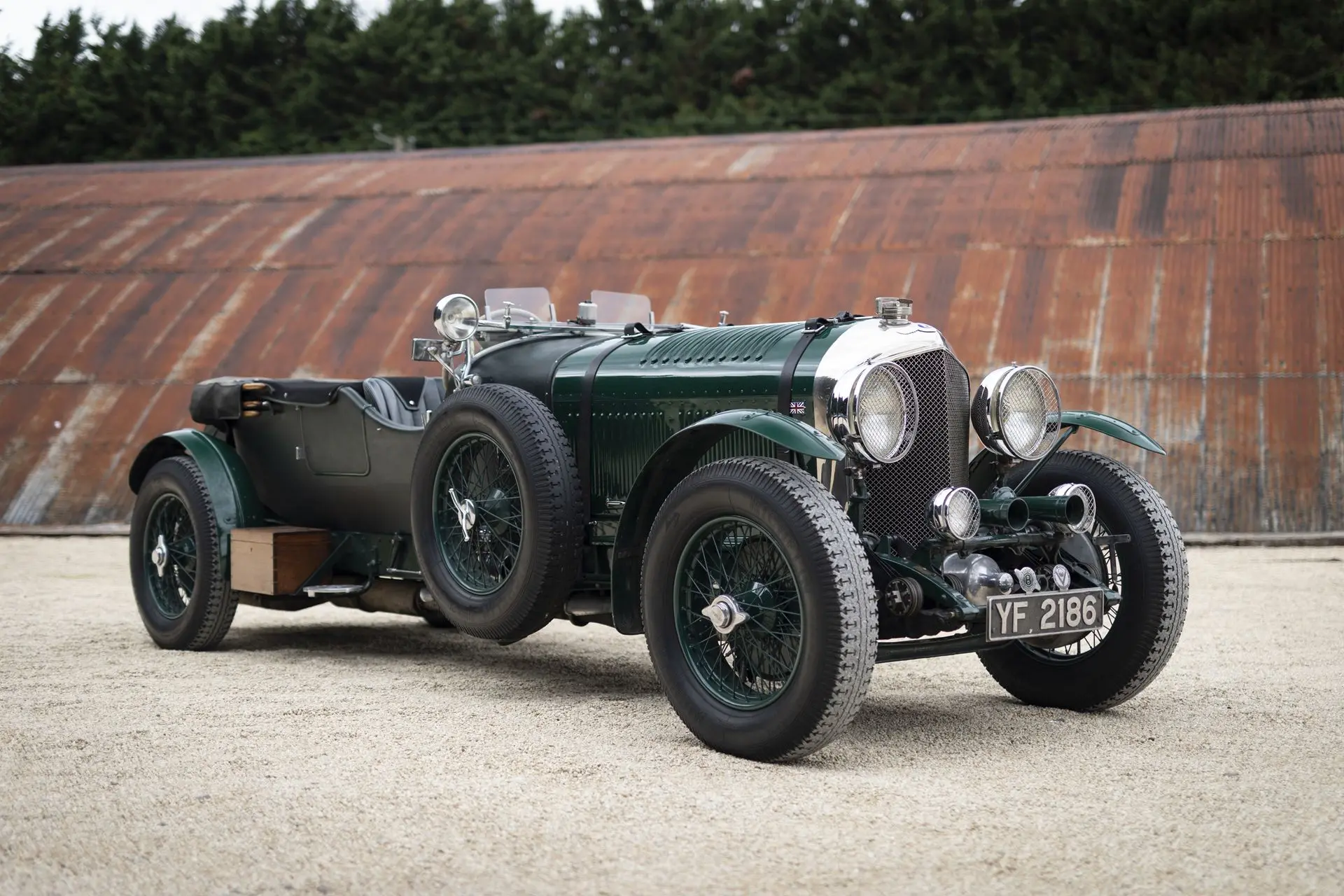
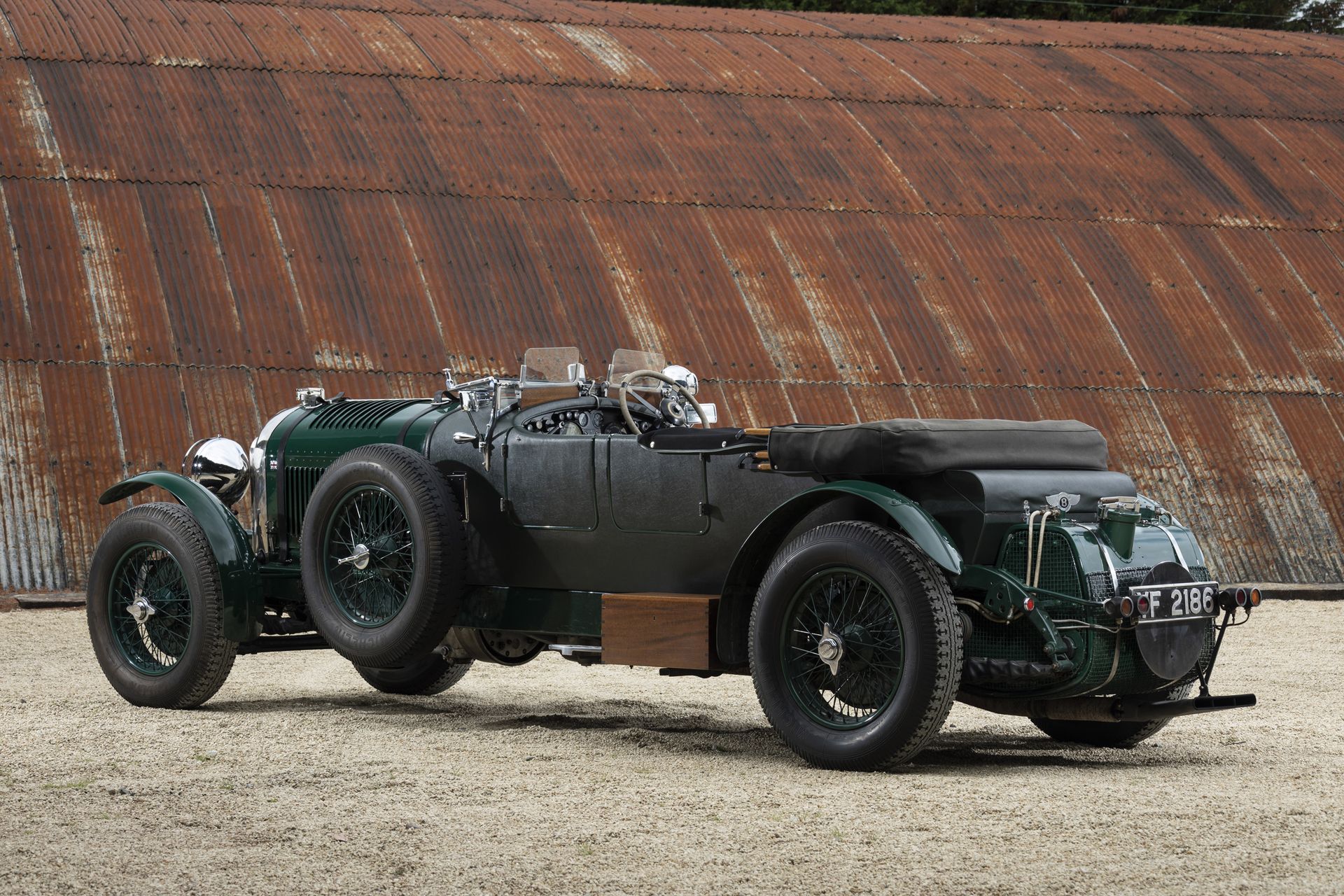
I’ve always dreamed of owning a Big Bentley. My fascination began as a teenager in the 1980s, when I went to a car show with my brothers. One of them drove an Austin 10 as his daily car, but it was the Bentley that stopped me in my tracks. From that moment on, I was hooked. I devoured every book I could find about Bentleys, especially the mighty 6.5 and 8 litres, until it became something close to an obsession.
Of course, owning one of those legendary machines always felt out of reach. So, in the early 2000s, I settled on the next best thing: a beautiful Racing Green Speed 8 replica. It was a fantastic car, full of character and presence. But deep down, I knew it wasn’t the real thing. I’d always promised myself that, if I ever had the chance, I would own a genuine Vintage Bentley from the 1920s.
I’ve always admired the 3 Litre and 4½ Litre cars, but nothing makes my knees go weak quite like a 6½ Litre Bentley, particularly one with closed coachwork. They may not have the immediate sporting image of the open cars, but that is part of their charm. Many 6½ Litres originally carried substantial closed coachwork, while over subsequent decades numerous cars were converted into open tourers and Le Mans-style Specials.
So when I finally decided to restore a Big Bentley, I began searching for a 6.5 litre tourer. Ideally one that had started life with closed coachwork, retained a strong degree of original Bentley identity, had a well-documented history and as many original components as possible. I looked at four or five cars, bid on a couple at auction, and even flew to Germany to see one in person.
Then I found YF2186.
I first test-drove it in 2018 and immediately knew it was something special. It had an amazing history, was mechanically strong, and full of character. But at the time, the price was just out of reach. The car was rightly valued highly, and it was listed with both Fiskens and The Classic Motor Hub. For months I kept going back to it online, downloading photos, even making one of them my screensaver. It was the car I couldn’t stop thinking about.
By early 2019, the market had softened slightly, and in April I finally decided to take a leap. On impulse, I put in an offer, almost certain it would be rejected. Days passed with no word, and then, to my surprise, the offer was accepted. And so, in April 2019, I became the proud owner of YF2186. A dream I’d carried with me since that very first car show all those years ago.
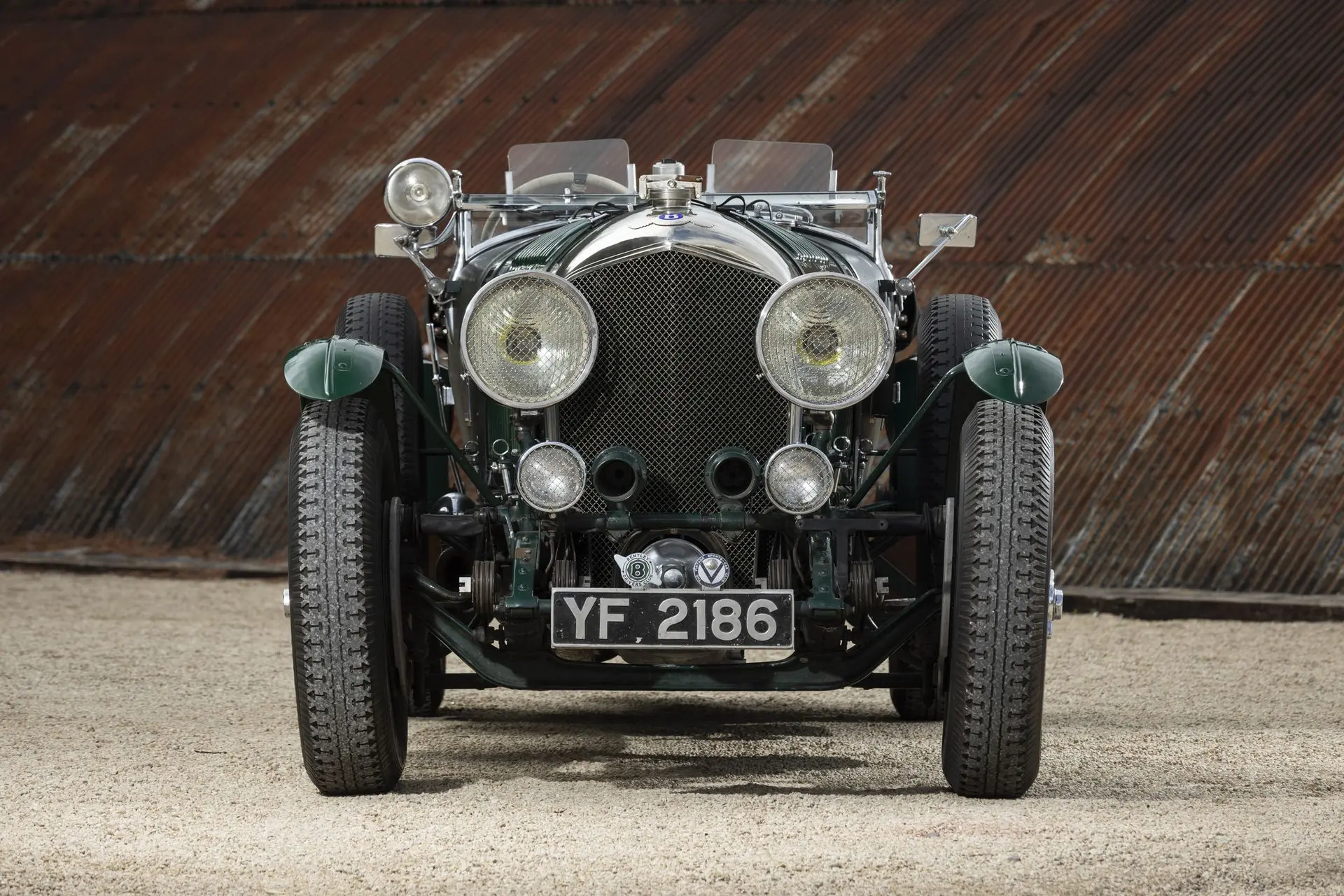
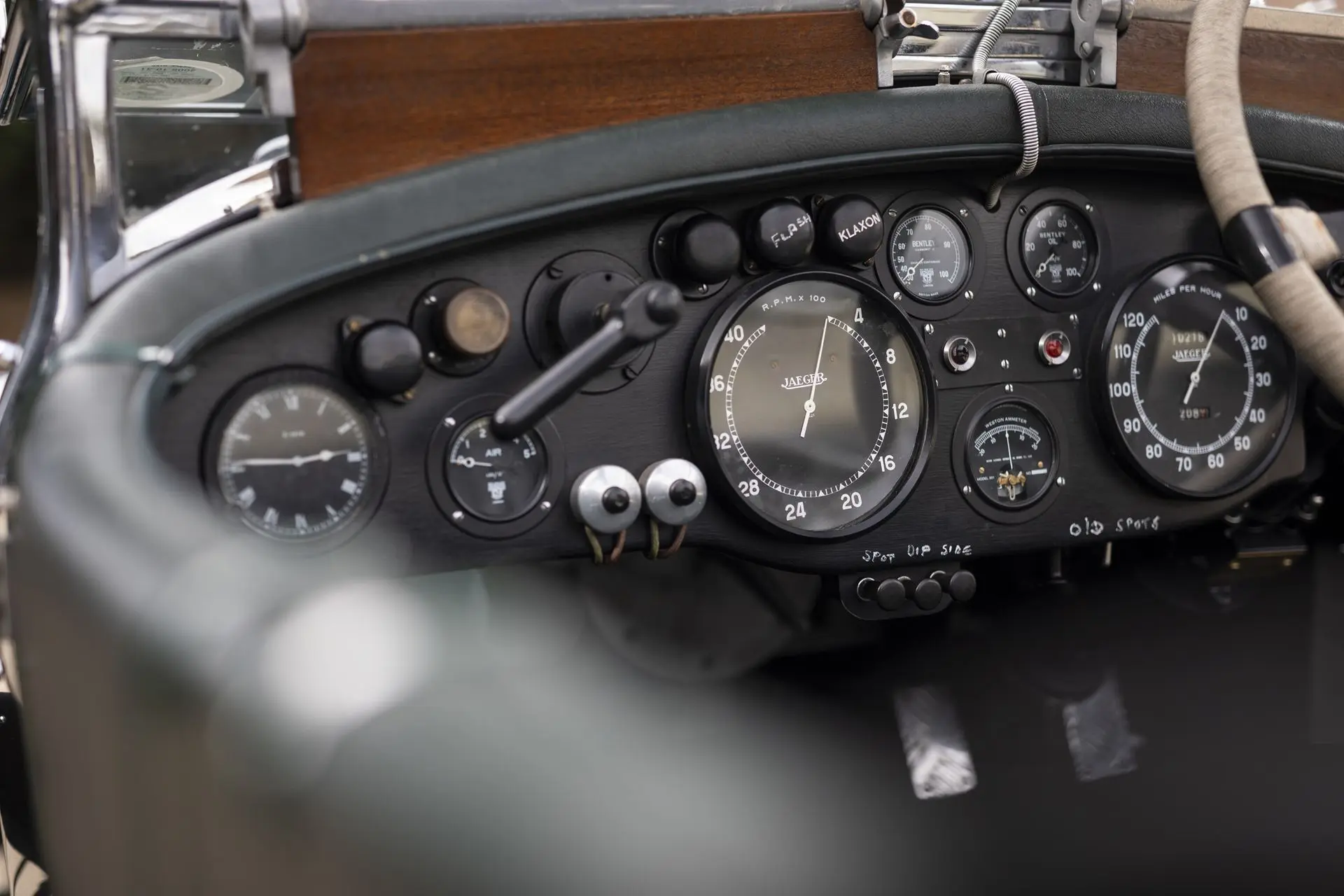
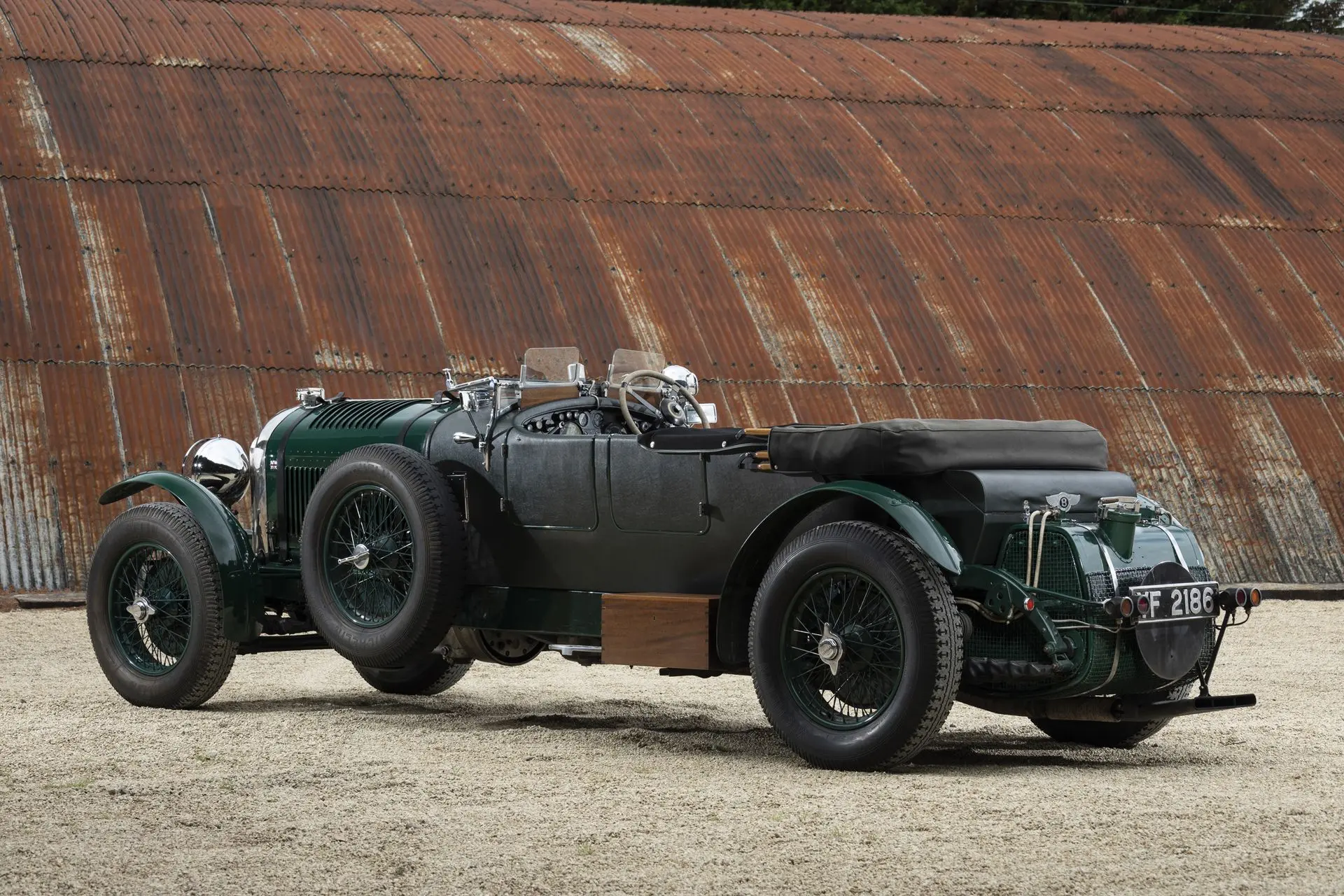
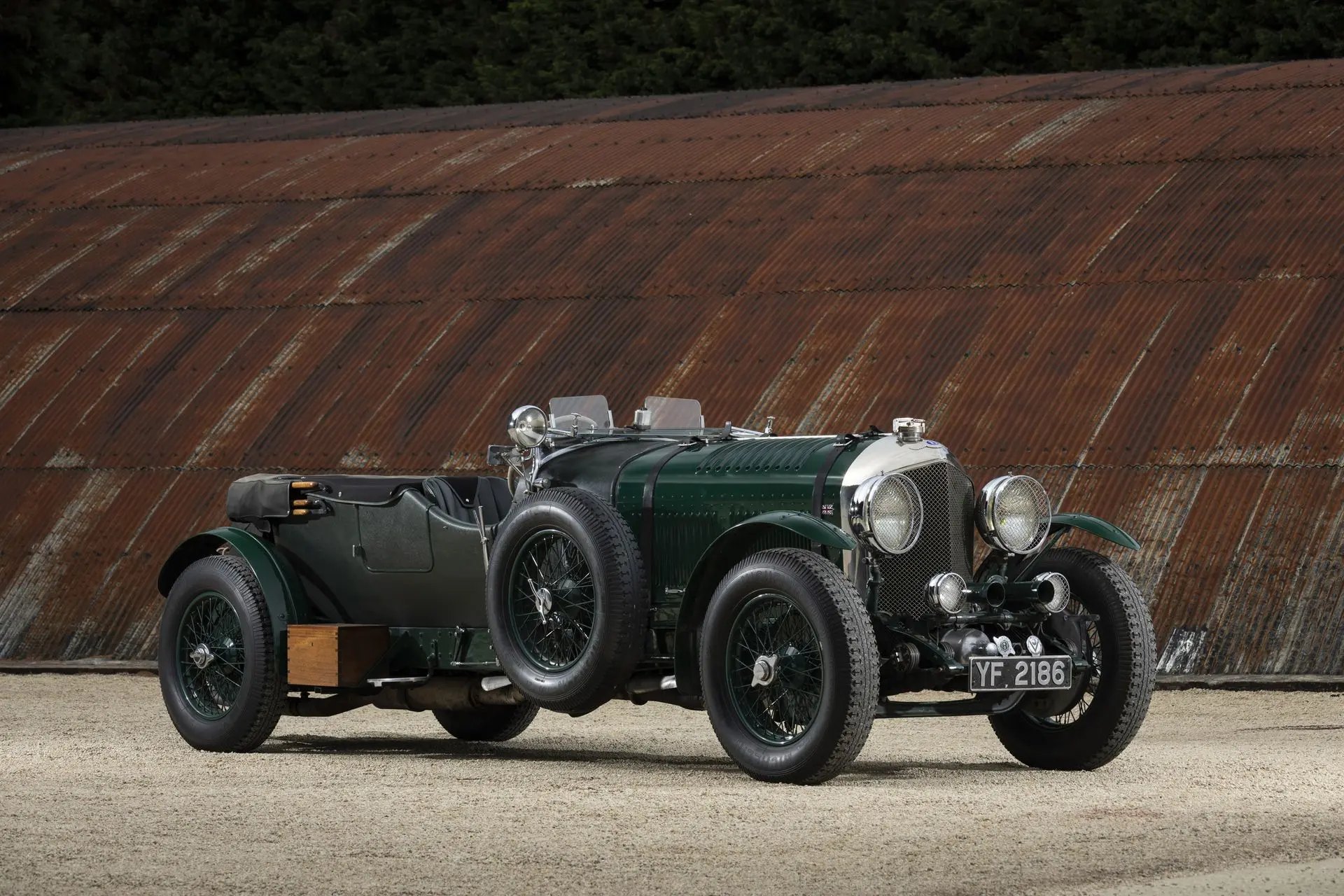
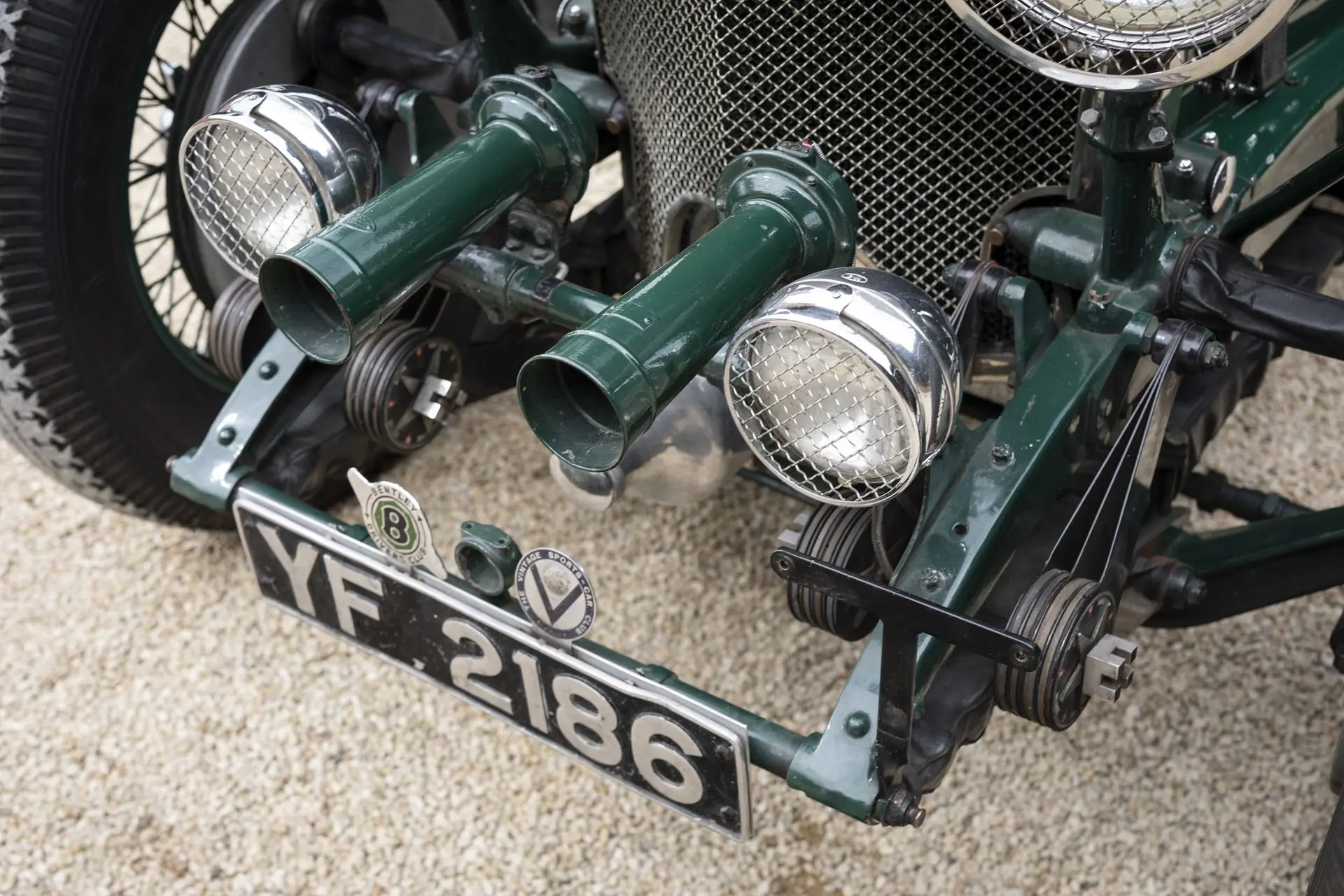
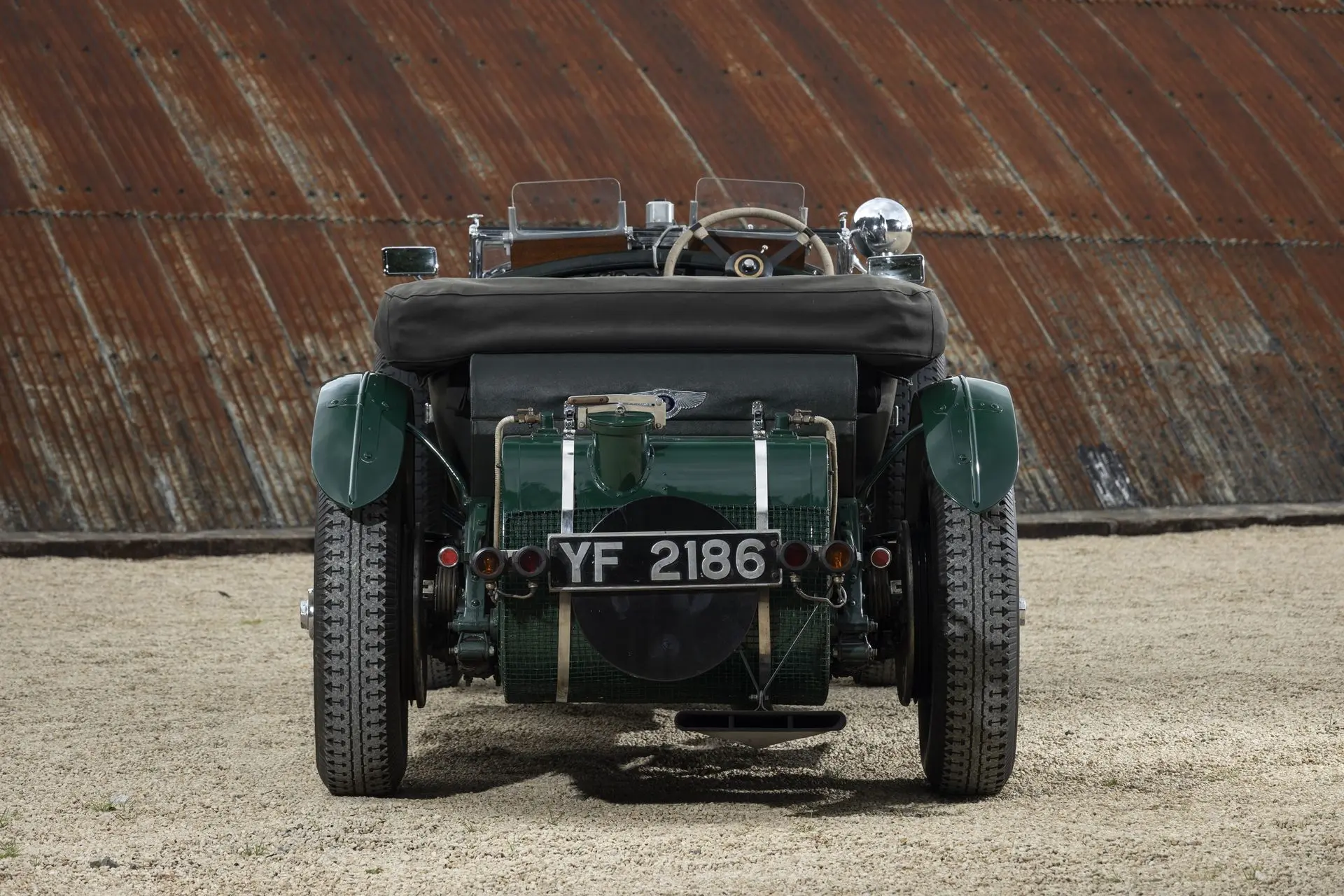
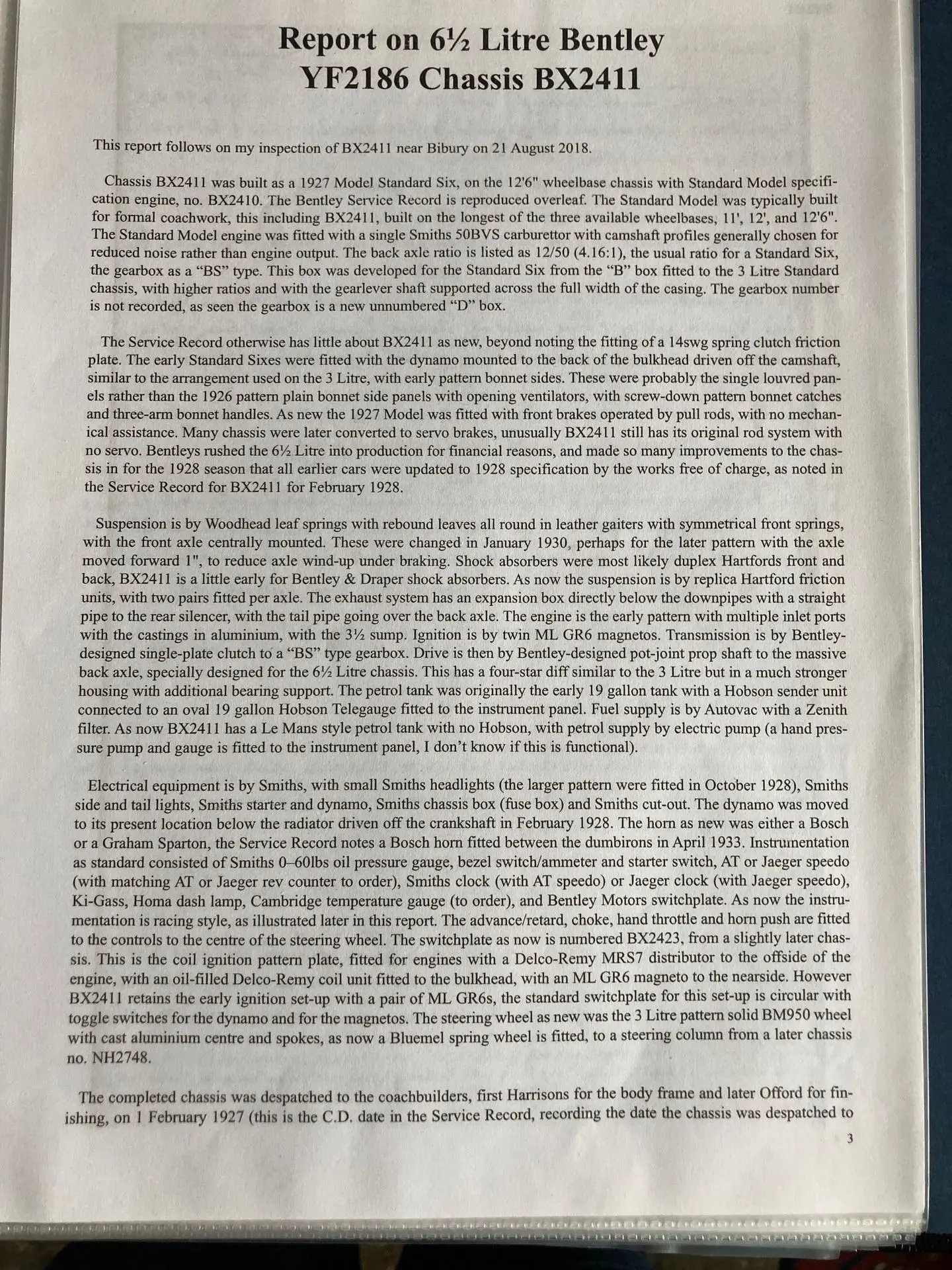
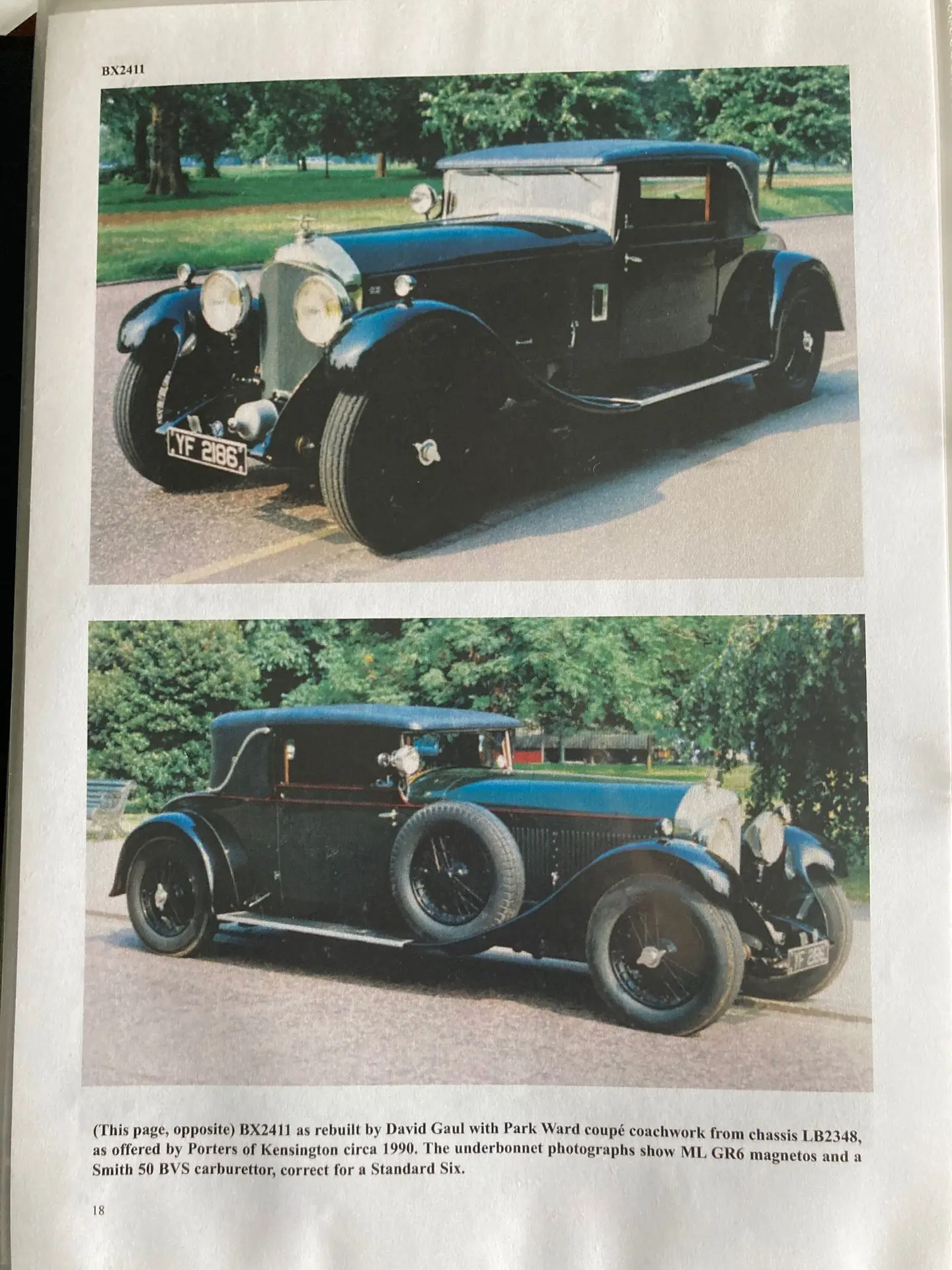
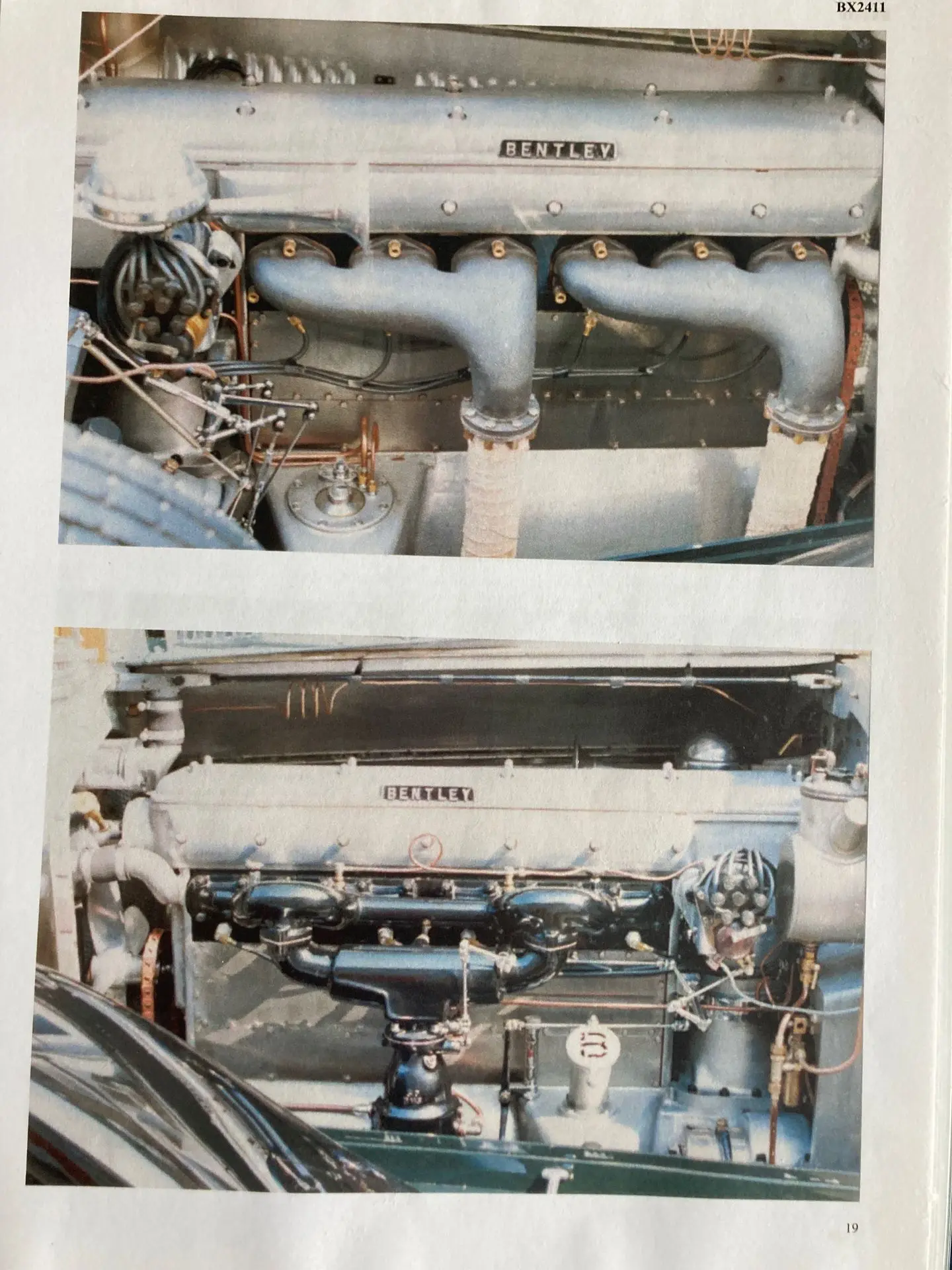
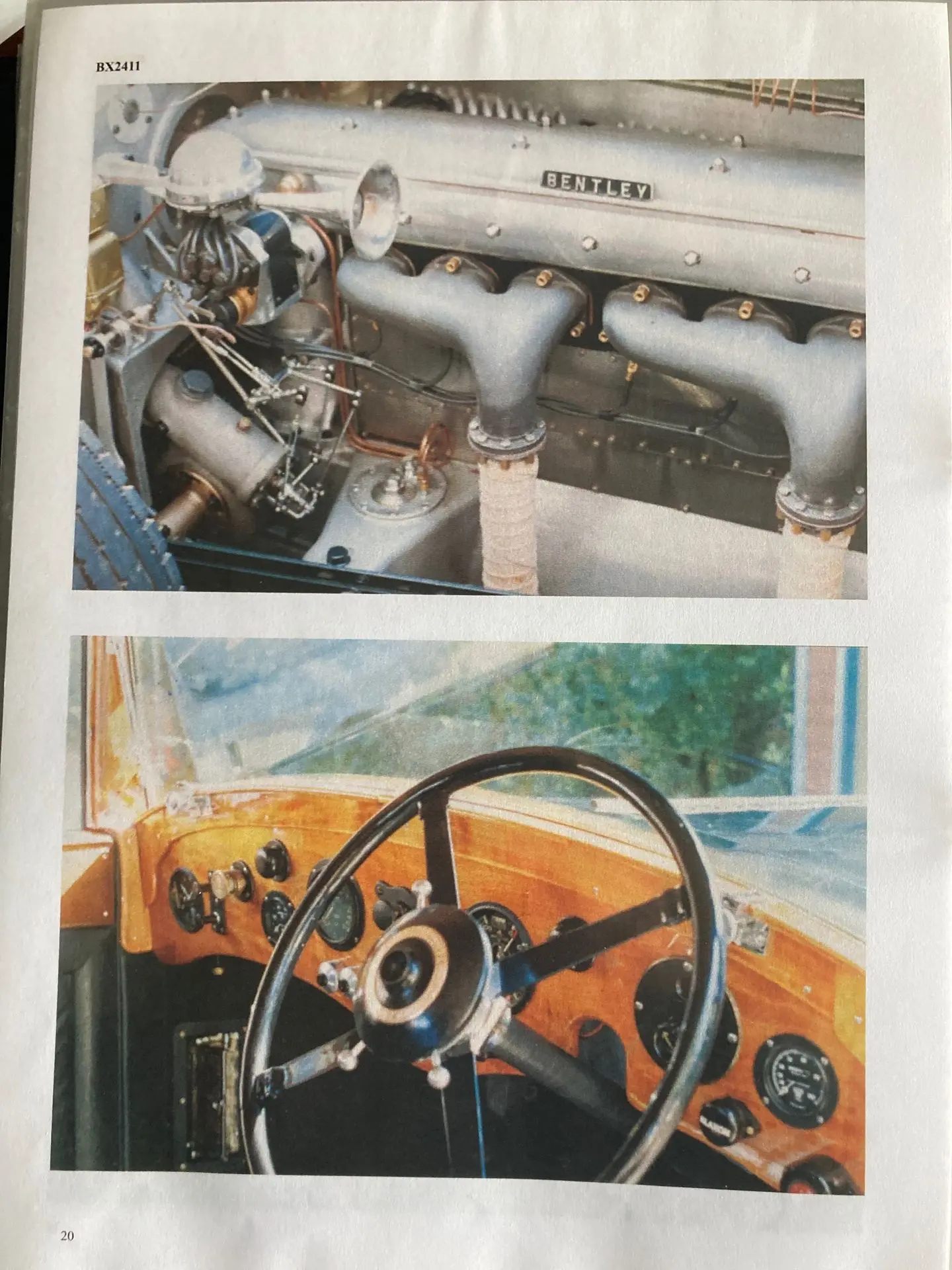
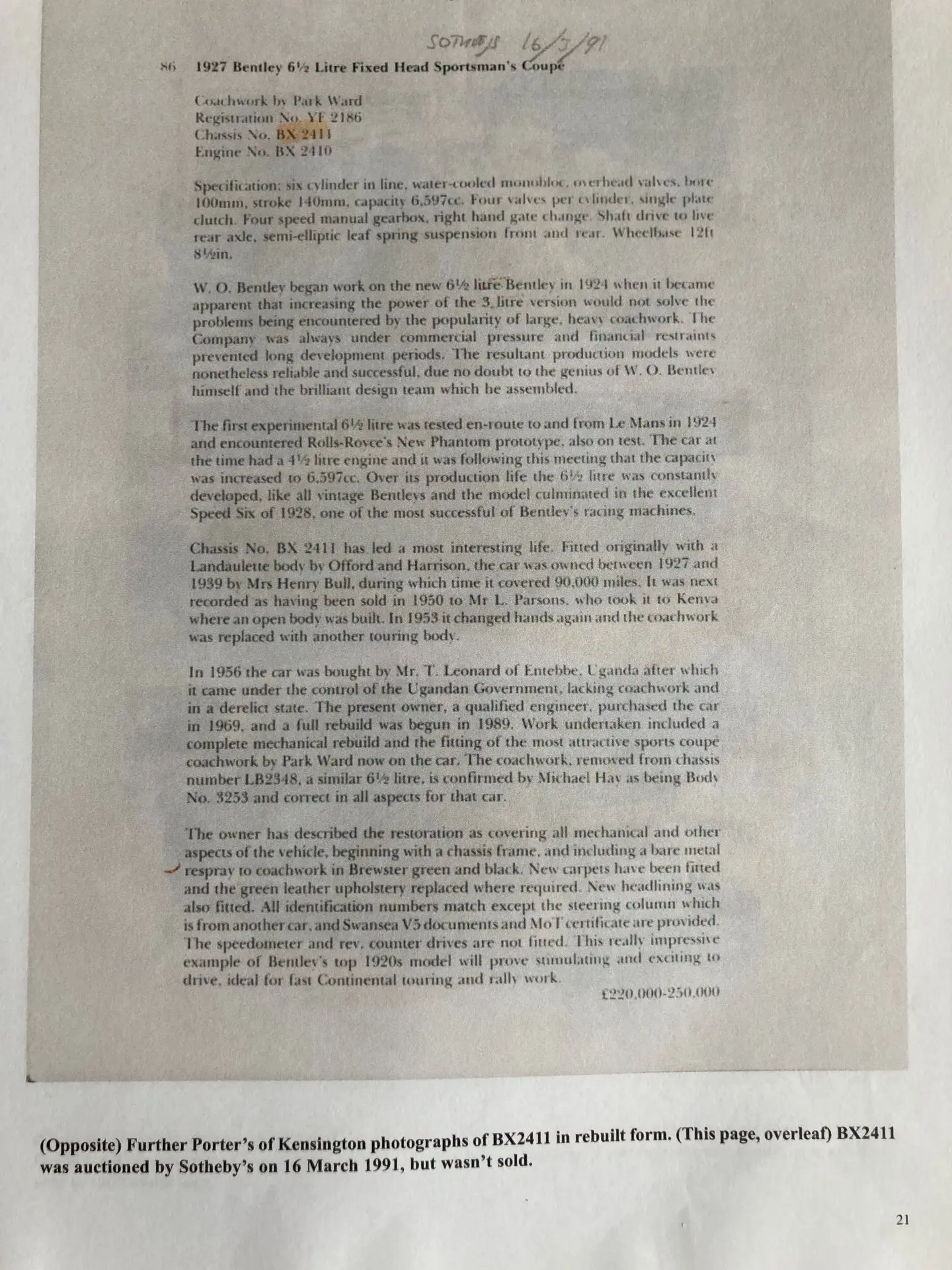
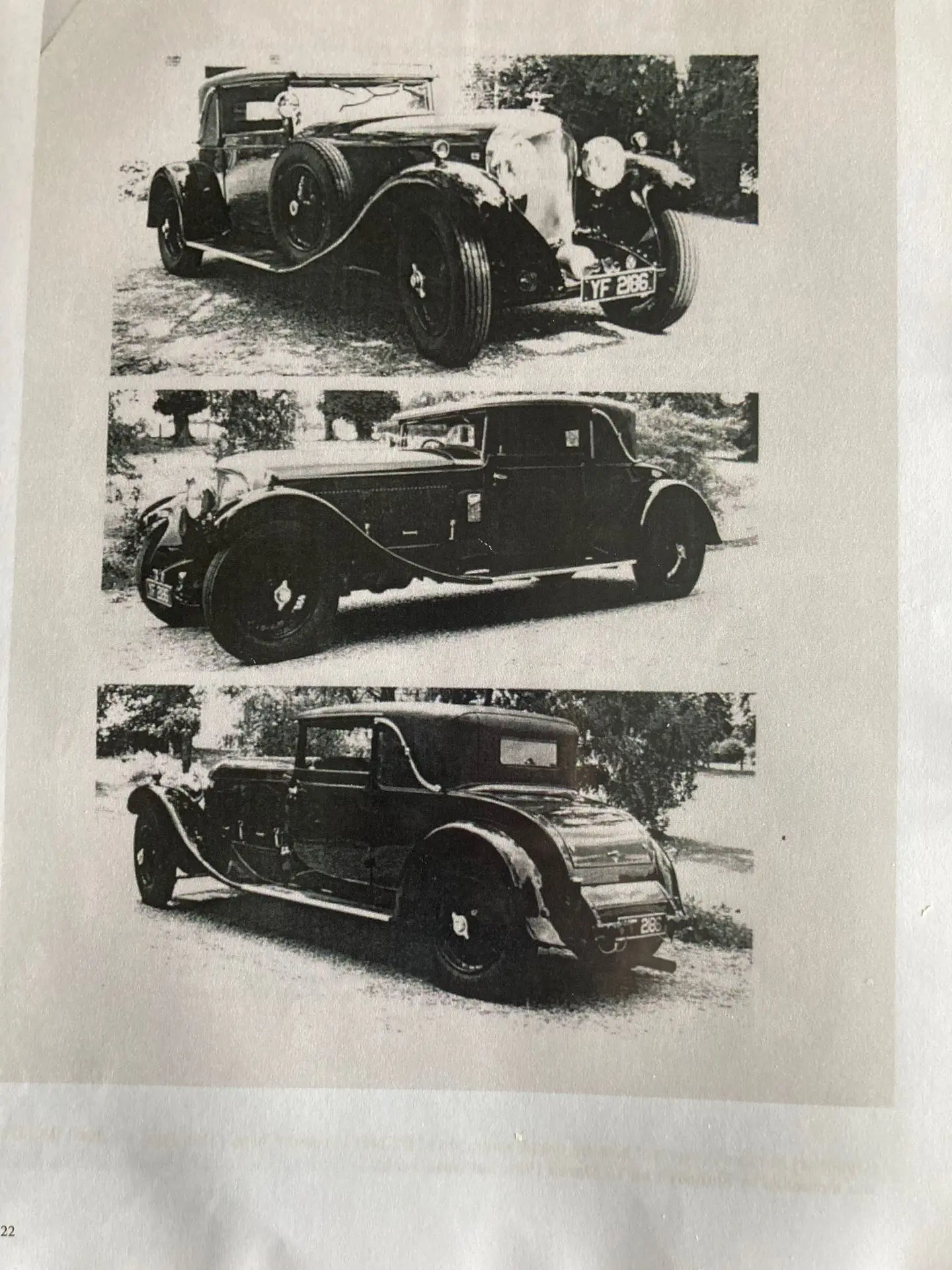
Although YF2186 came with an unusually substantial documented history, Claire Hay's report made clear that the Bentley had evolved considerably since leaving Cricklewood in 1927. That is hardly unusual for a Vintage Bentley approaching its centenary.
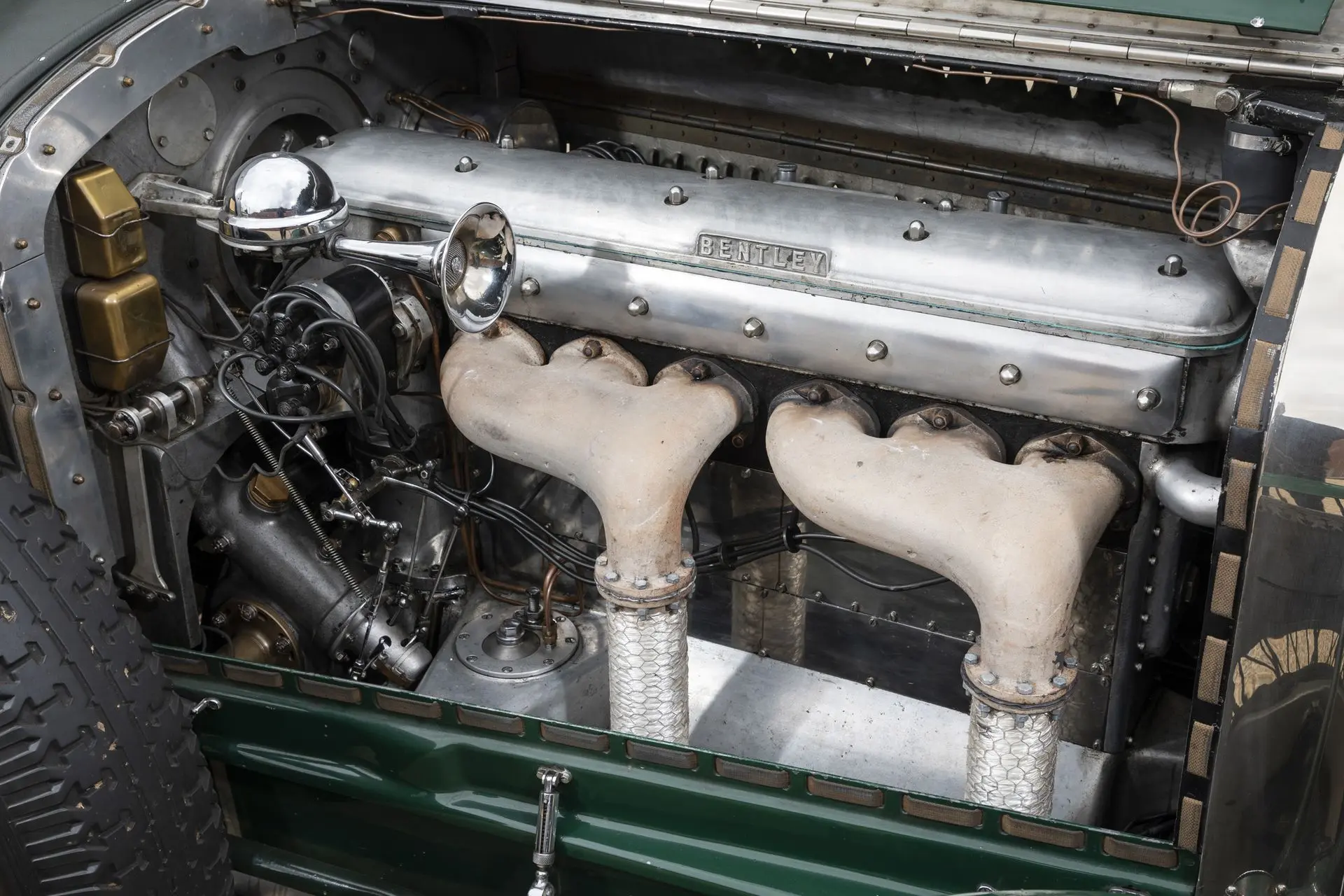
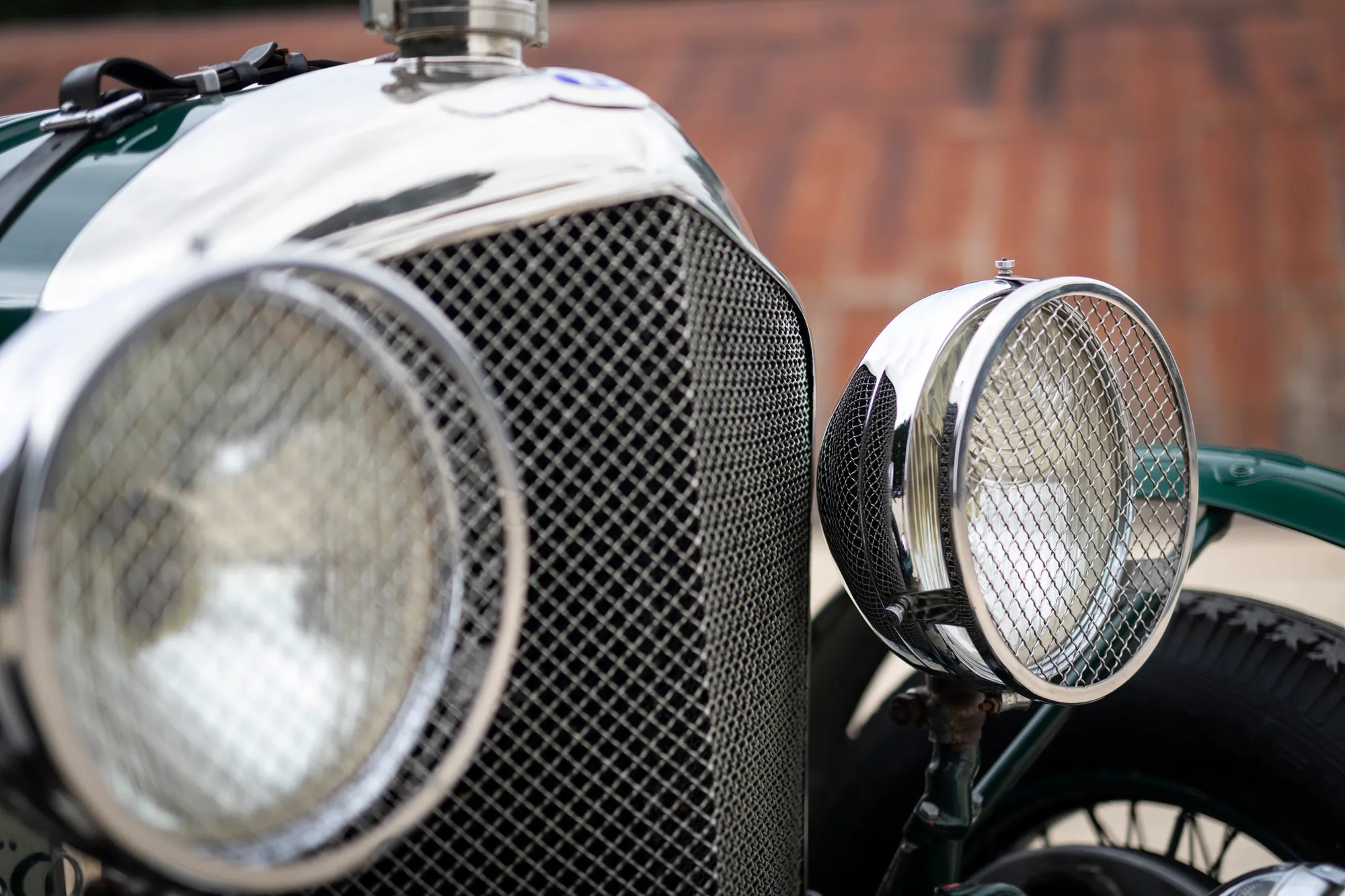
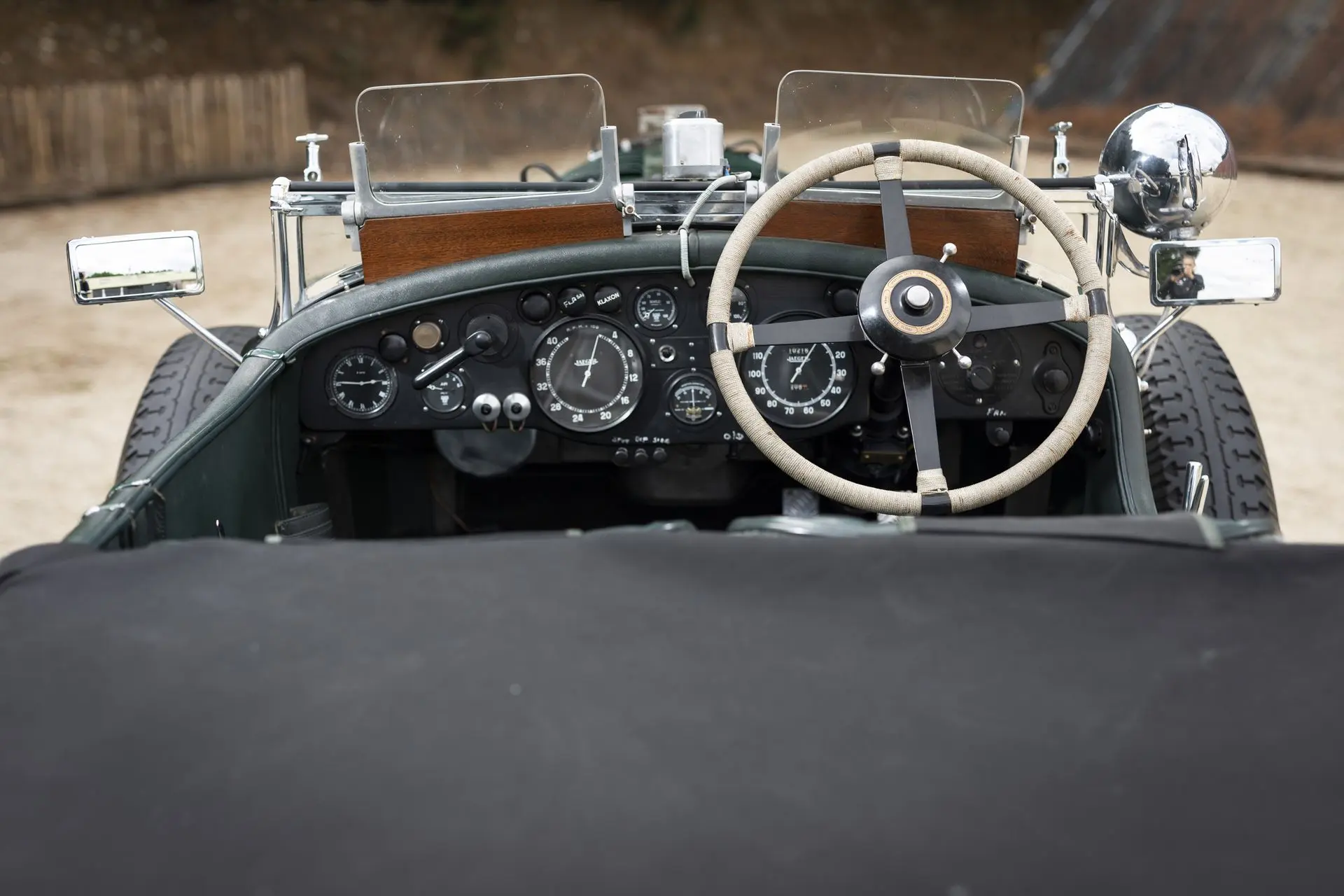
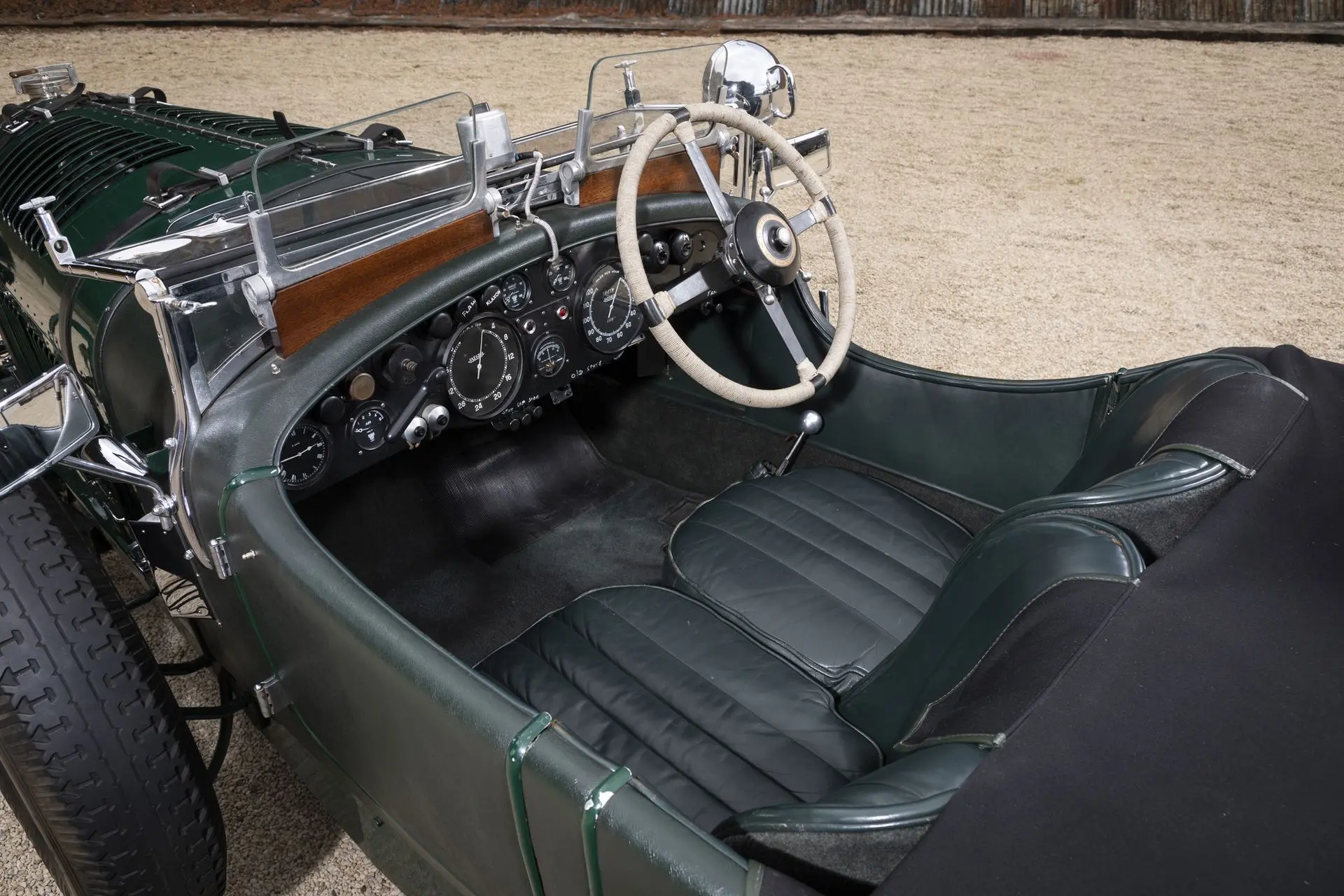
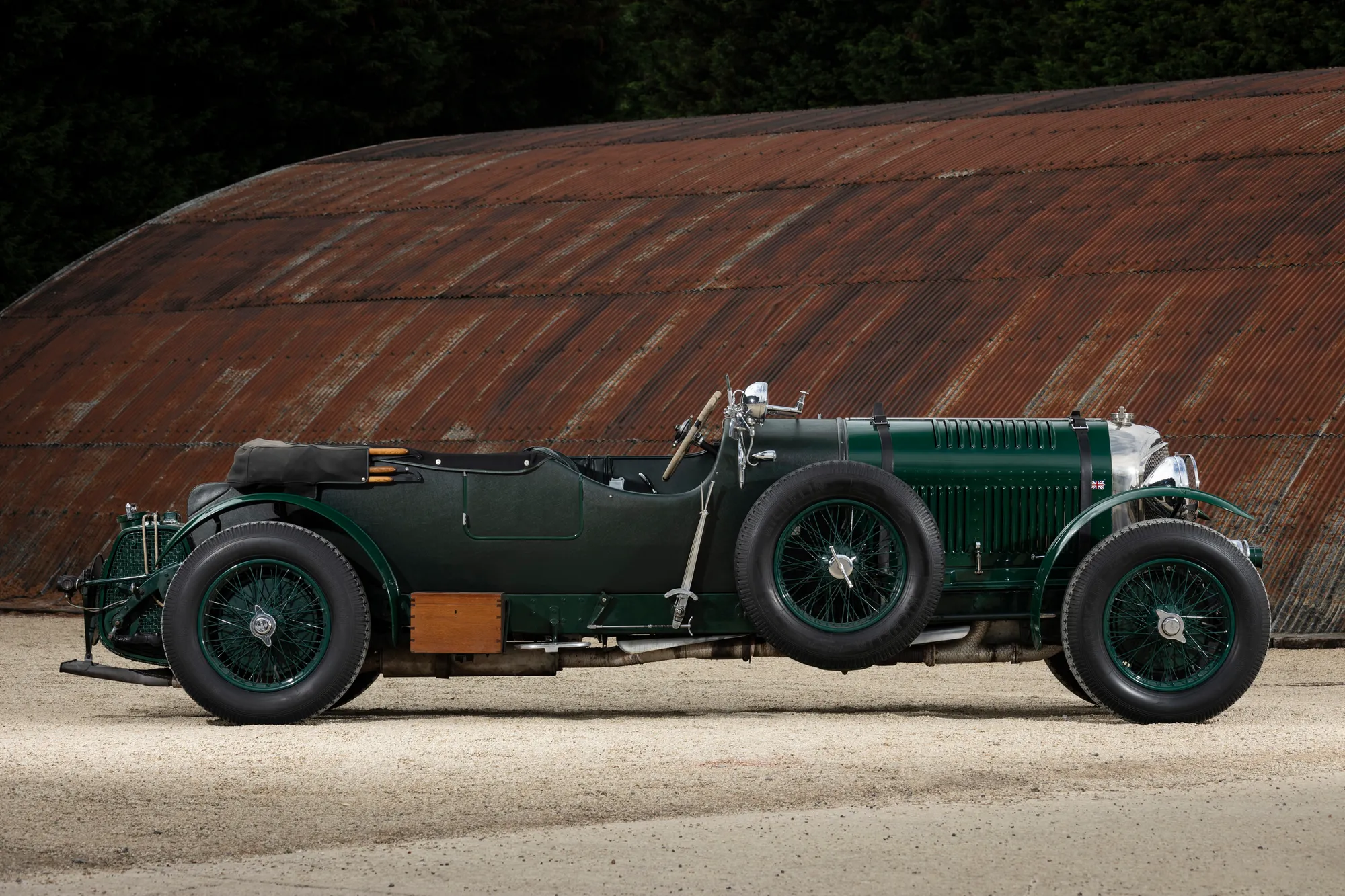
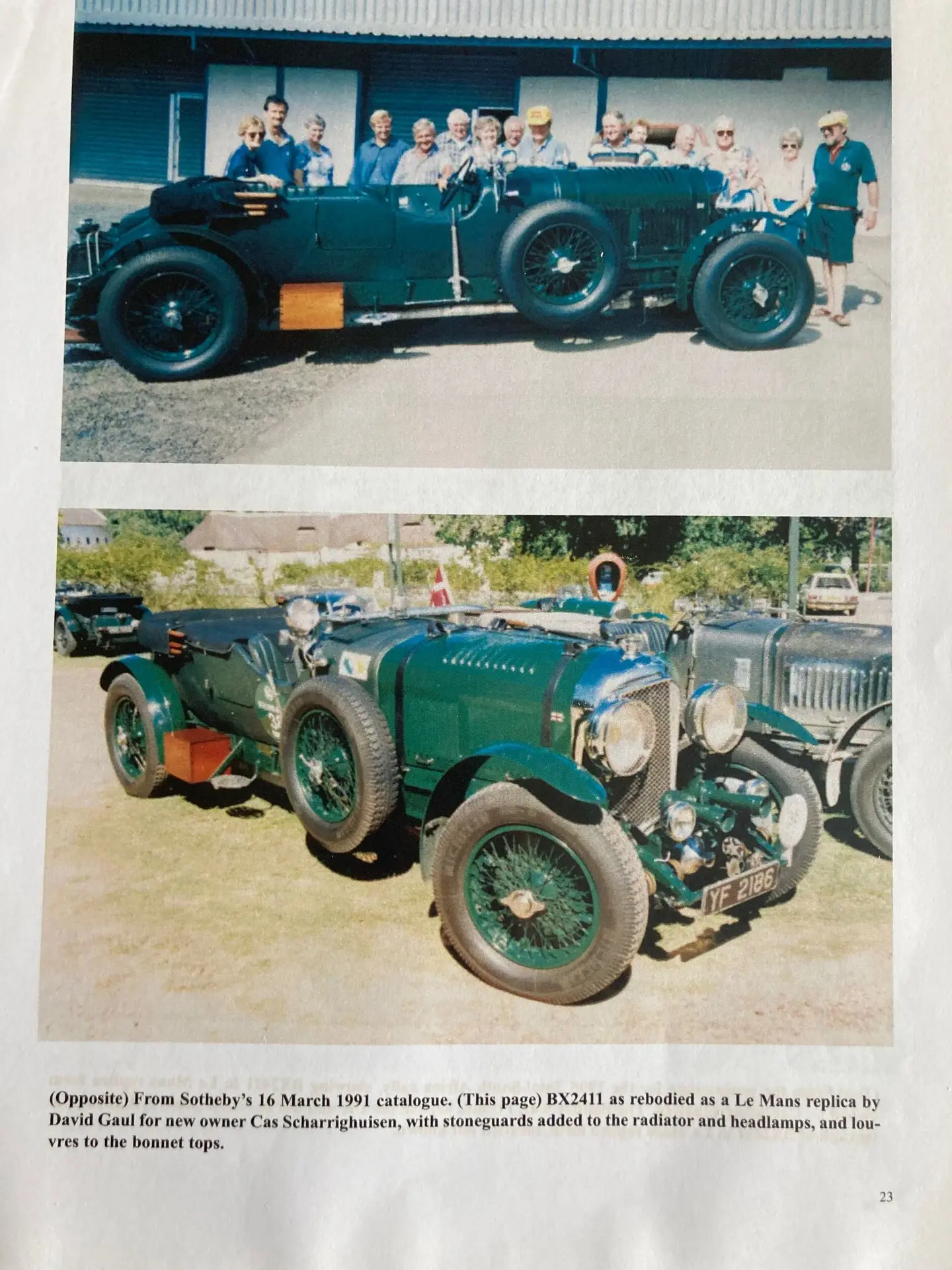
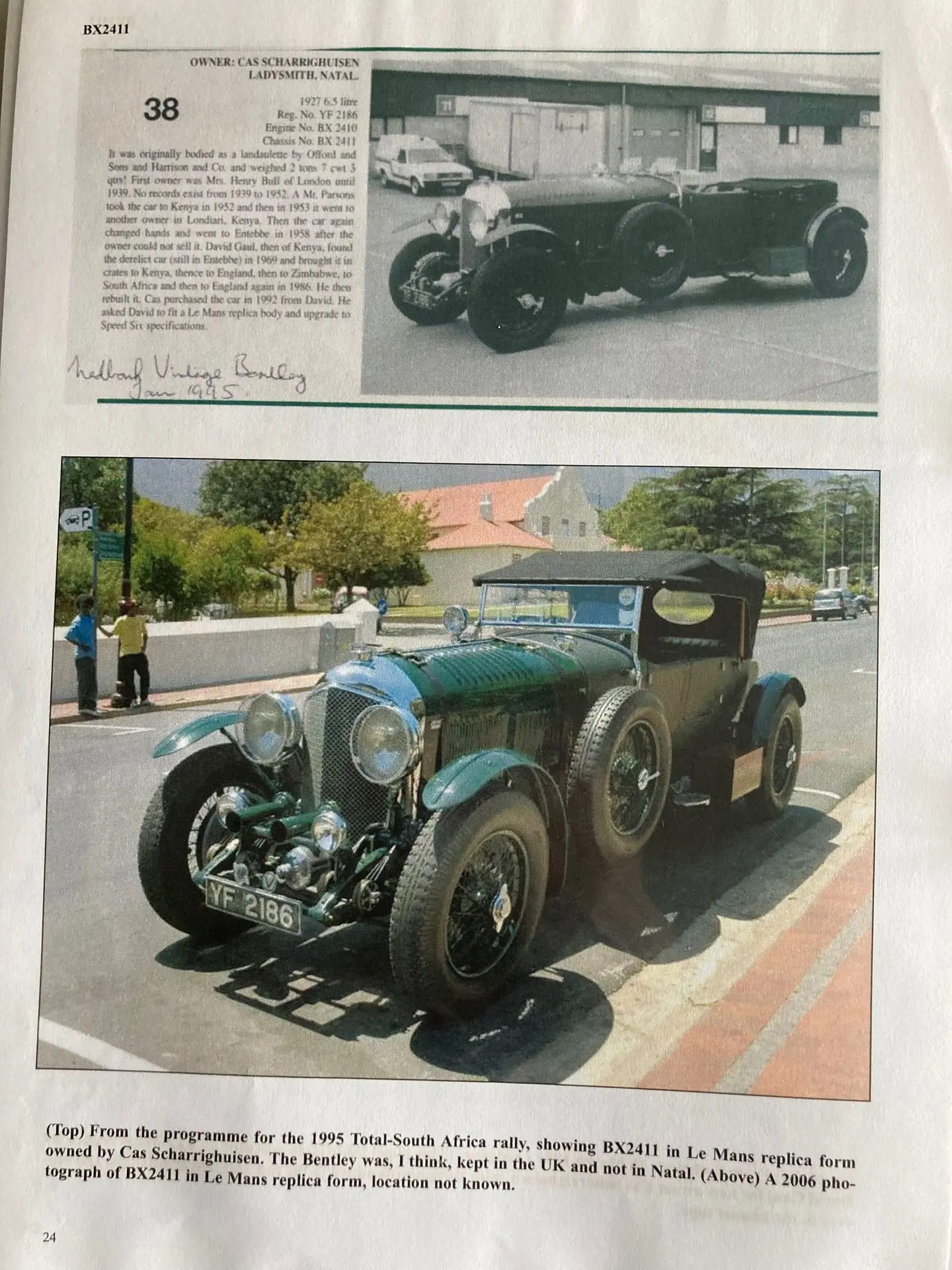
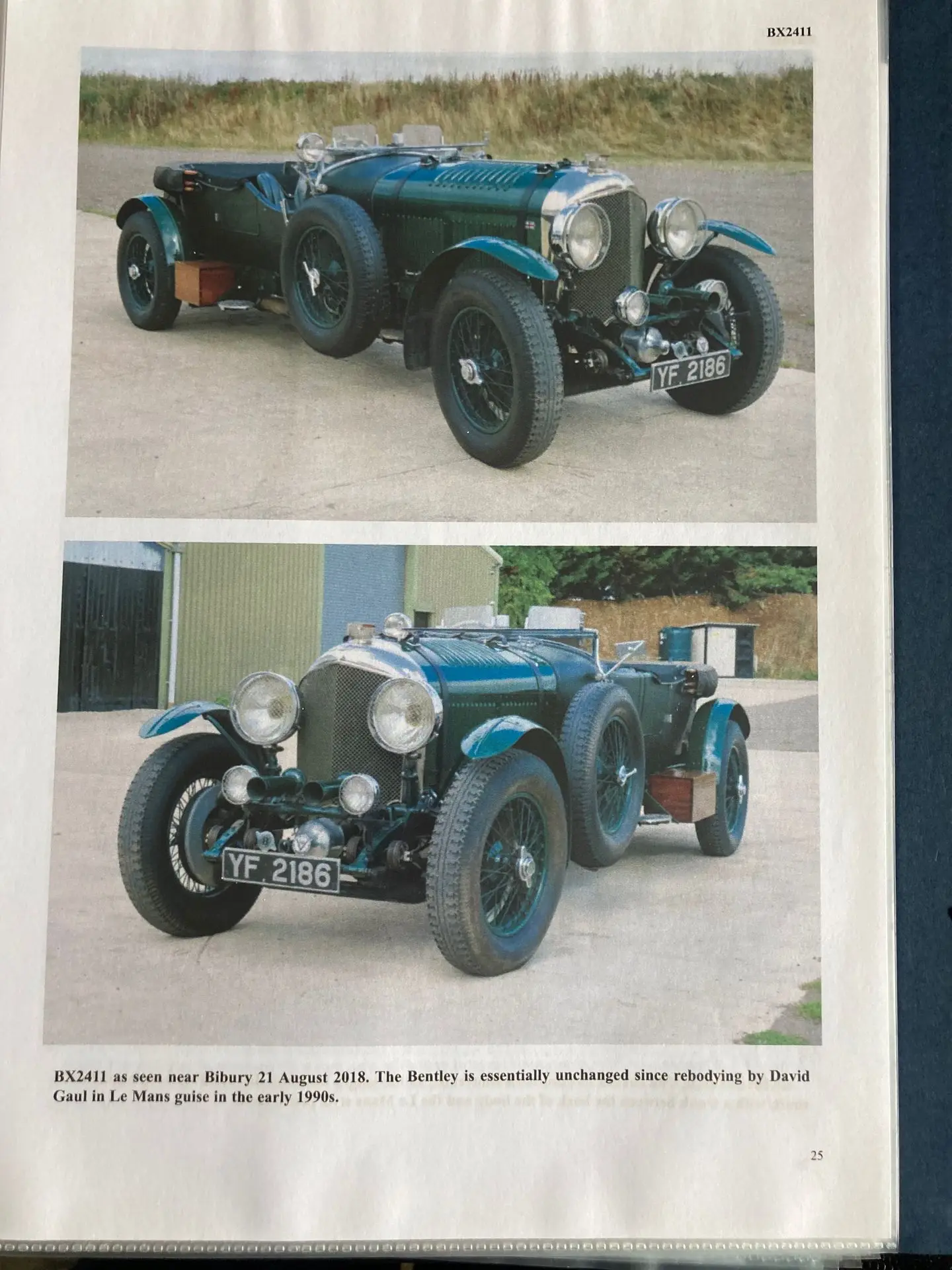
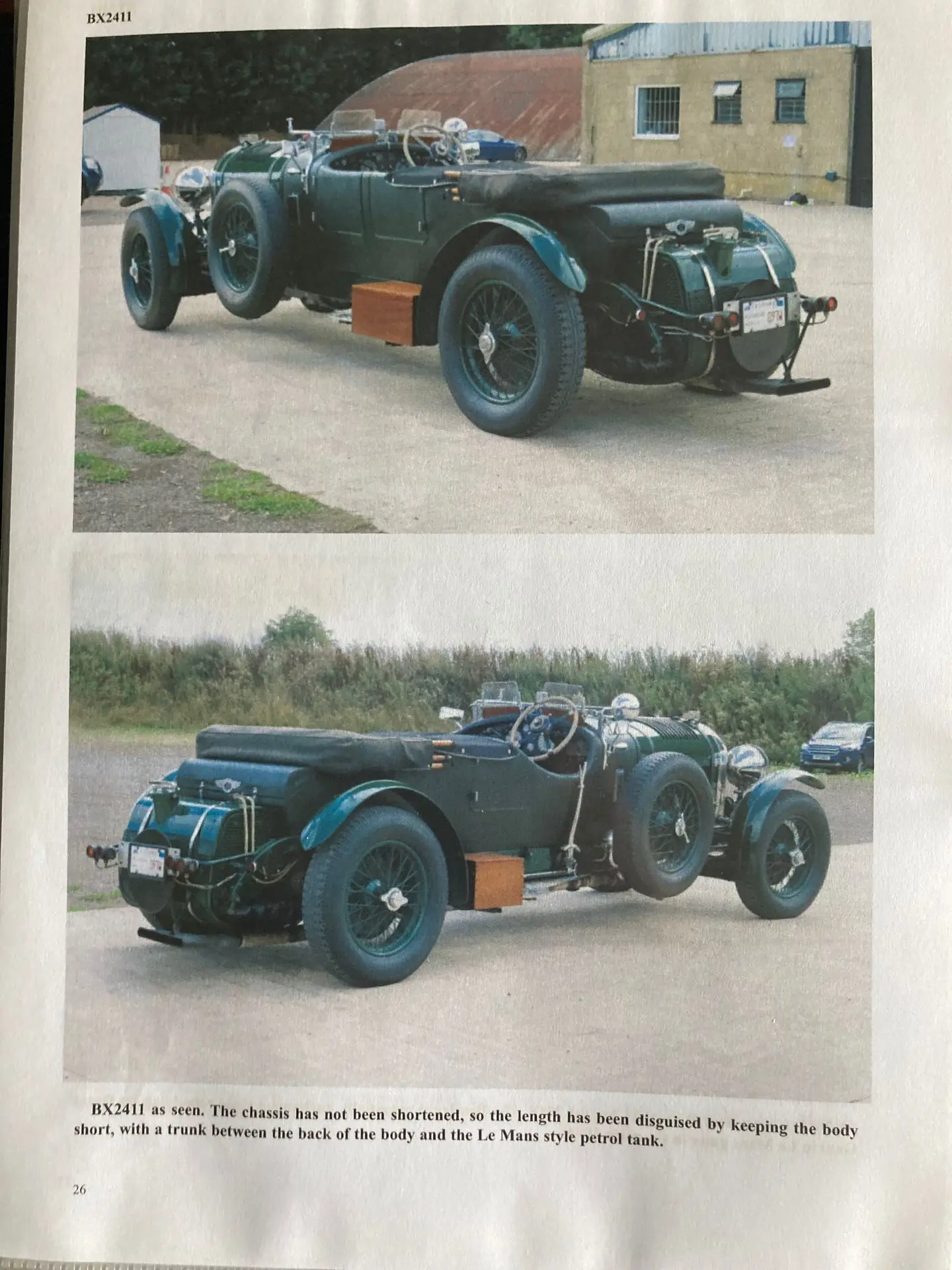
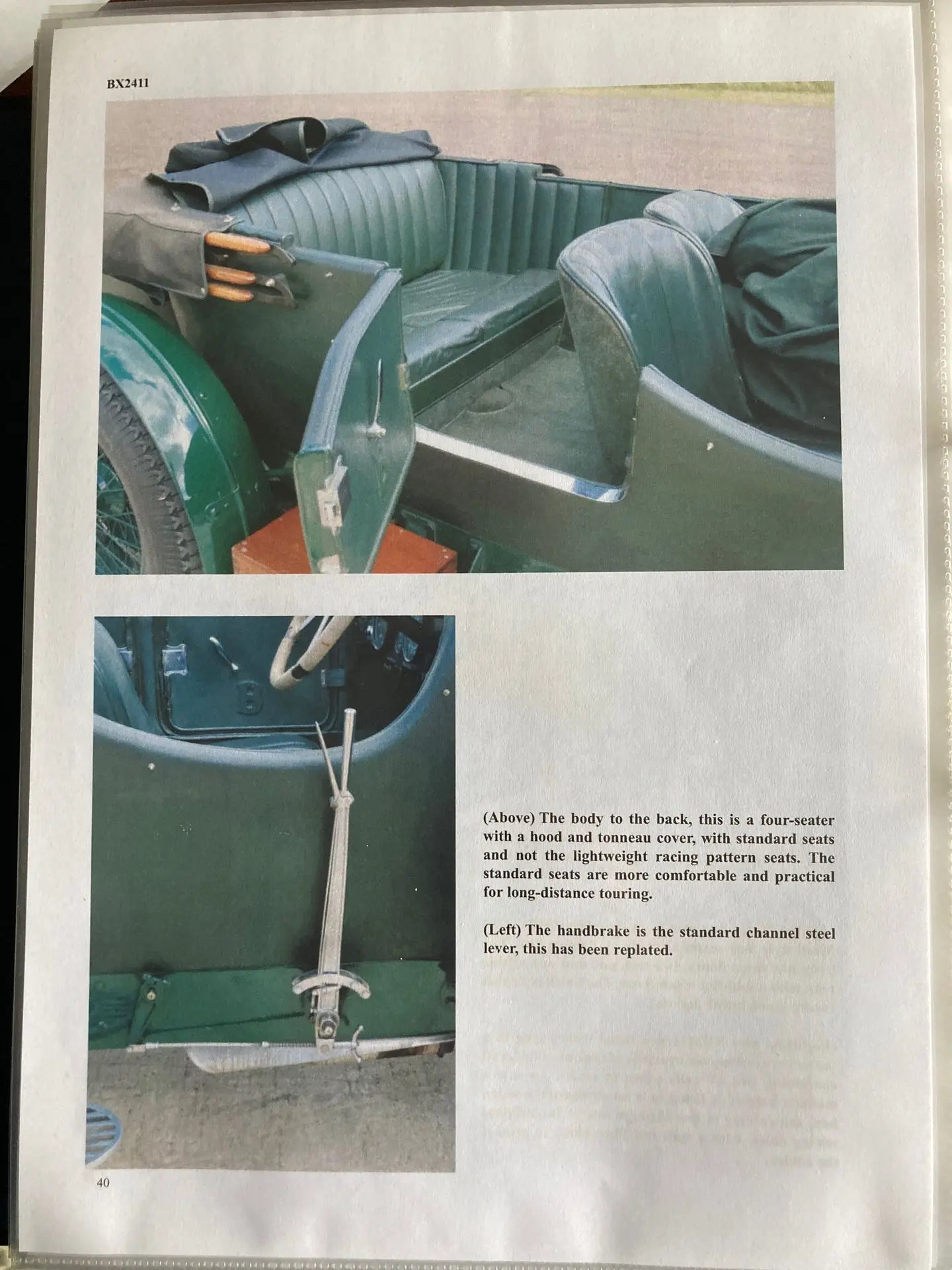
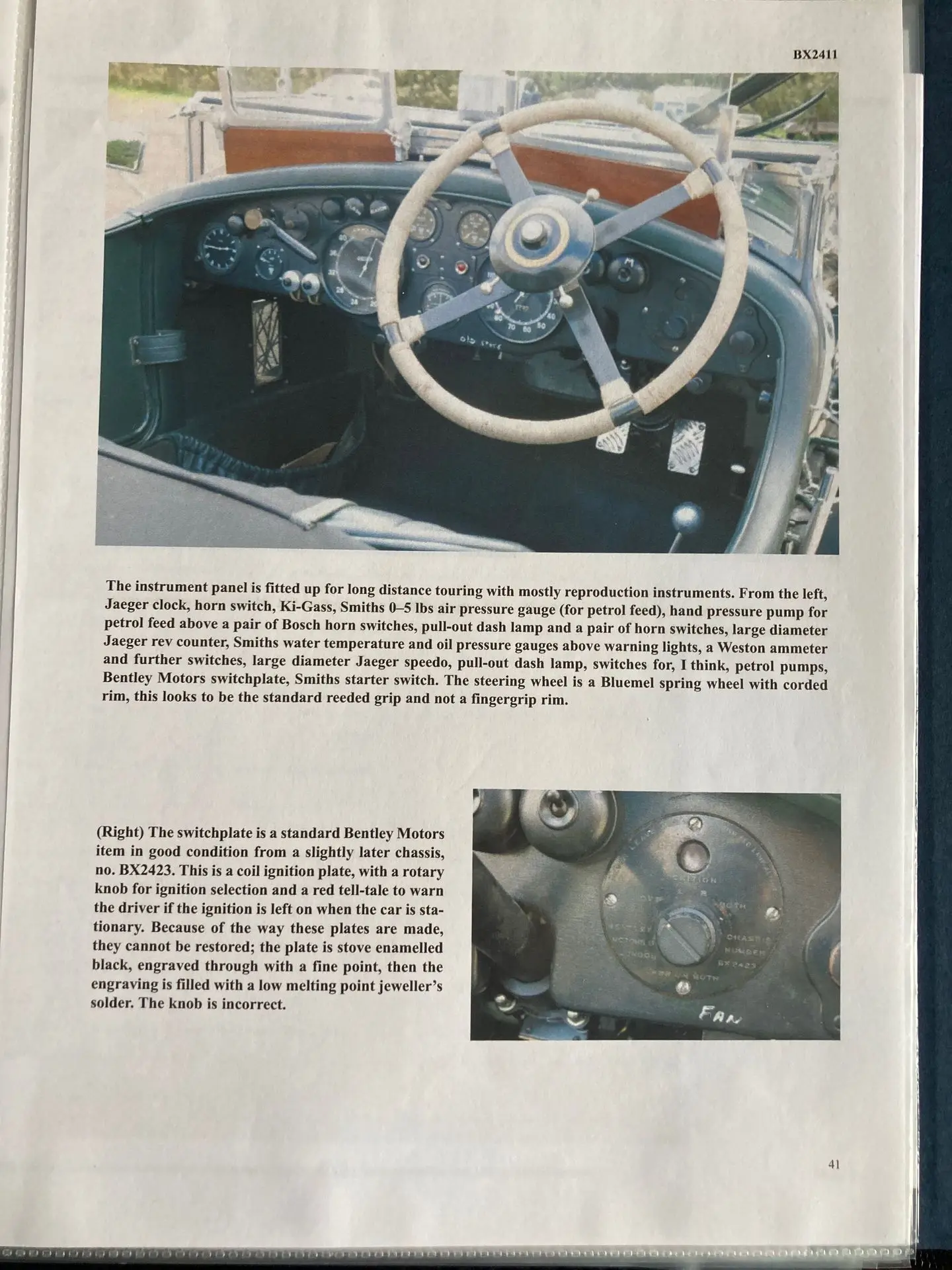
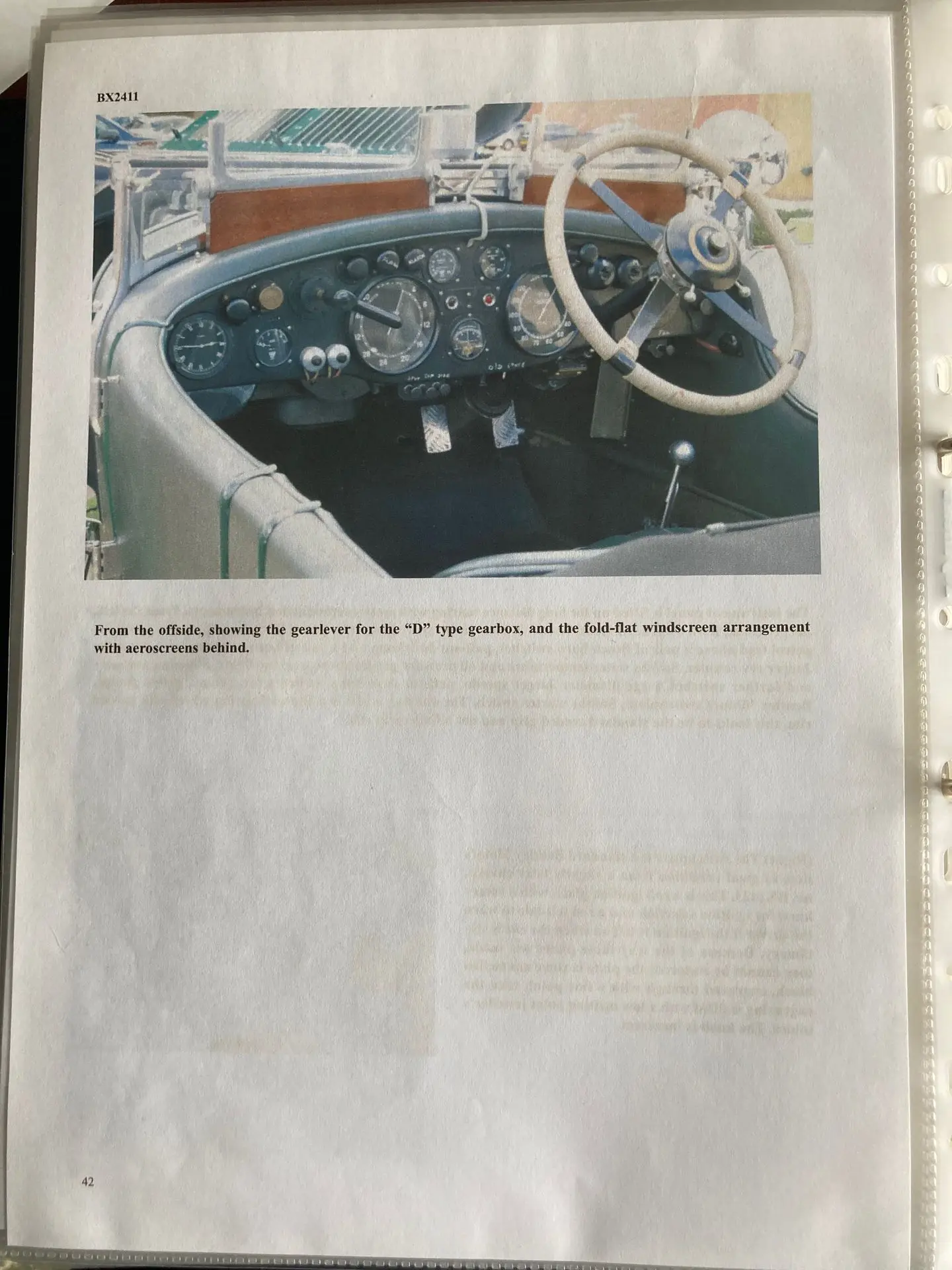
When I bought BX2411 it was presented in the Le Mans Replica form created by David Gaul in 1993. The body, interior and much of the dashboard belonged to that later configuration. It was a very well executed and attractive car, but I knew from the outset that I wanted to take it in a different direction.
Although the history of YF 2186 is well documented, and Claire Hays report was extremely useful, I accepted that some elements of the car were not as it left the factory. This is not unusual for any car that is almost 100 years old, and very often the status for a vintage Bentley.
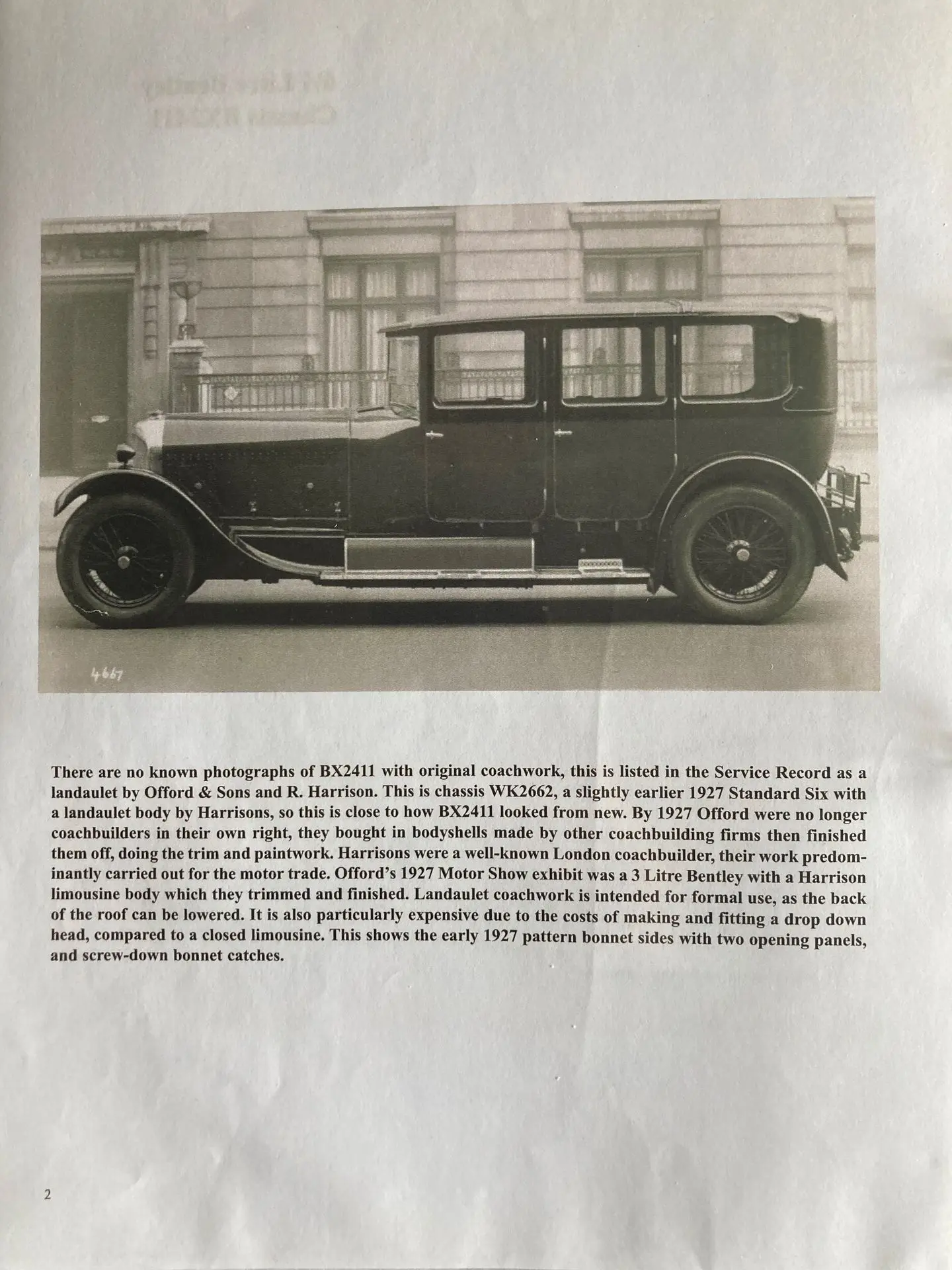
I was already fascinated by the surviving period Harrison coupé body that David Ayre and William Medcalf had identified. Although it had never originally belonged to BX2411, it offered the opportunity to return the car to closed coachwork using genuine period Bentley coachwork rather than creating another replica body from scratch.
That in turn prompted a broader idea: wherever possible, could we source genuine period Bentley components and build the finished car around historic material, while being completely open about where each element came from? The challenge was set.
Why BX2411?
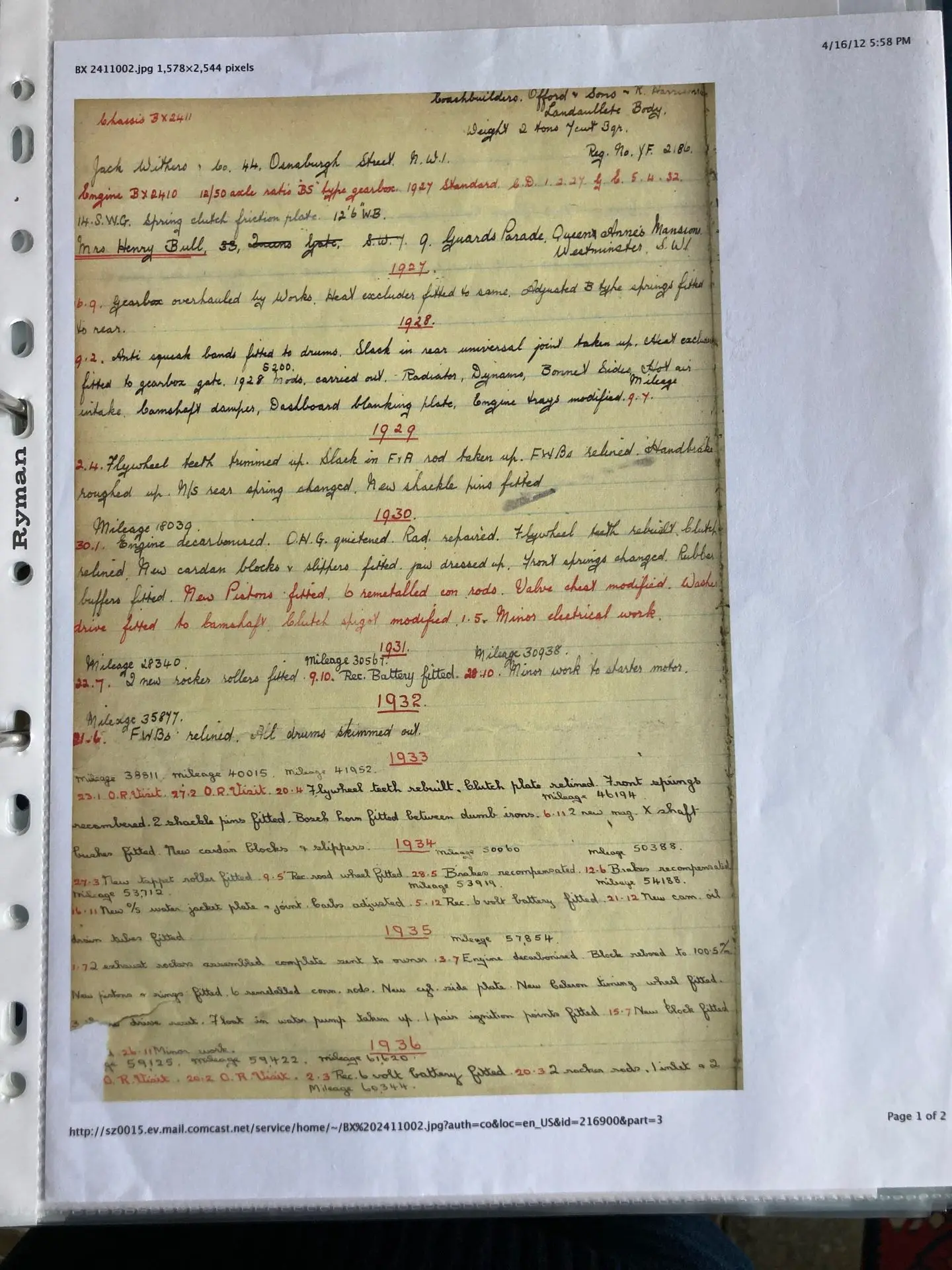
YF2186 wasn't a blank canvas. That was part of its appeal. It retained the identity of a genuine 1927 Bentley 6½ Litre, engine identity BX2410, an unusually substantial documentary history and decades of real use. Equally importantly, its history of changing coachwork meant that creating another carefully considered chapter did not require us to dismantle an untouched original-bodied car.
The more we understood BX2411, the more it seemed the right foundation for what we wanted to create.
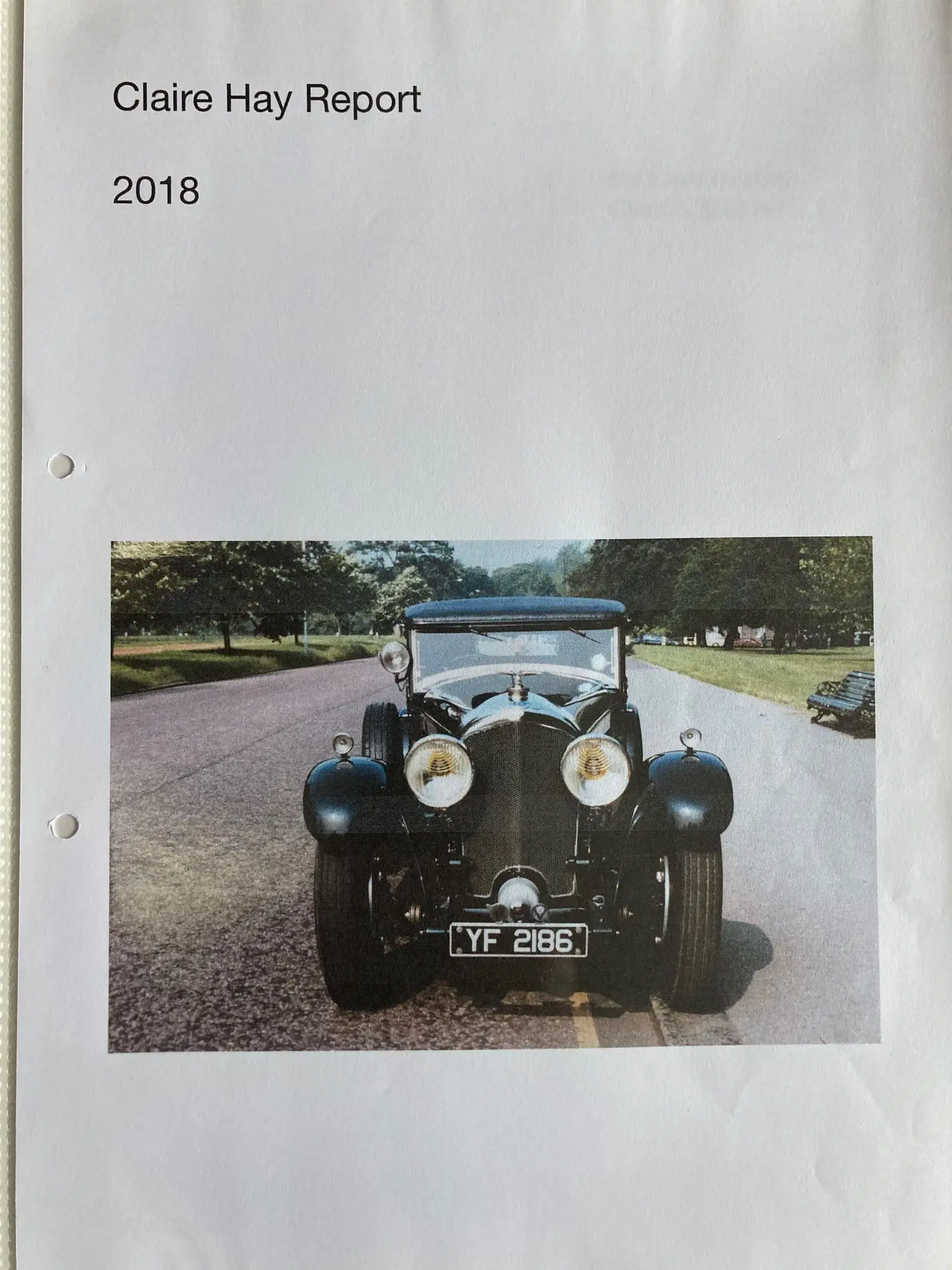
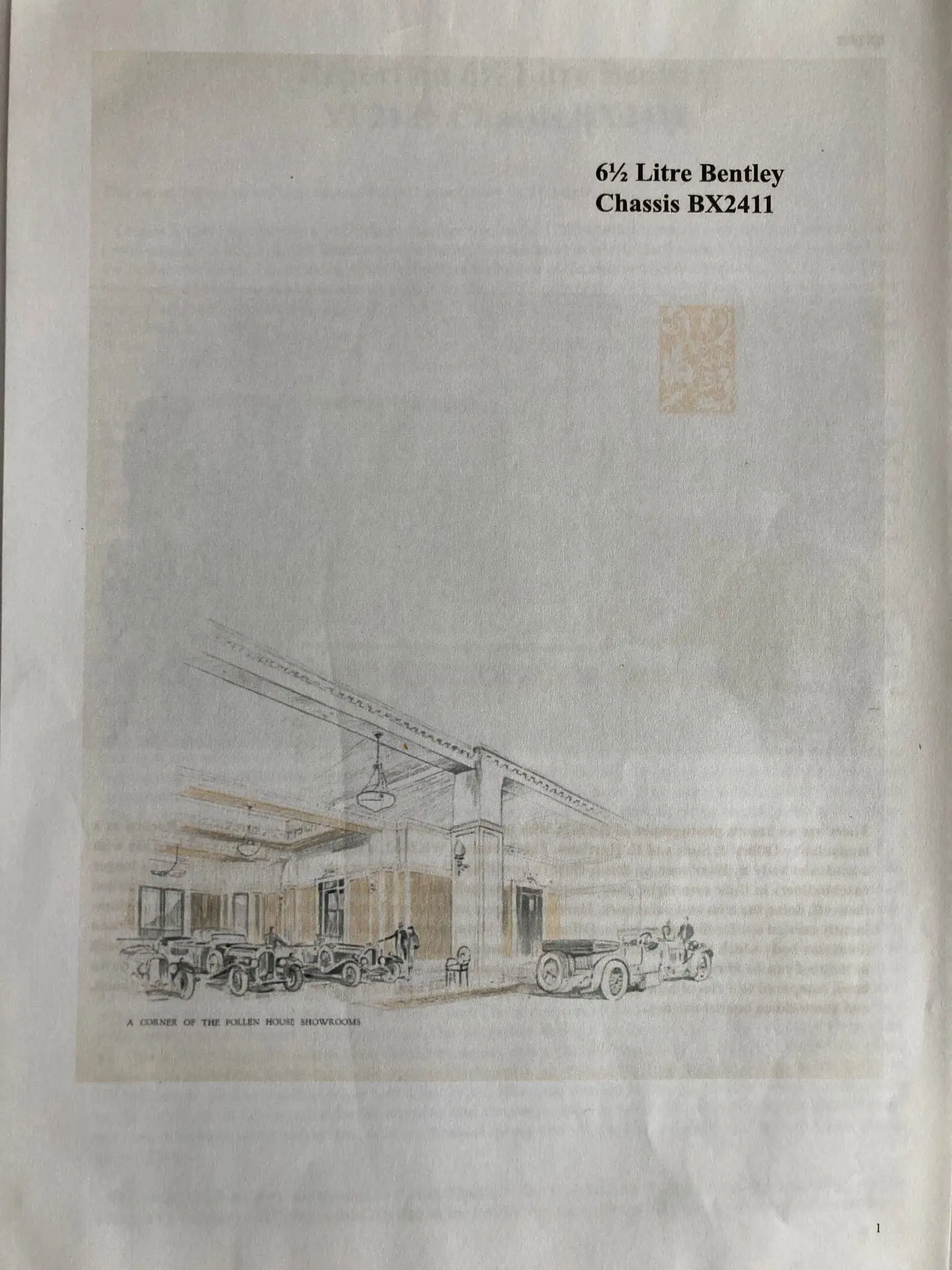
The Hay Report - 2018
During my search for the right starting point, I relied heavily on friends within the vintage Bentley world to help narrow the field. Experience and enthusiasm are invaluable, but when it came to committing to a purchase, I was clear that the decision needed to be underpinned by authoritative historical research.
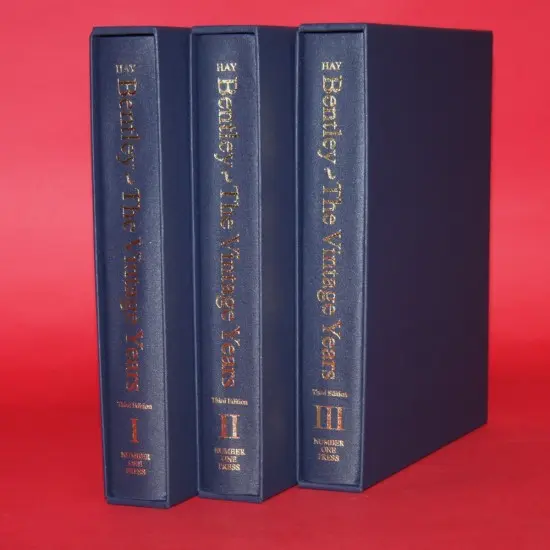
For that reason, the independent 2018 report commissioned by the vendor from Claire Hay gave me considerable confidence in understanding the car I was considering buying. As author of 'Bentley: The Vintage Years, her knowledge of these vehicles is unsurpassed.
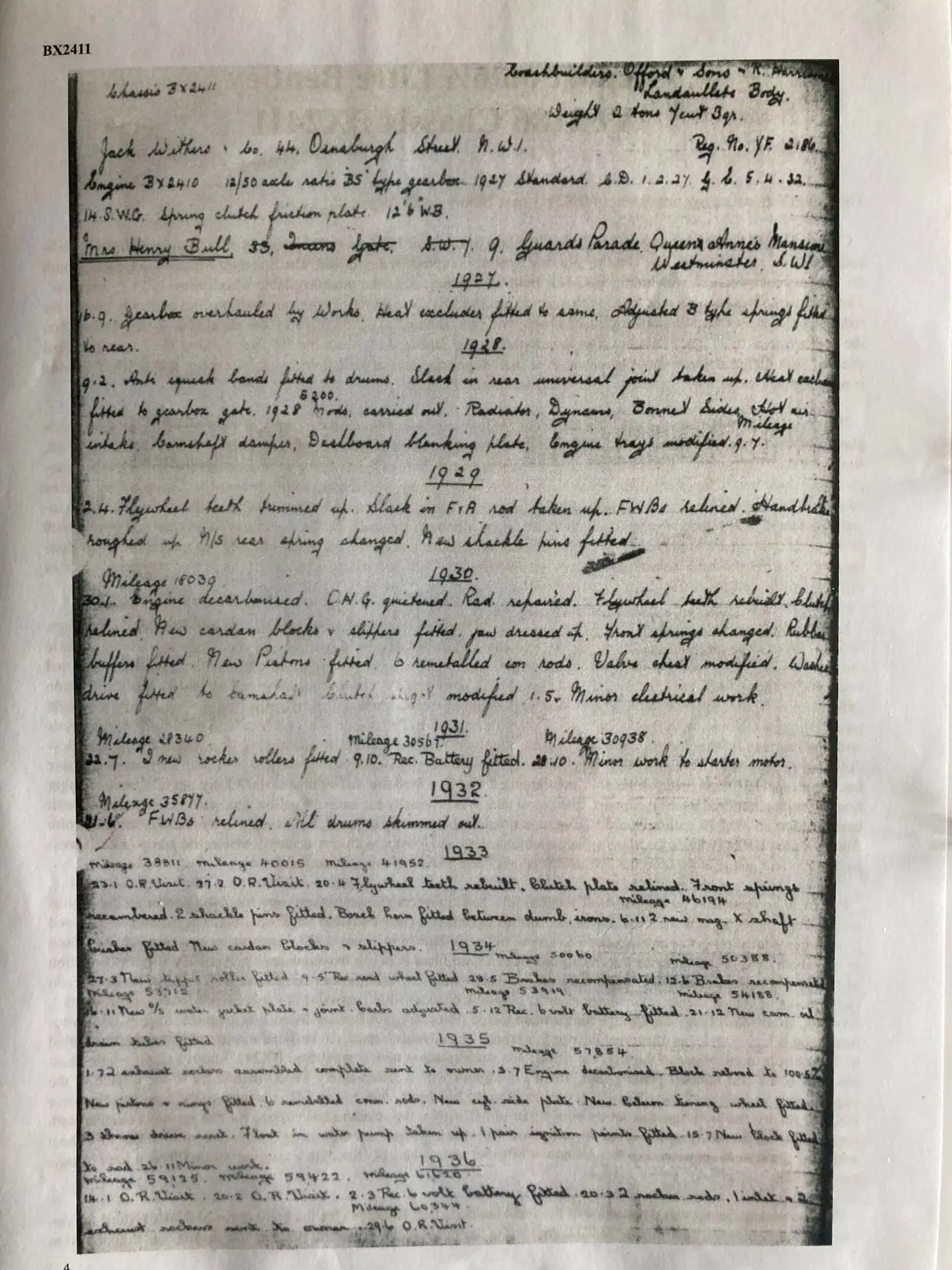
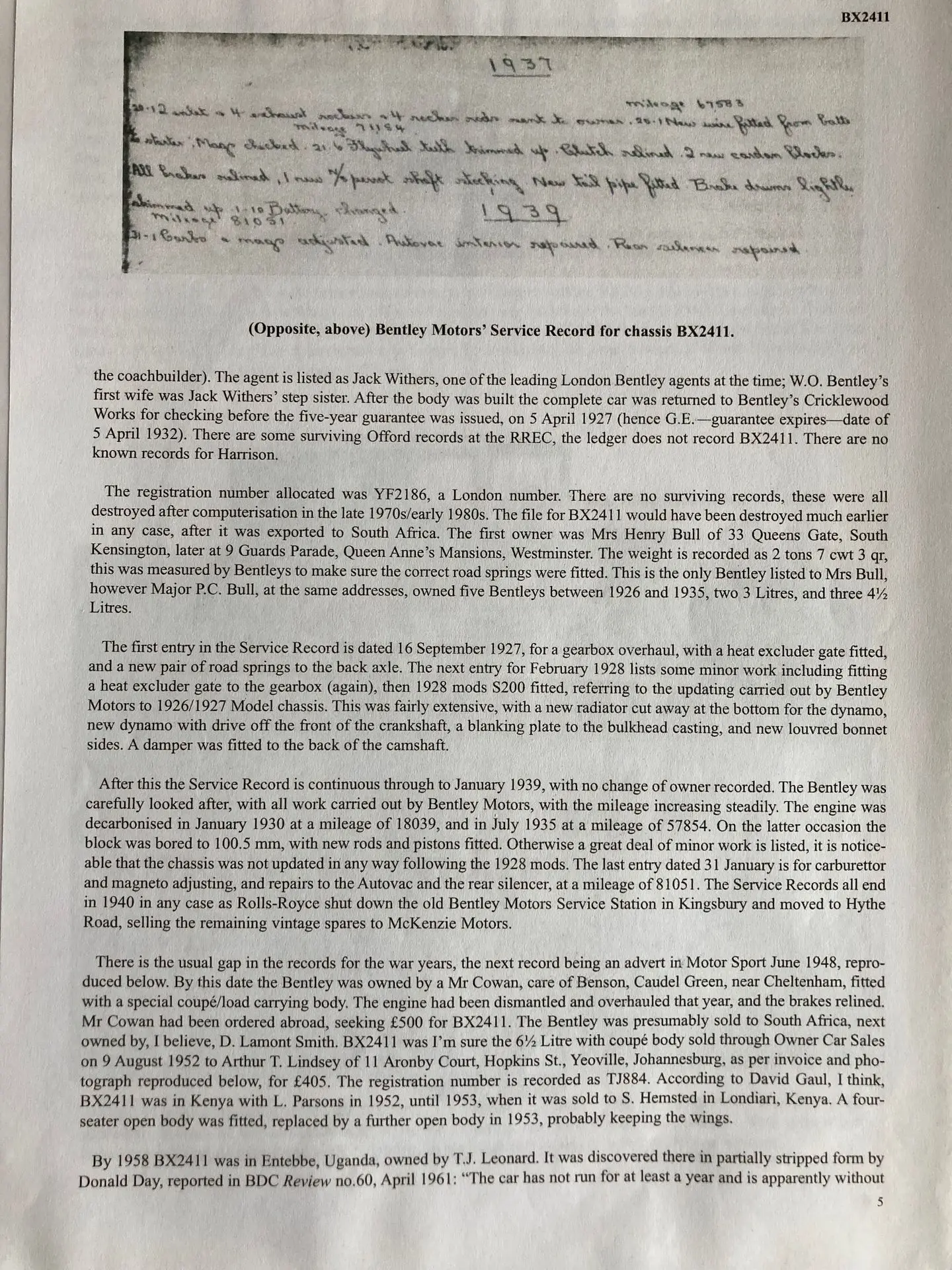
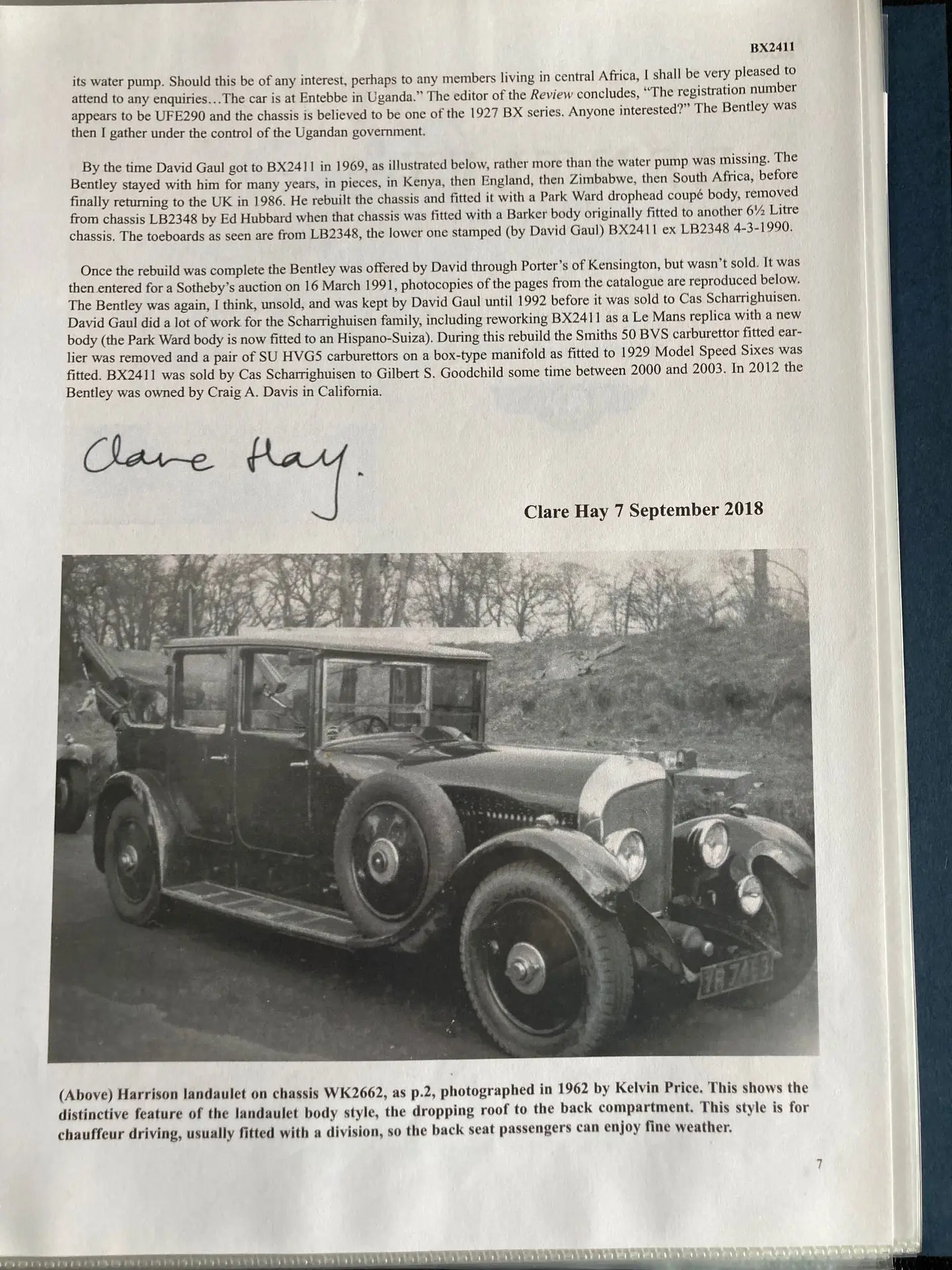
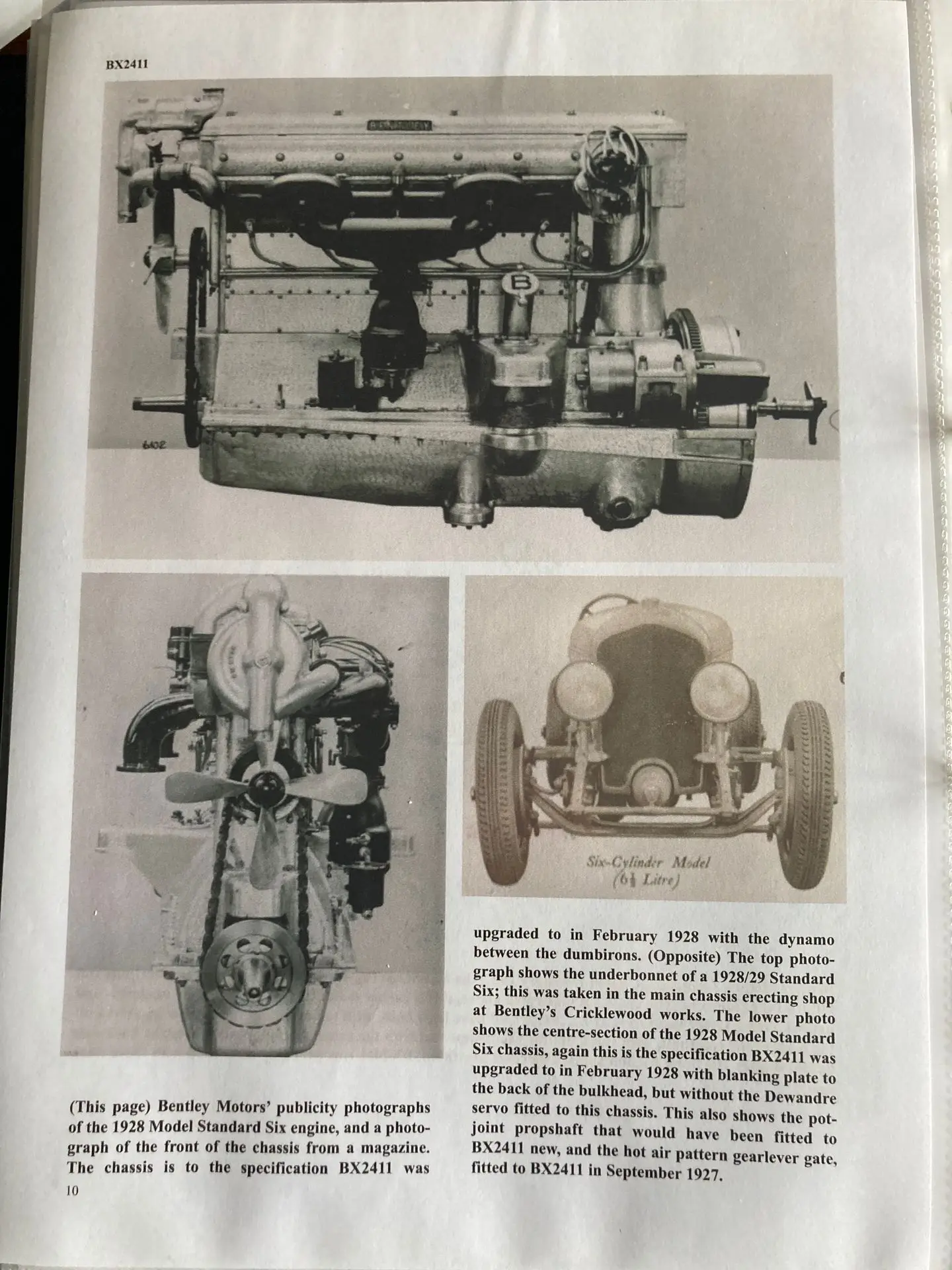
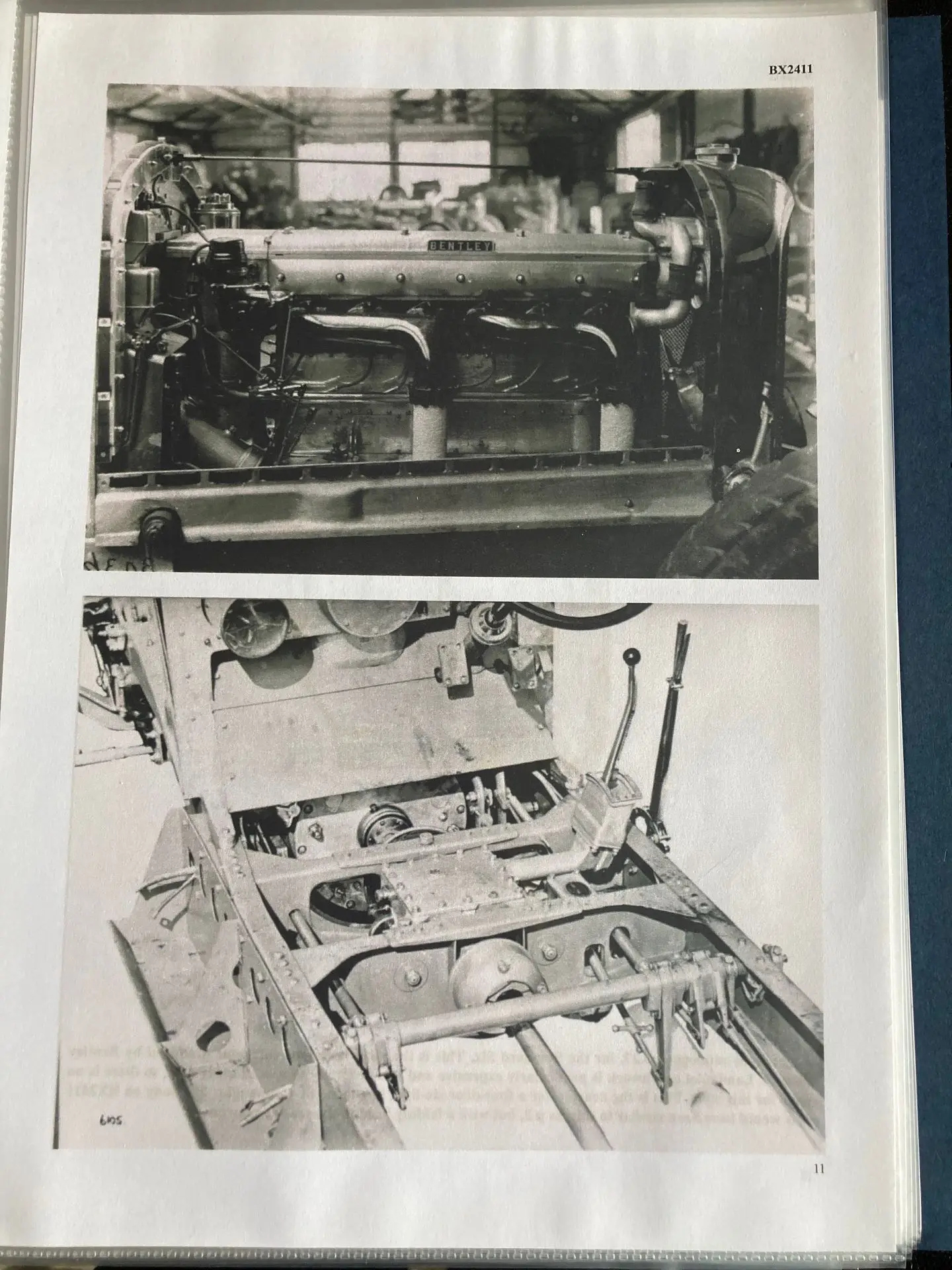
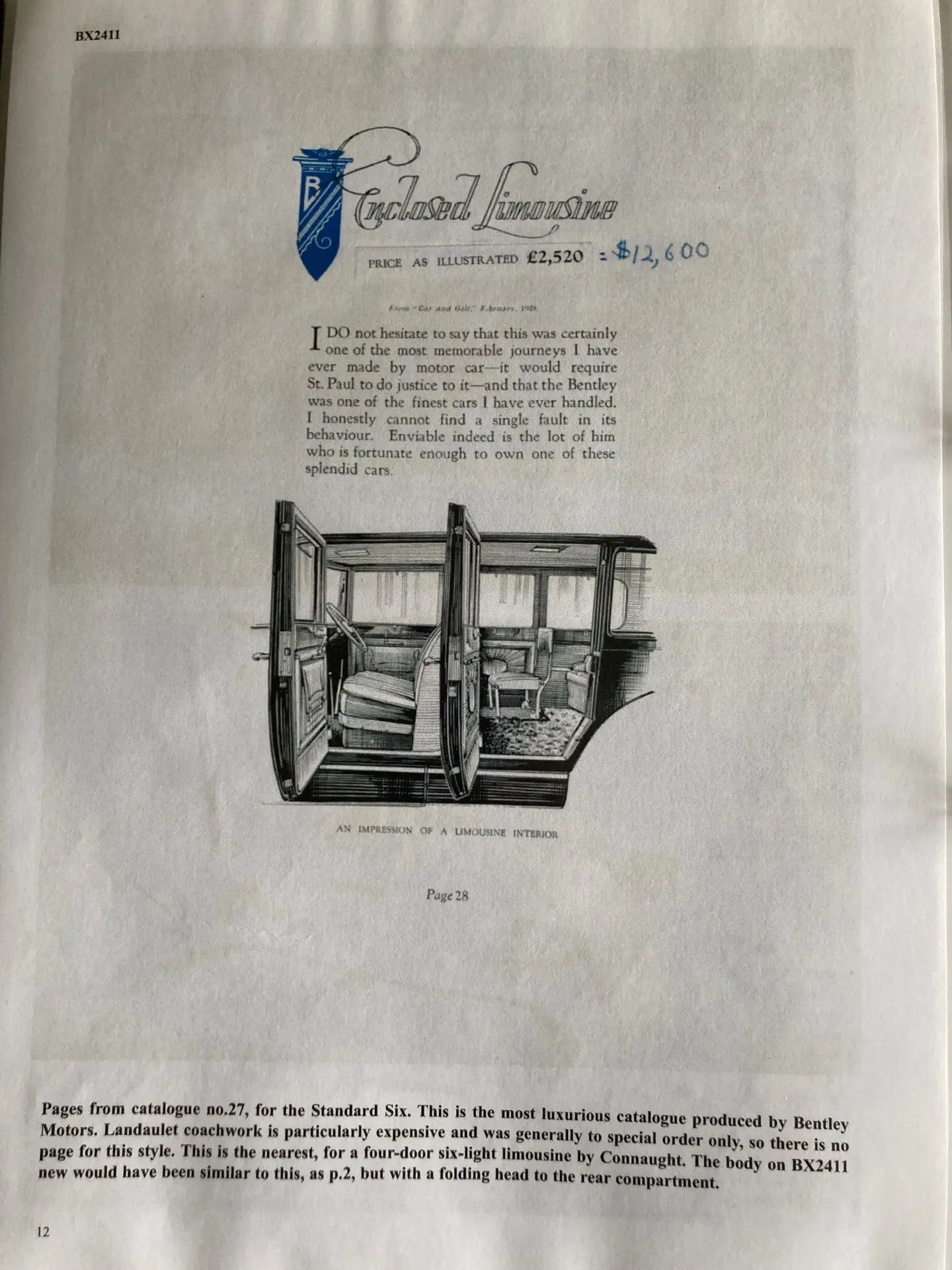
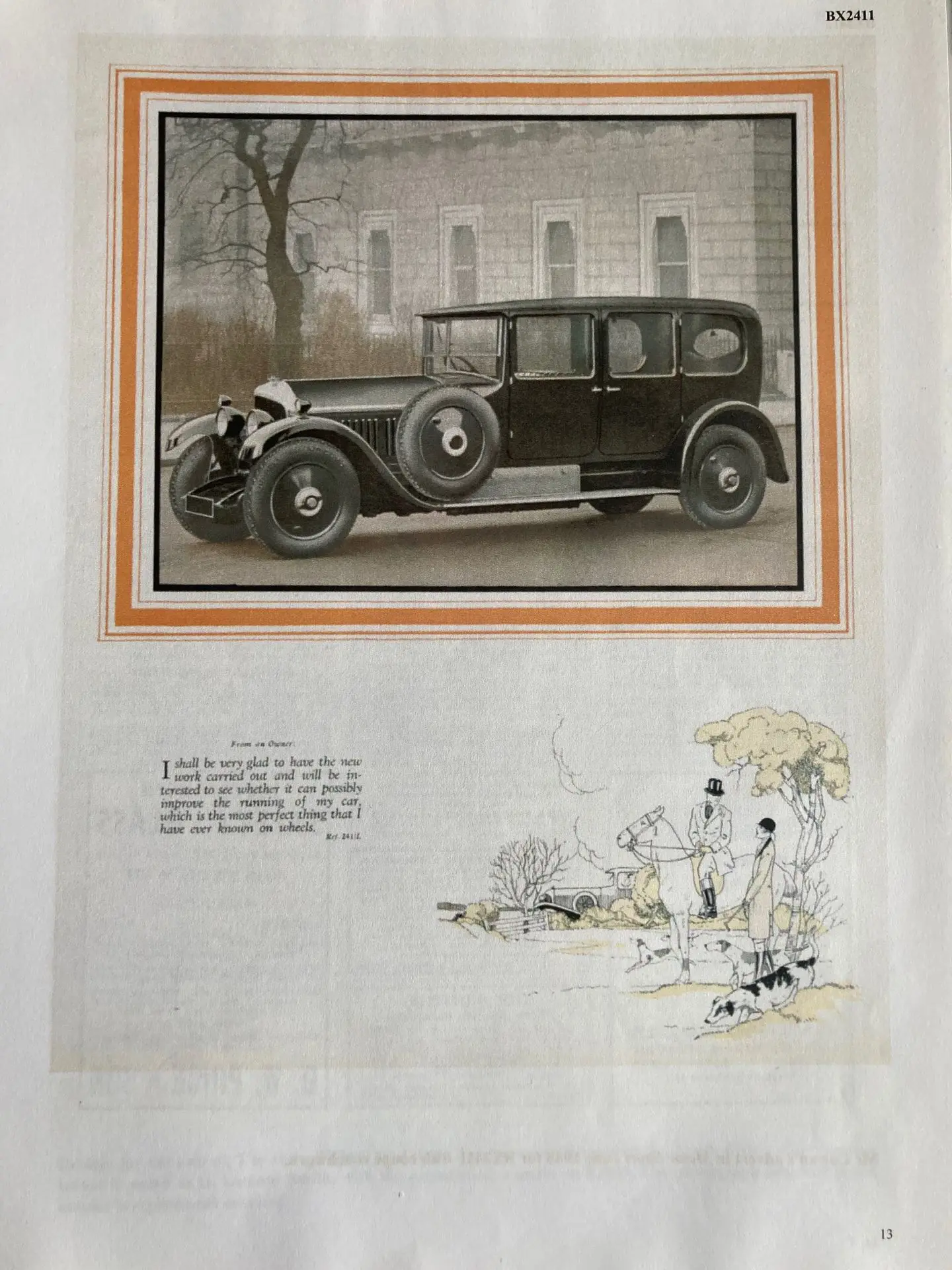
Her work focused on establishing the YF2186's history, provenance and originality, drawing on factory records, period documentation and archival material.
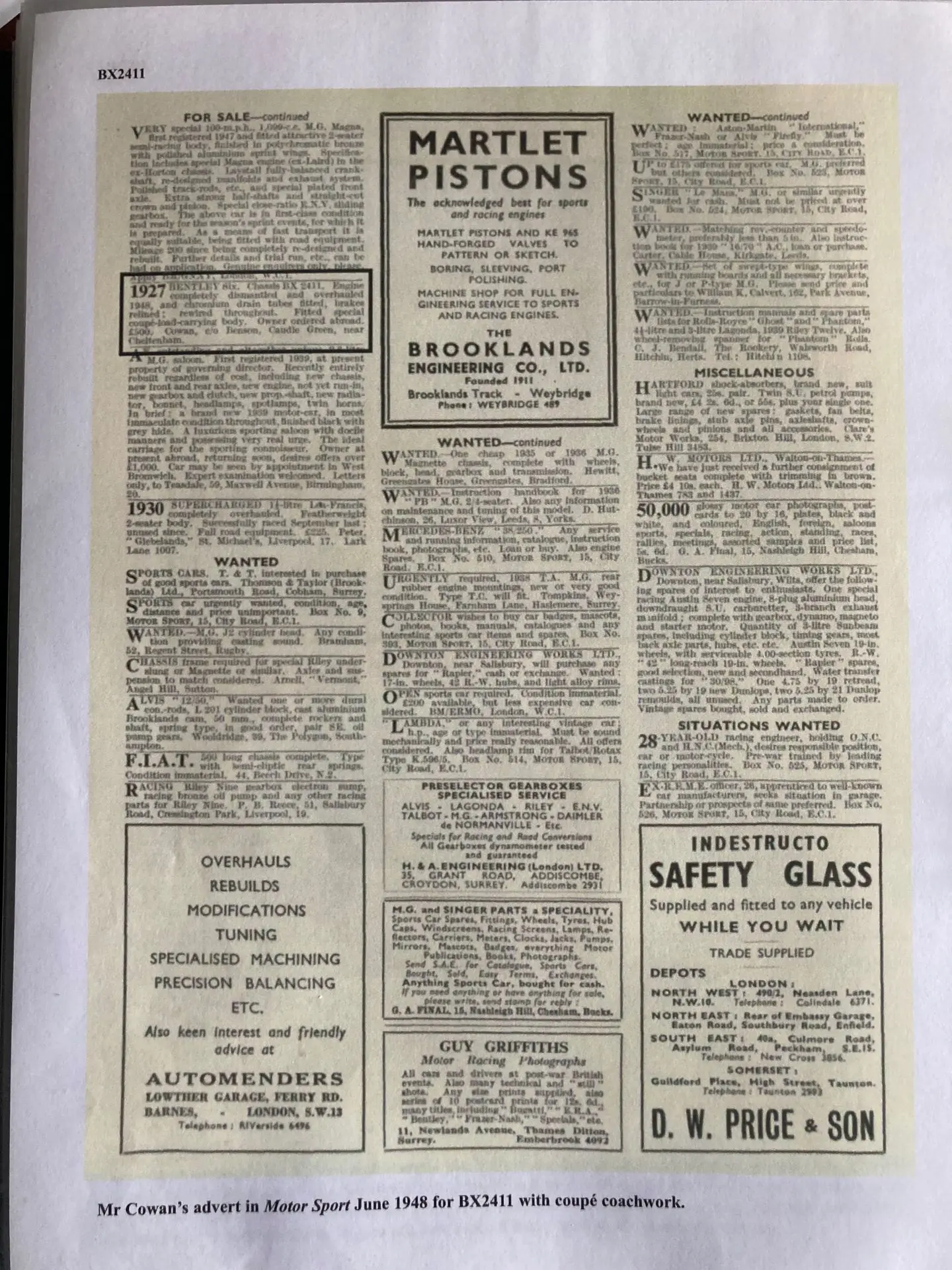
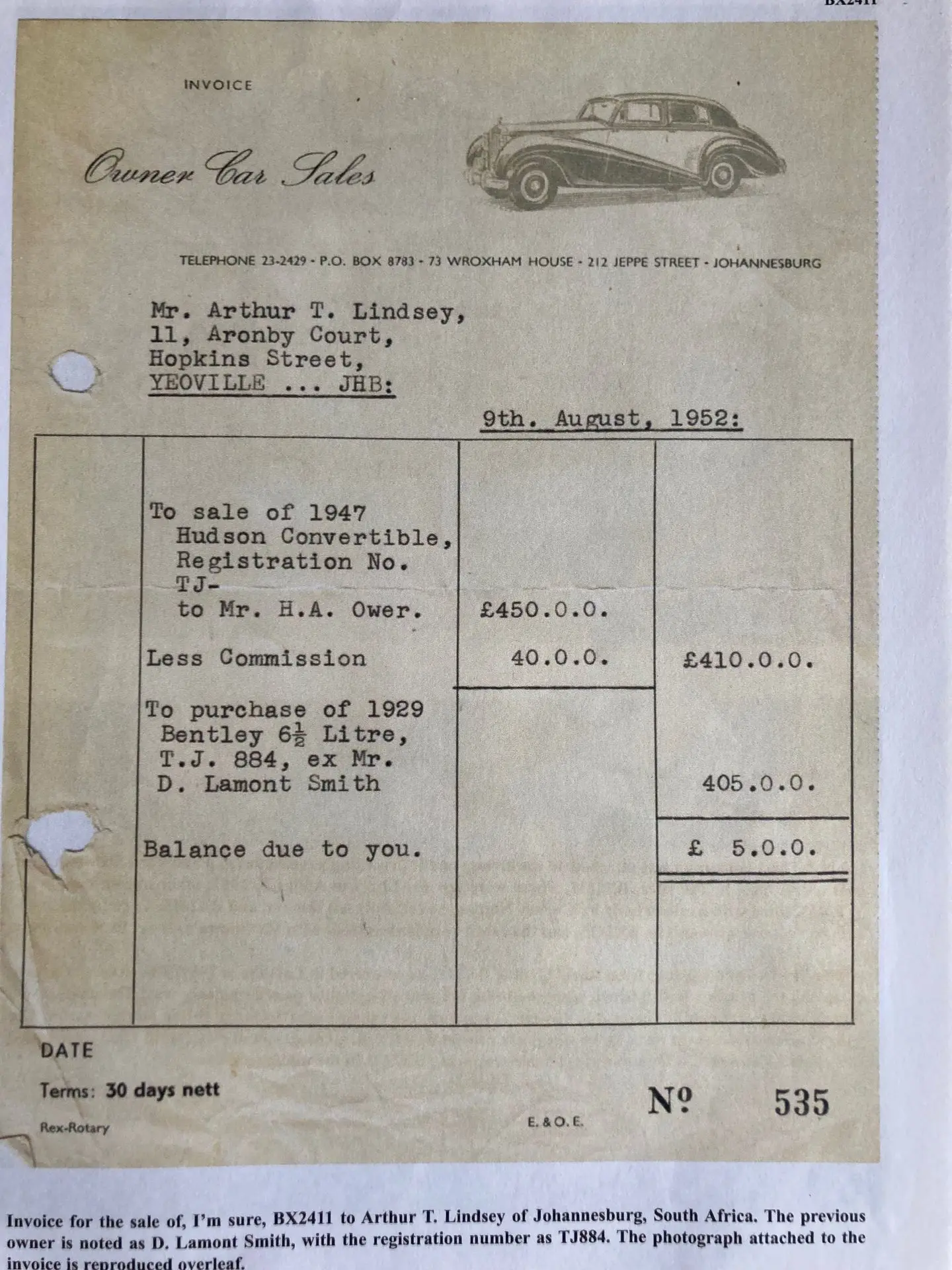
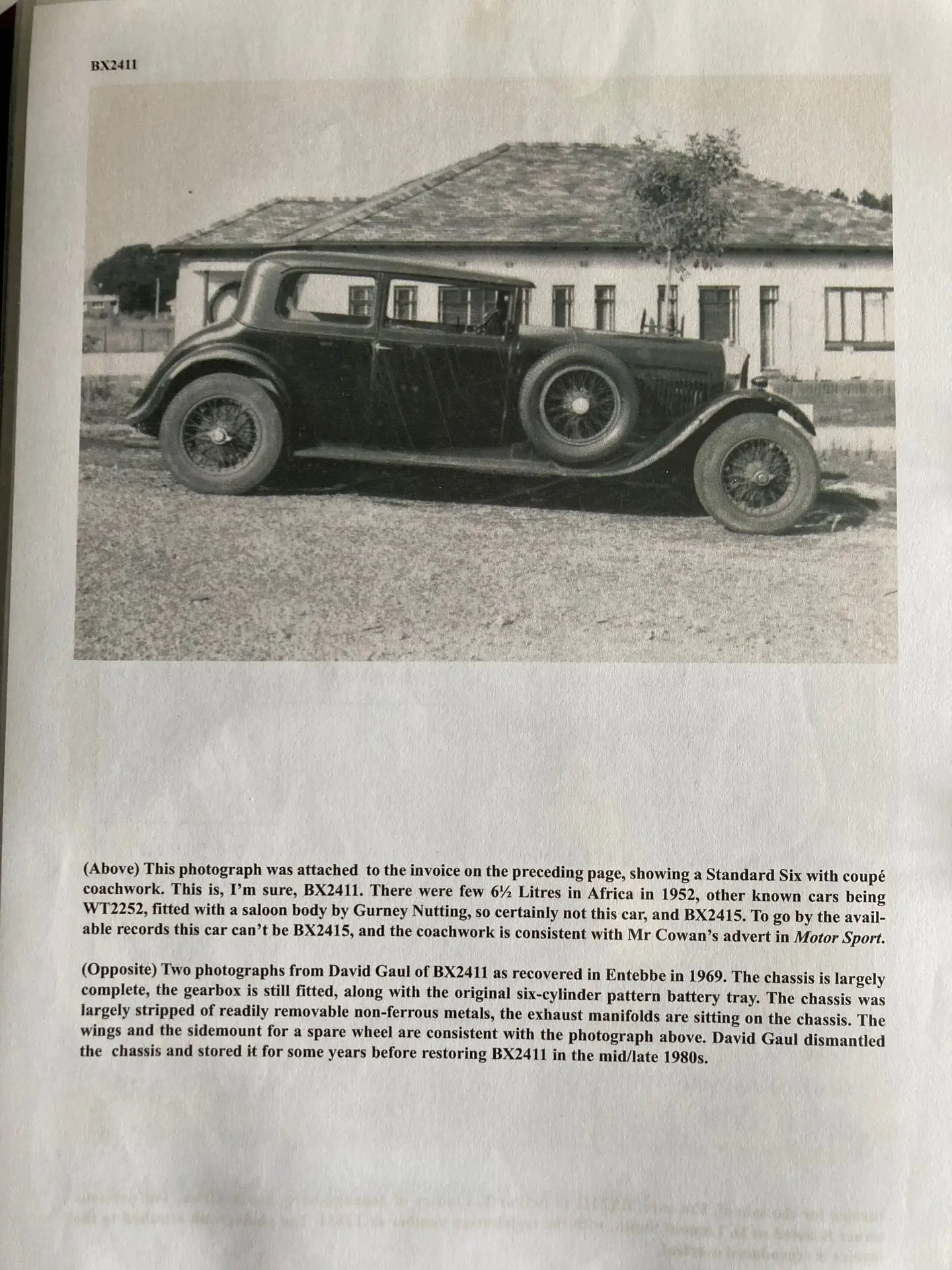
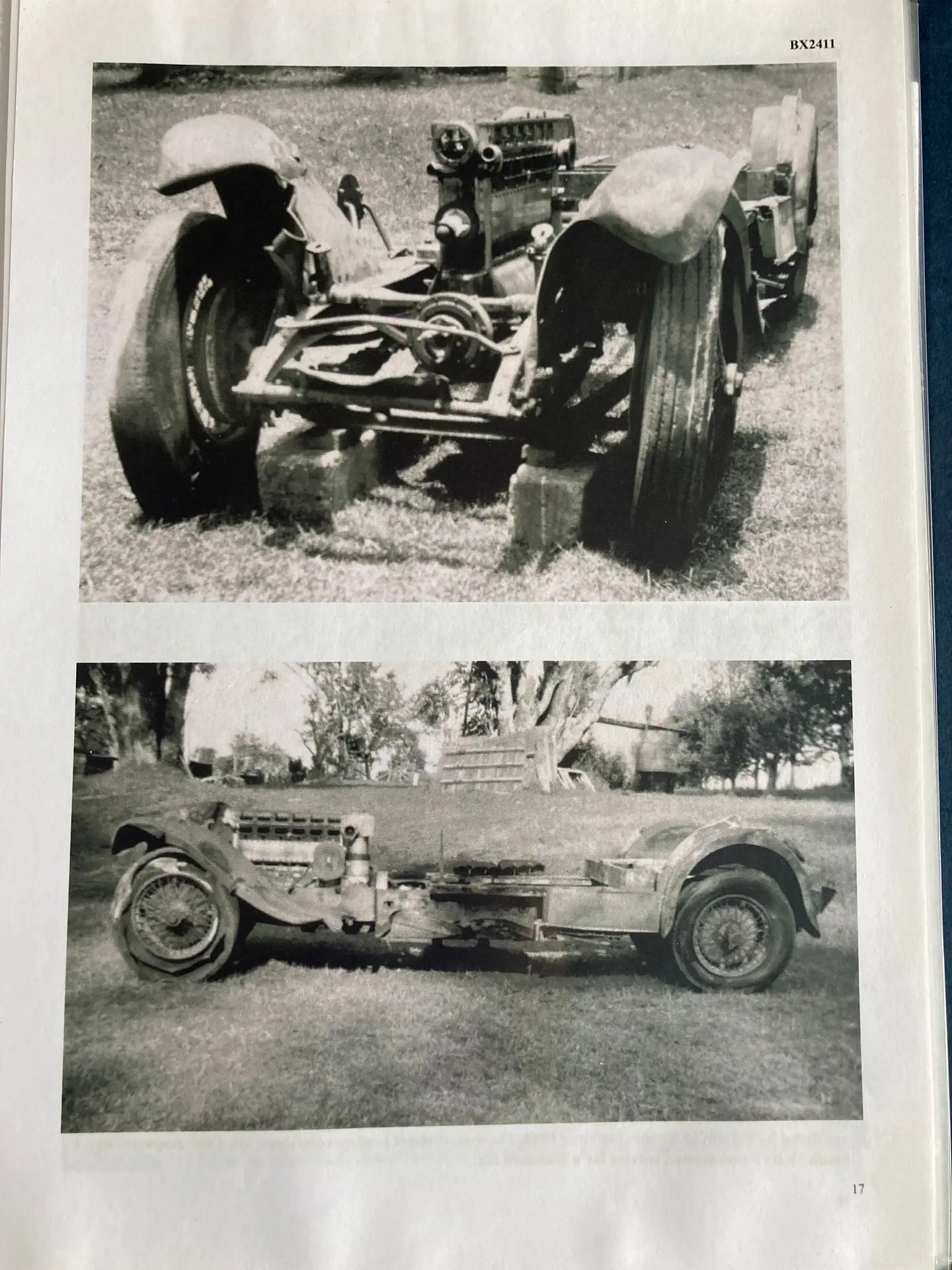
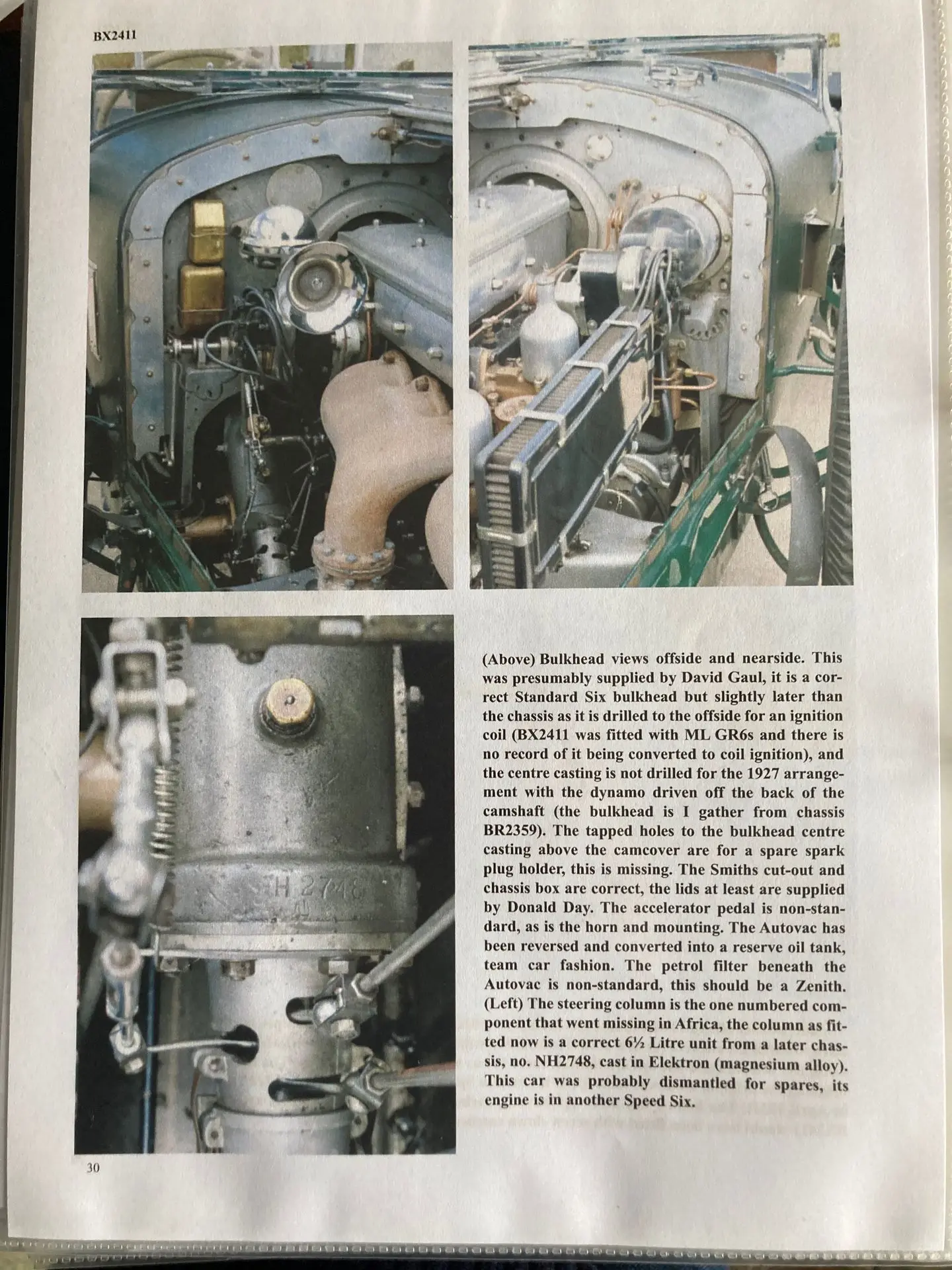
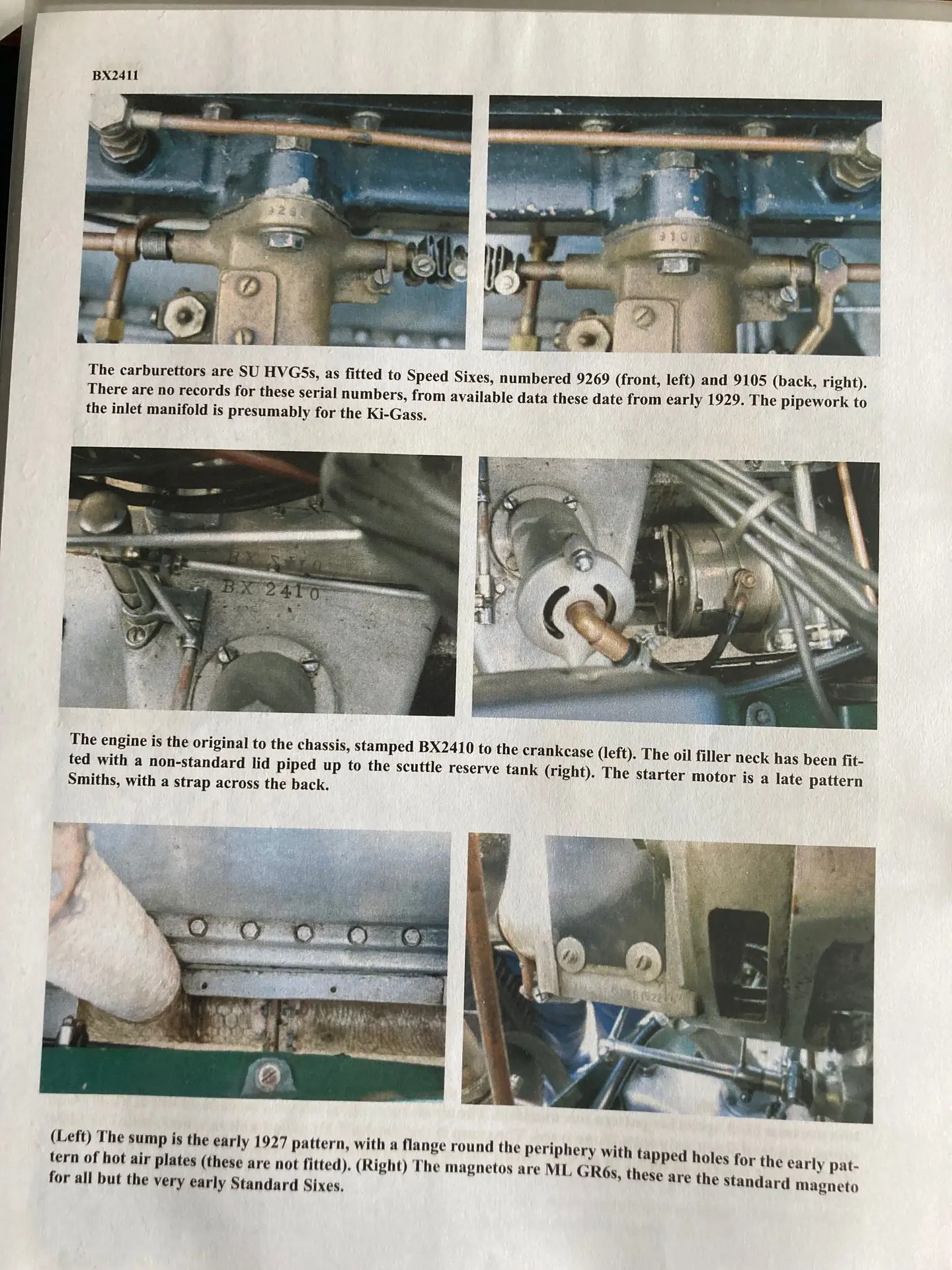
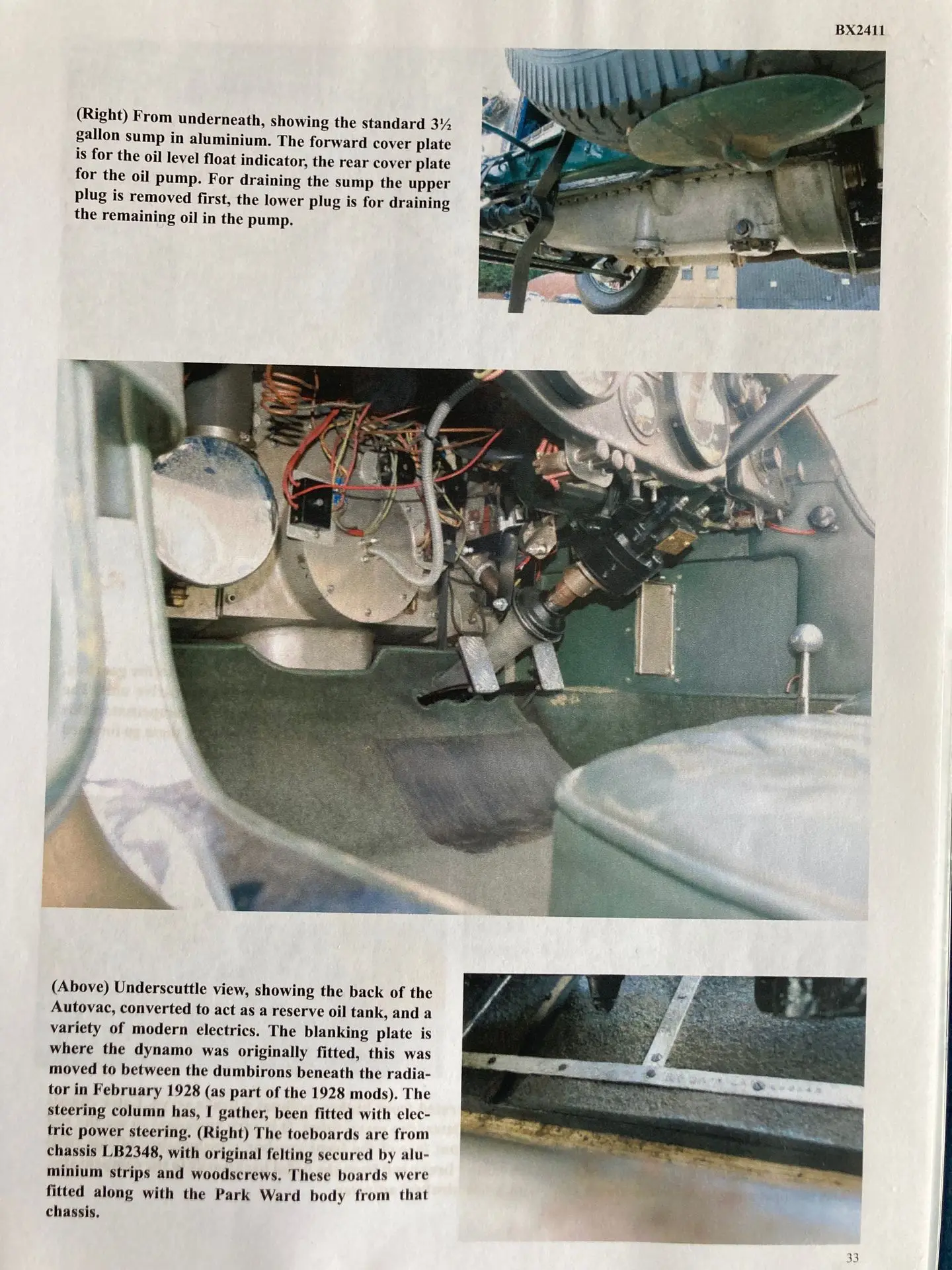
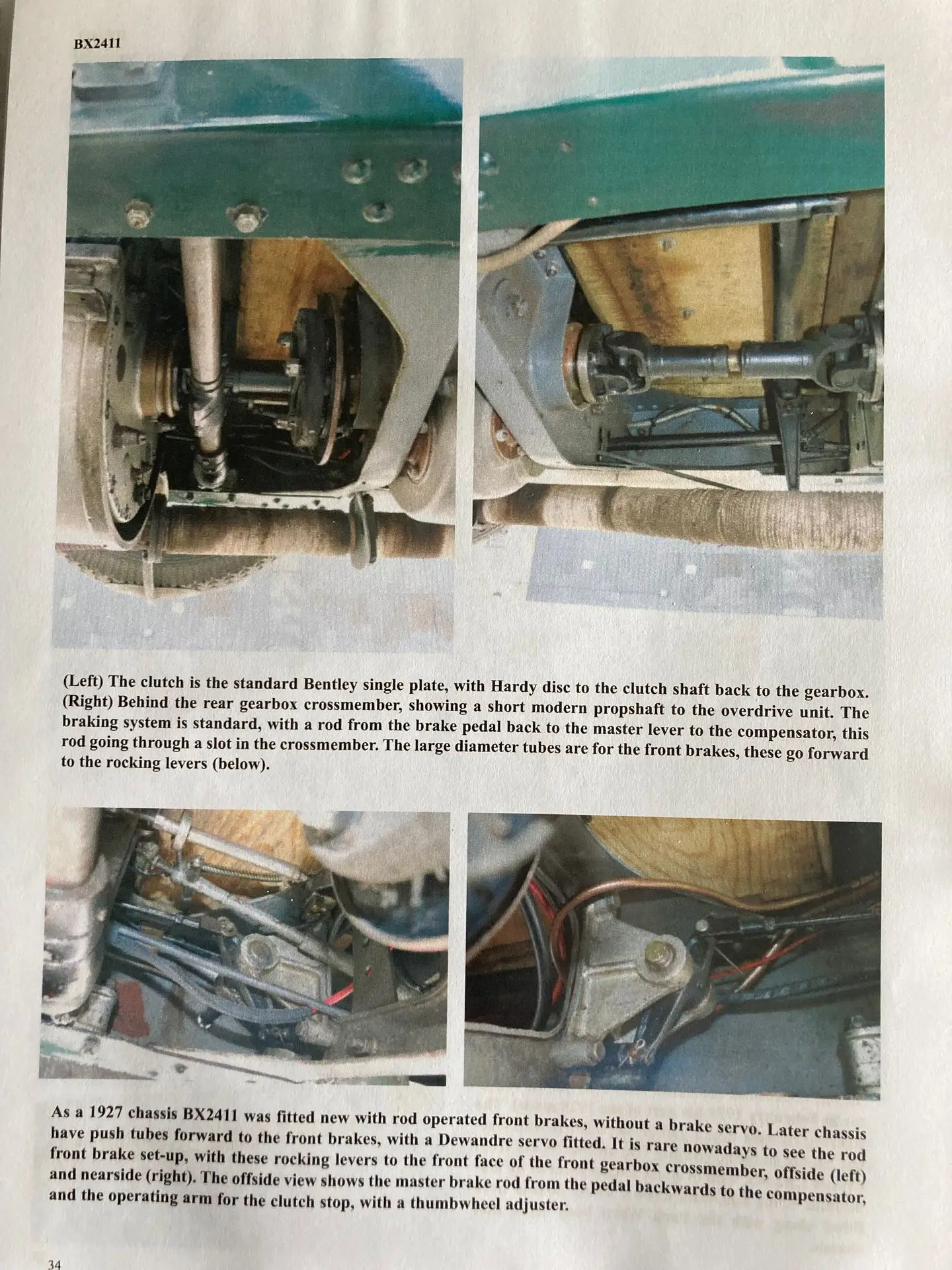
Before embarking on a project of this scale, it was essential to understand precisely what the car was, where it had been, and how it had evolved over time. Crucially, the report was completed before the present Harrison reconstruction began, giving us an independent assessment of BX2411 as it existed before Anthony's ownership and the 2019–22 project.
Read the Full 2018 Claire Hay Report
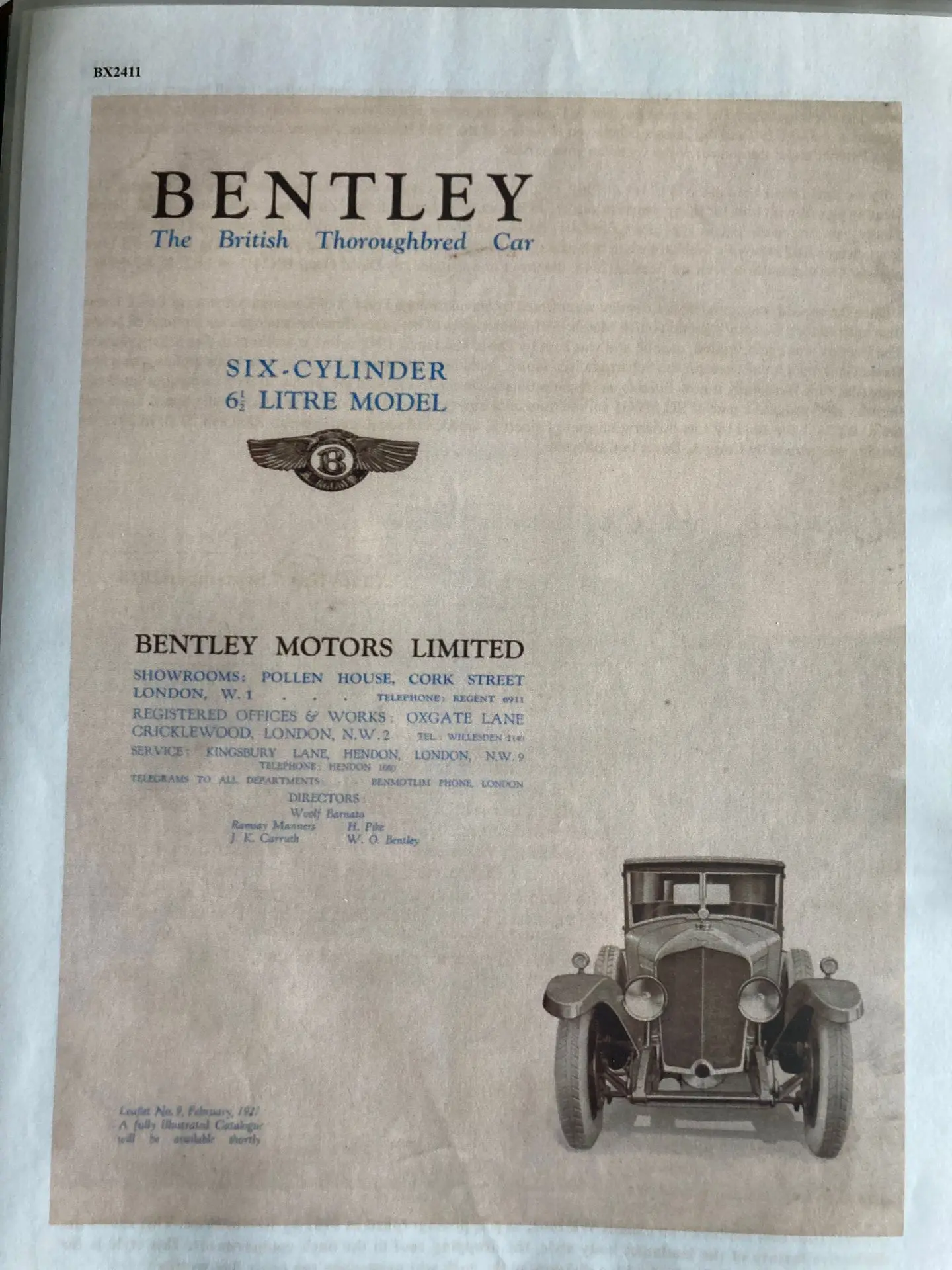
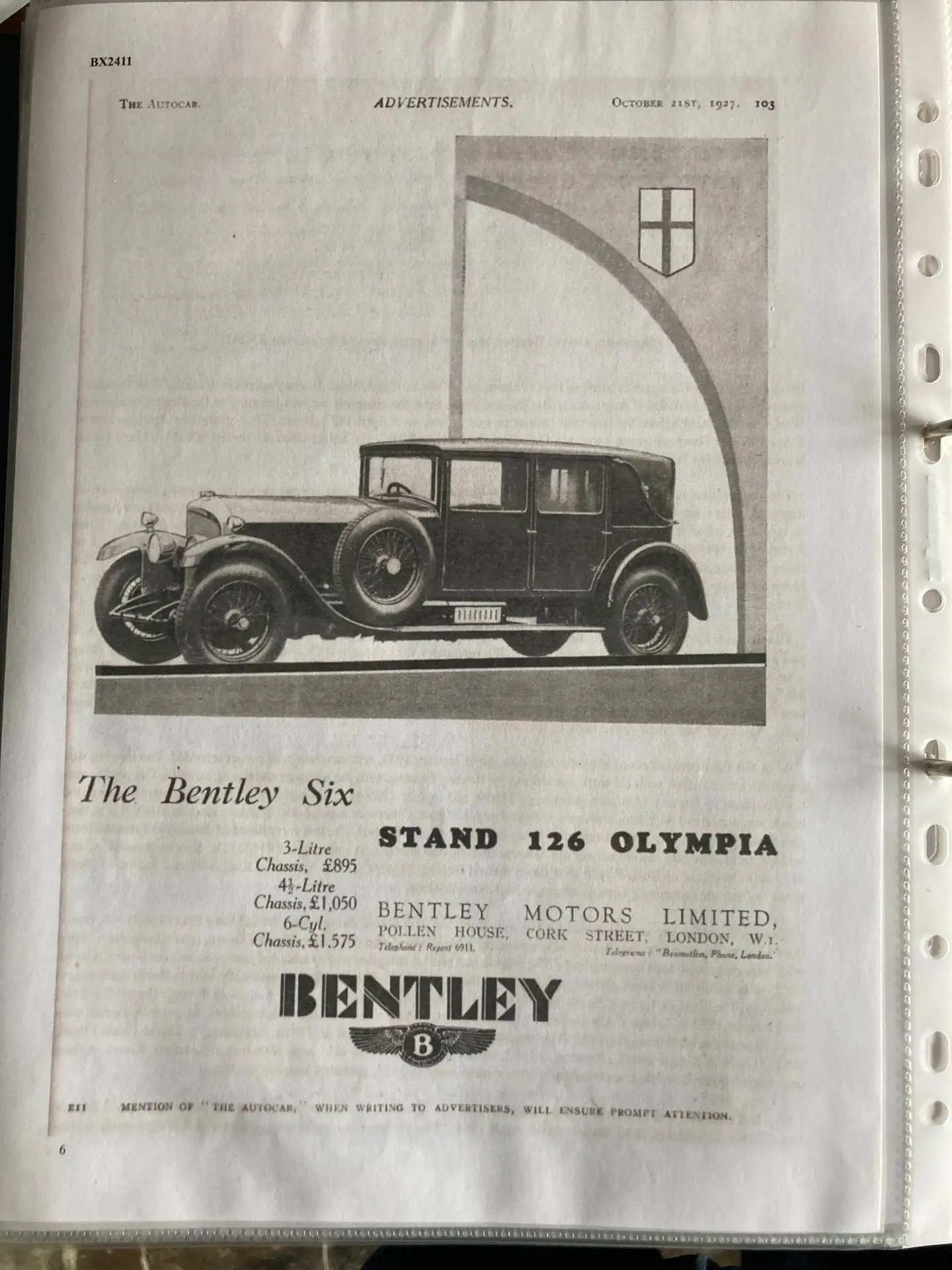
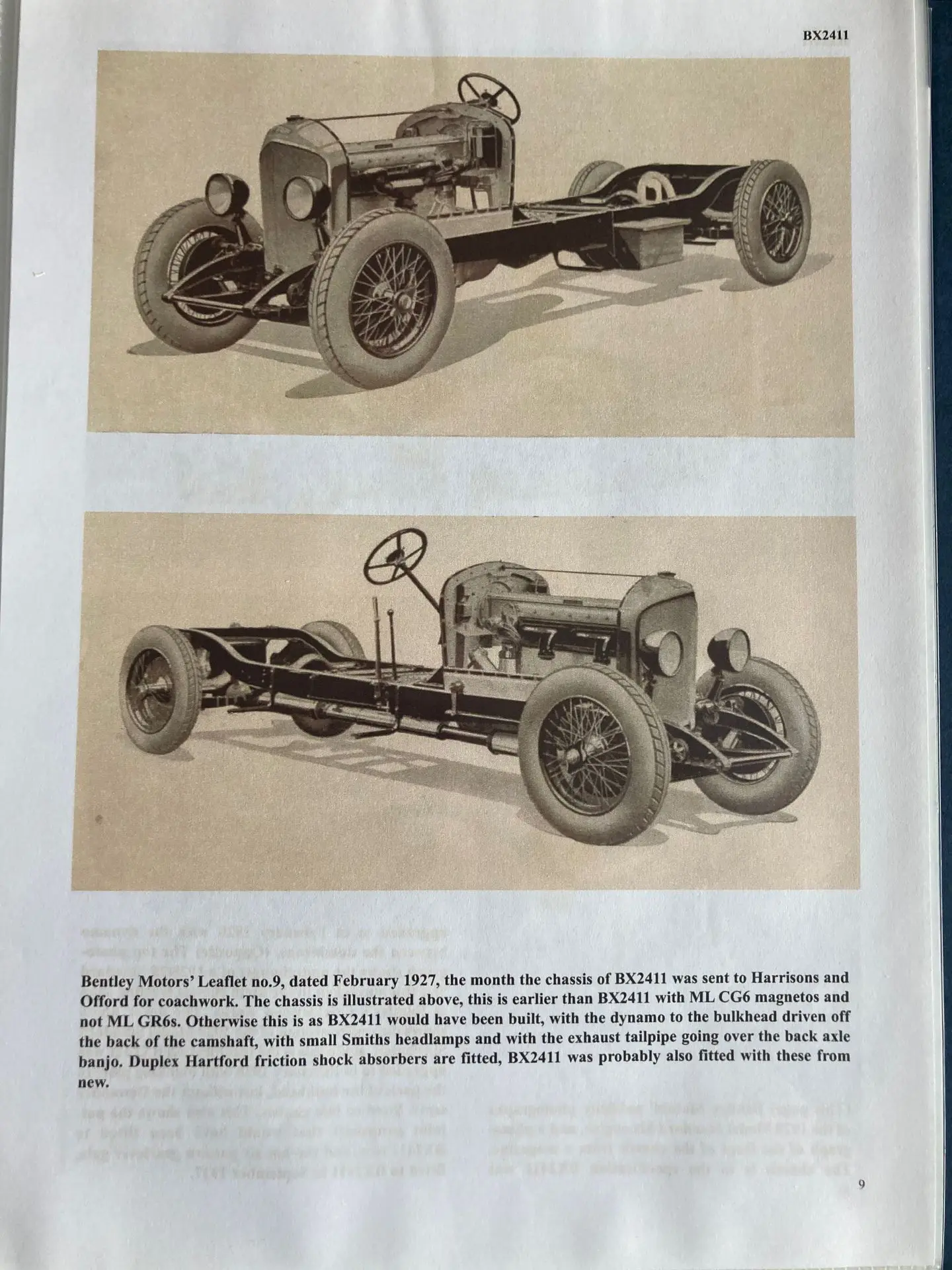
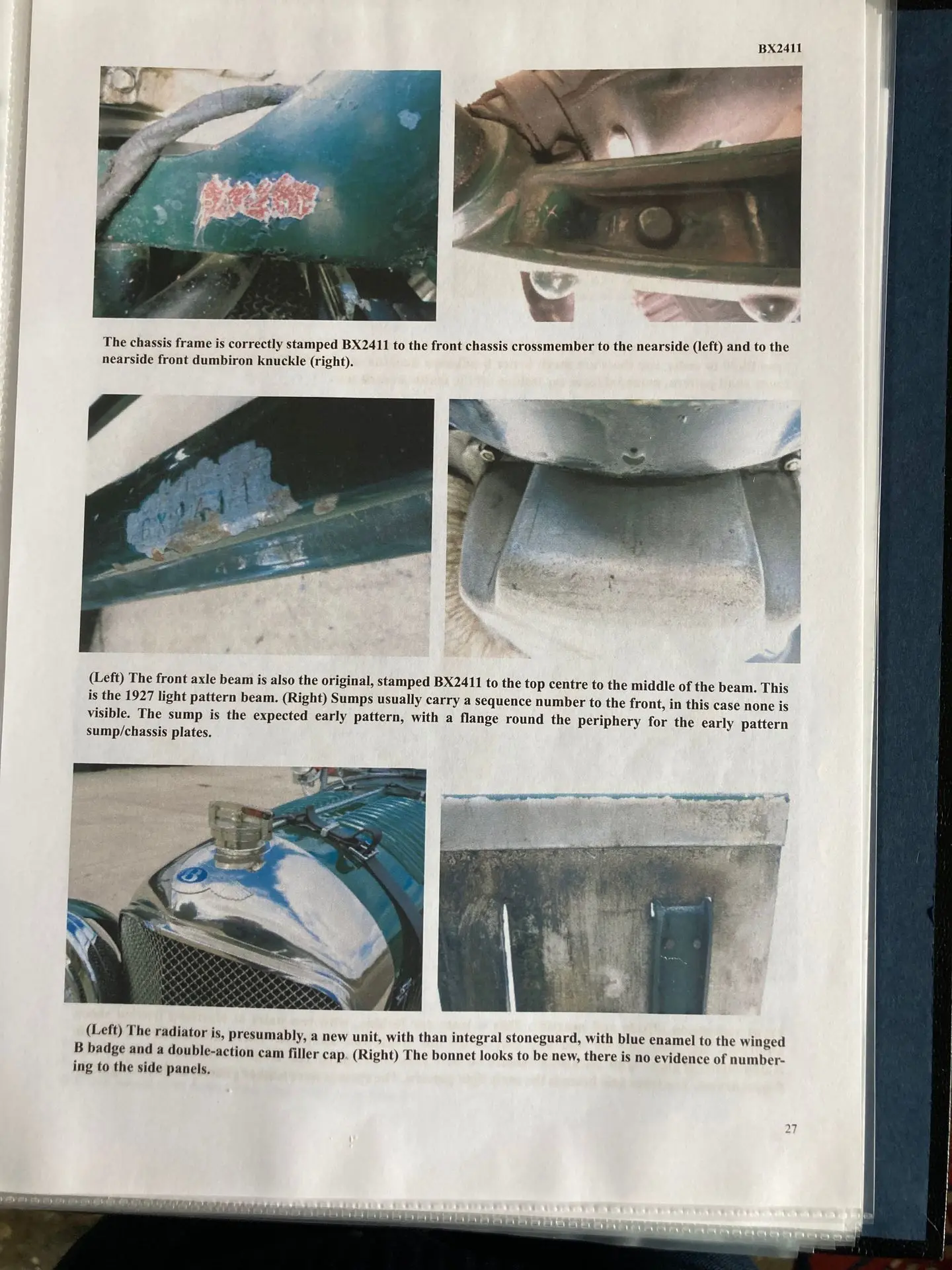
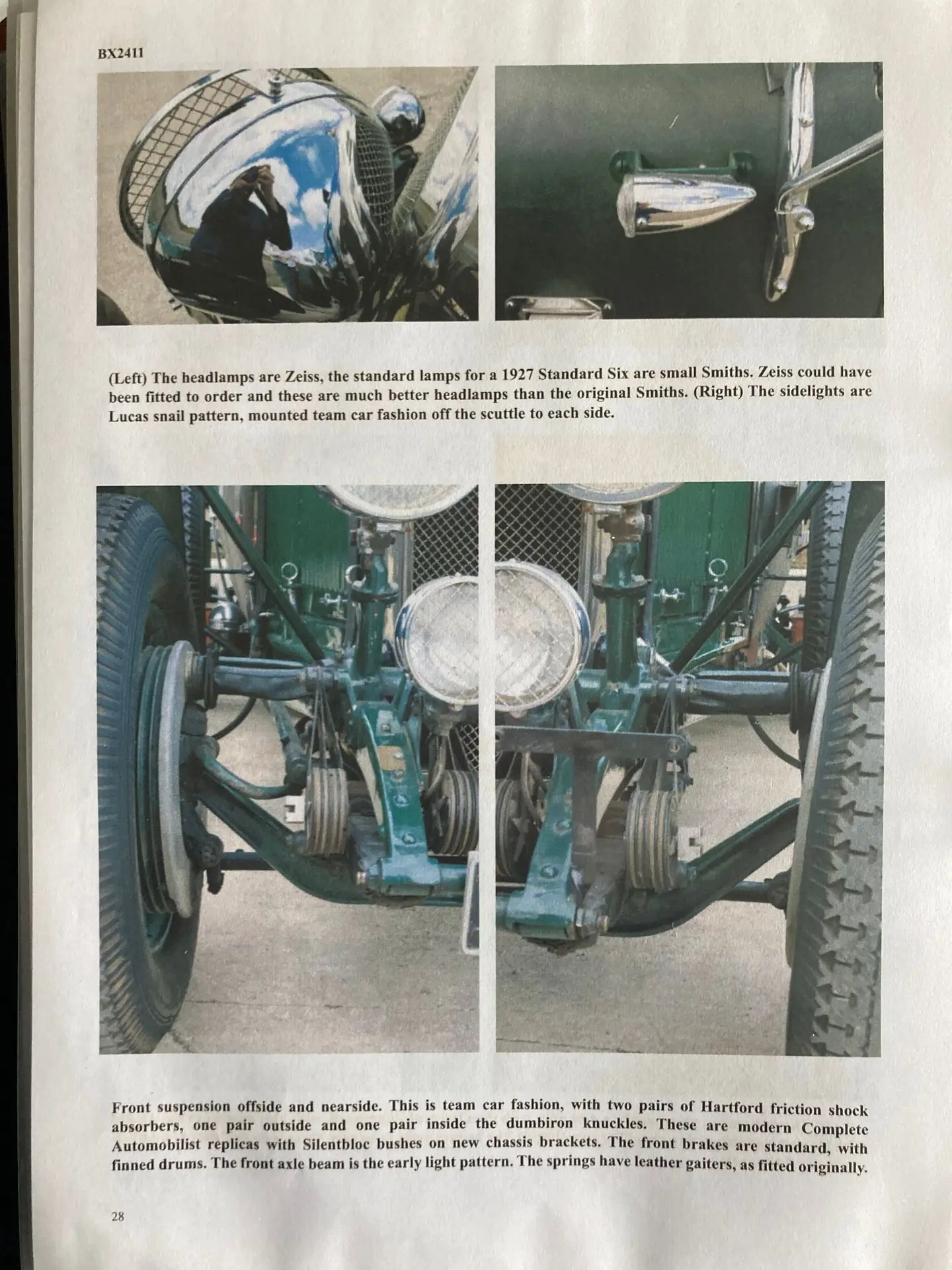
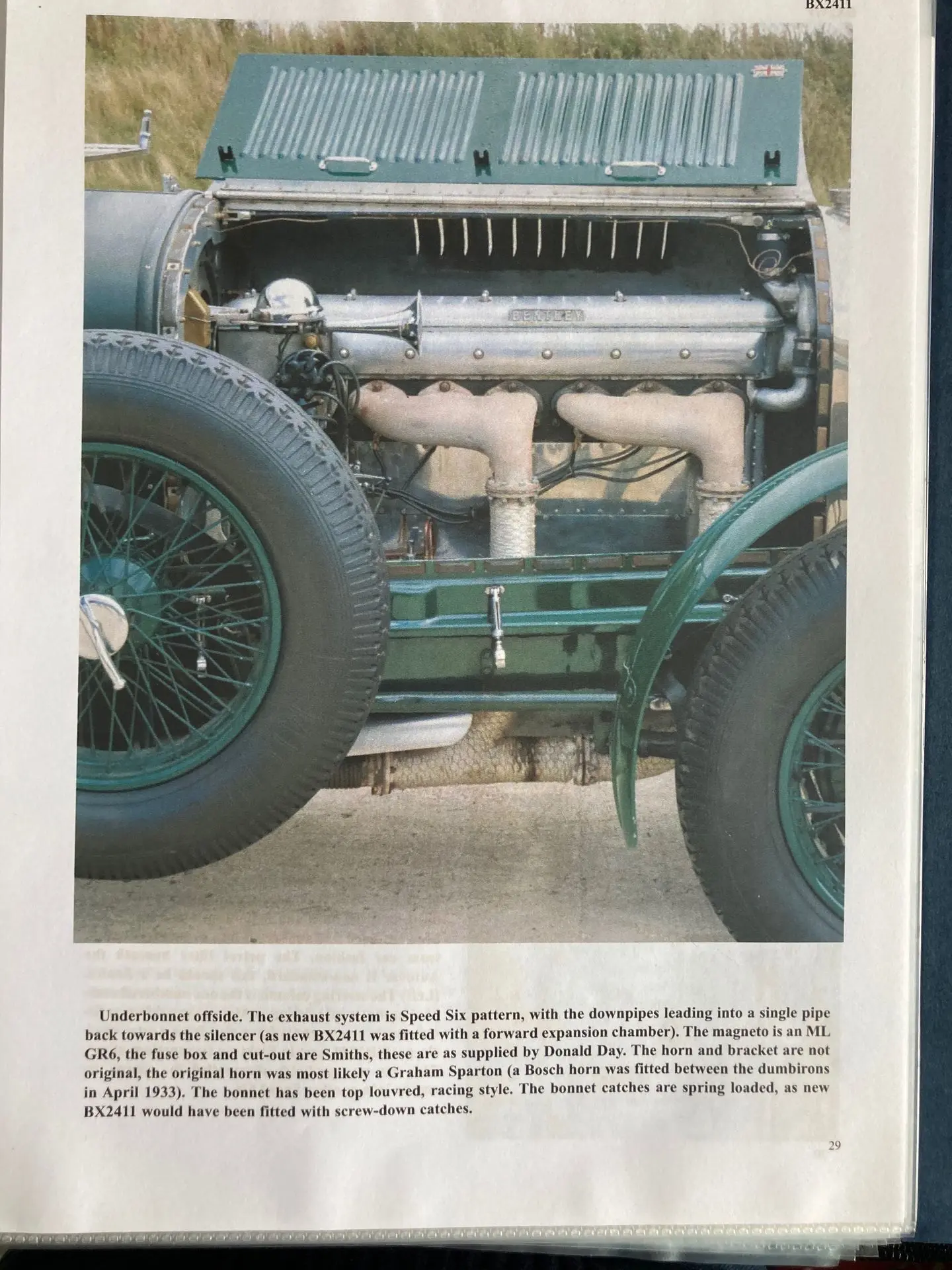
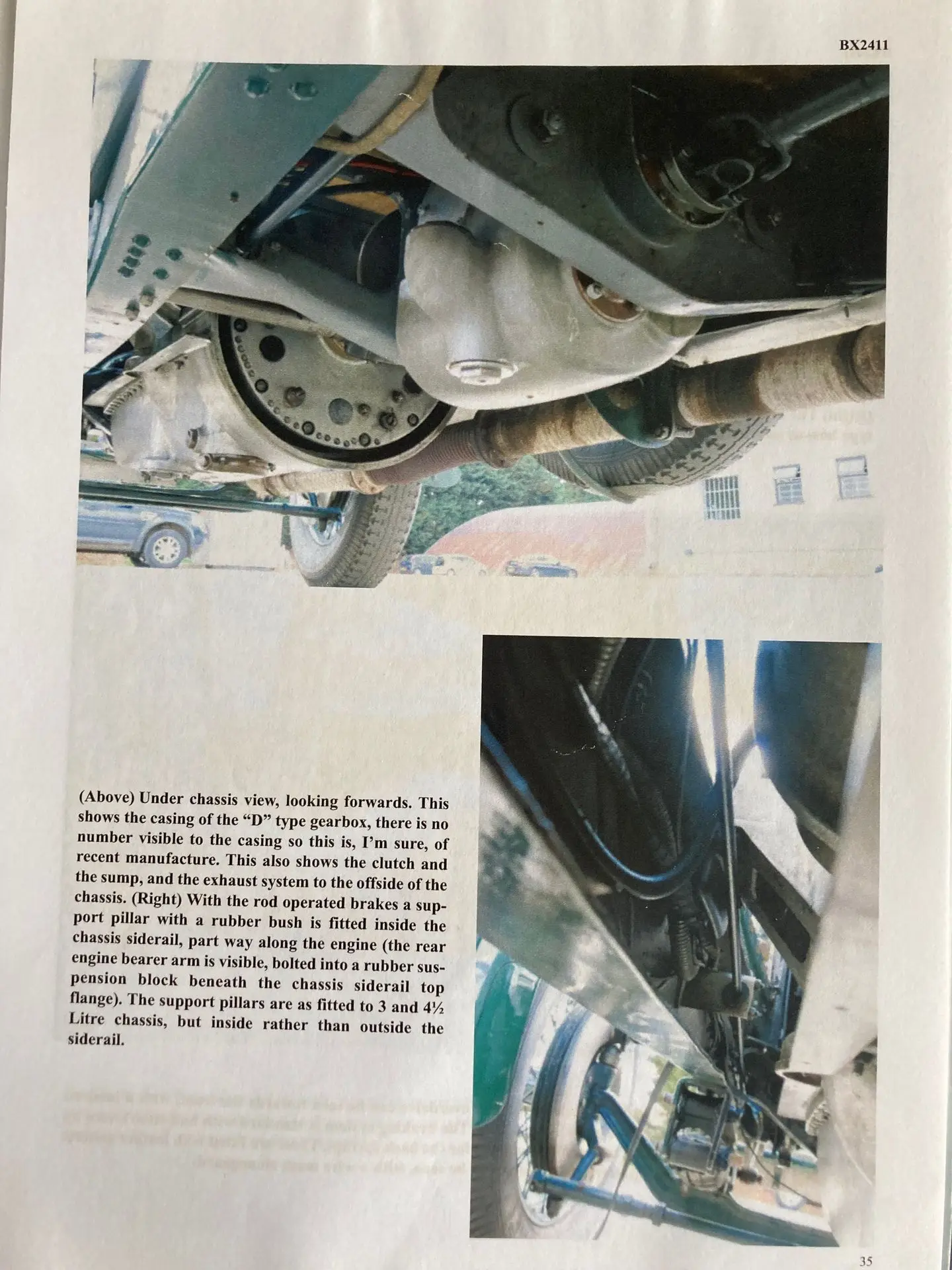
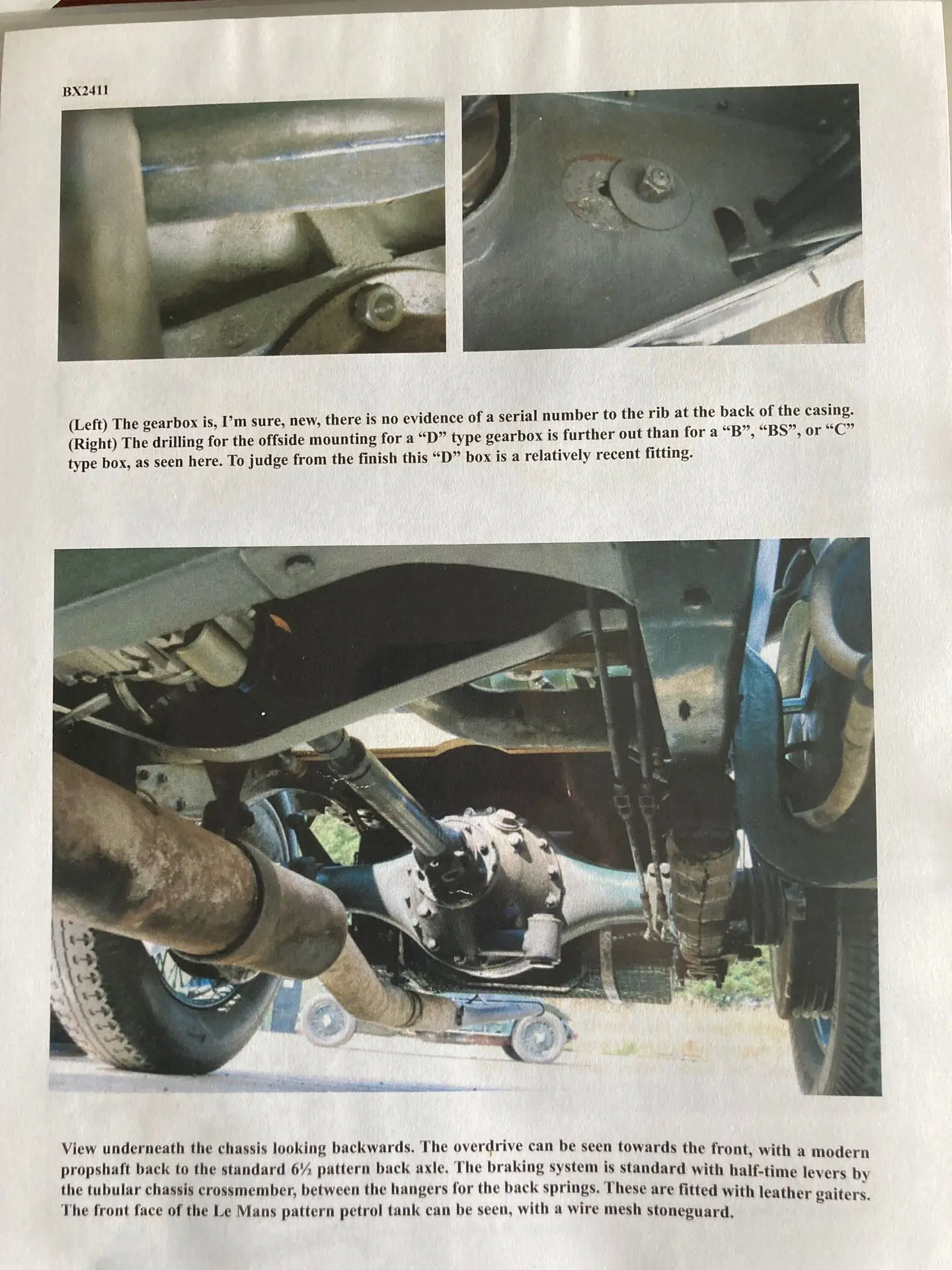
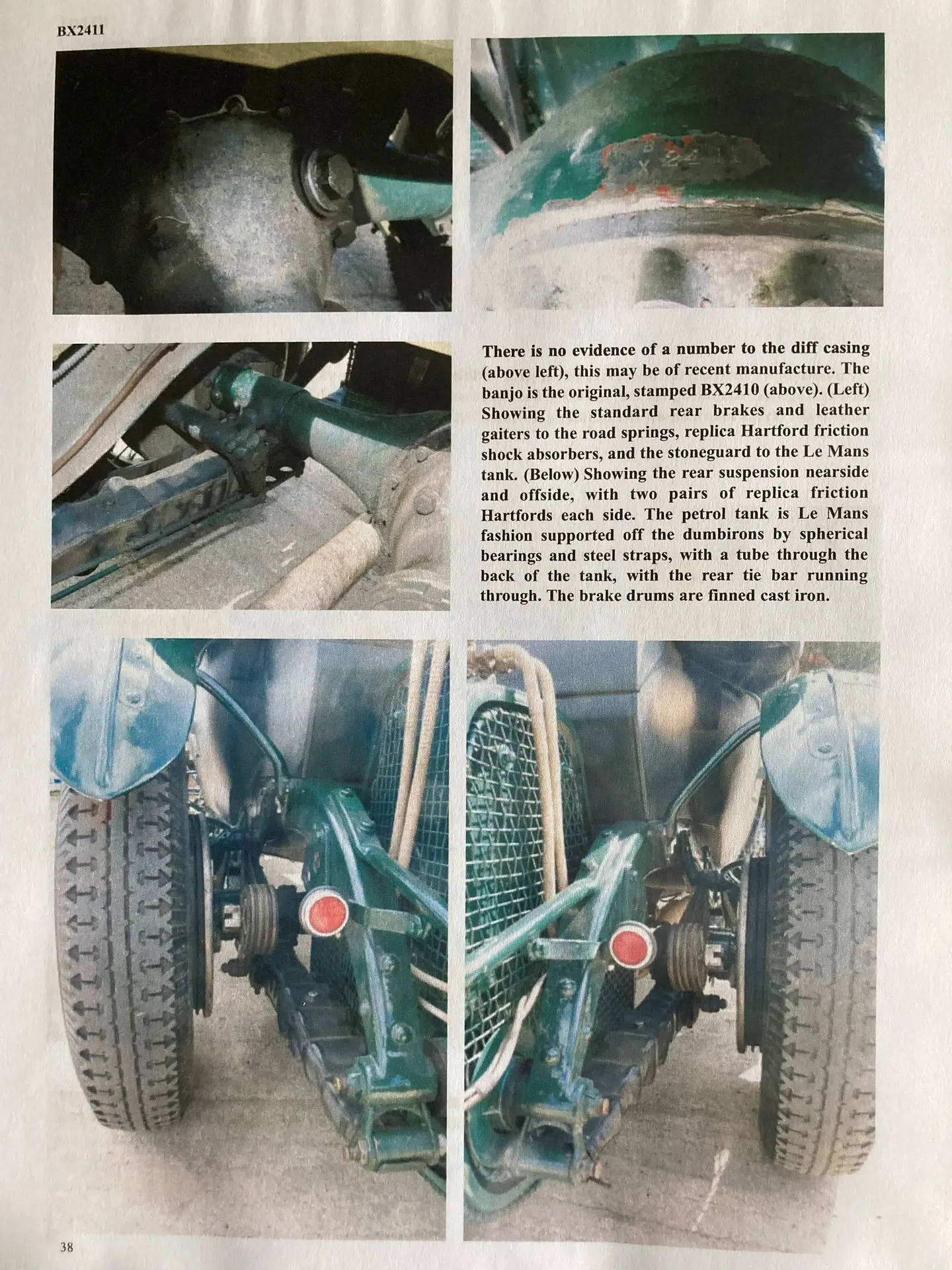
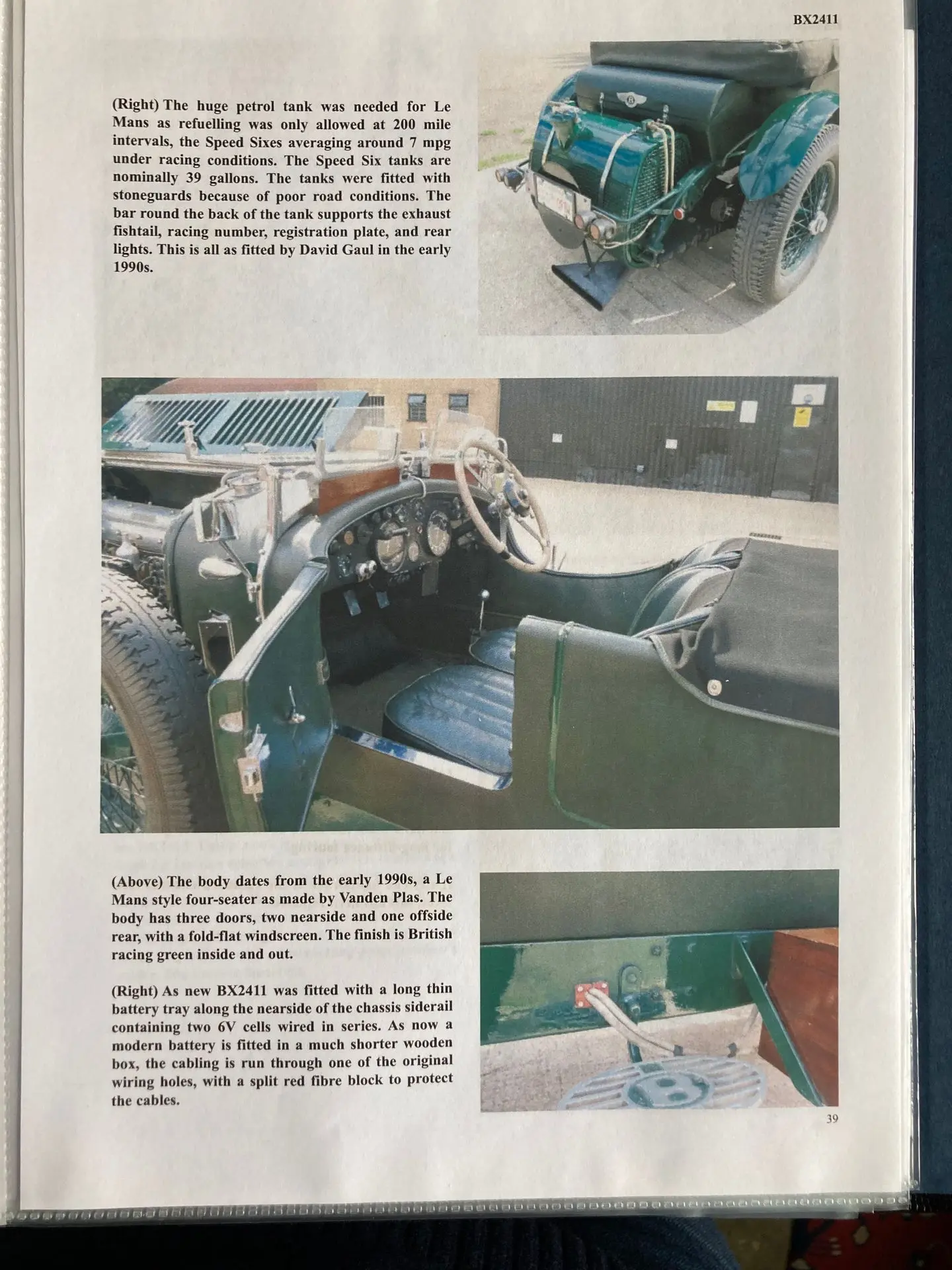
The complete report is reproduced below in the interests of transparency. It should be read as Claire Hay's assessment of BX2411 in 2018, before the present reconstruction began.

To install this Web App in your iPhone/iPad press
 and then Add to Home Screen.
