Body Restoration
The Body: A Century of Reinvention
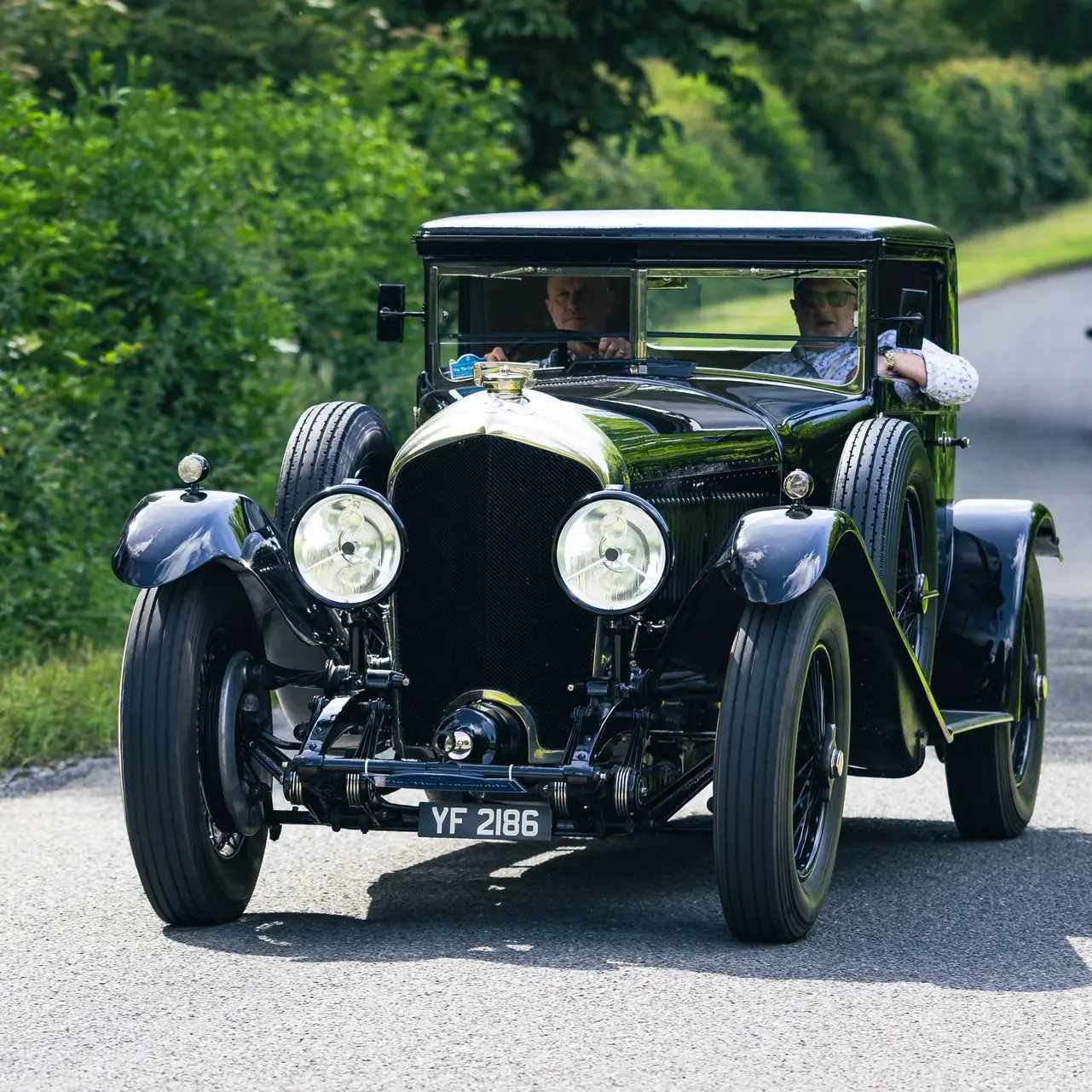
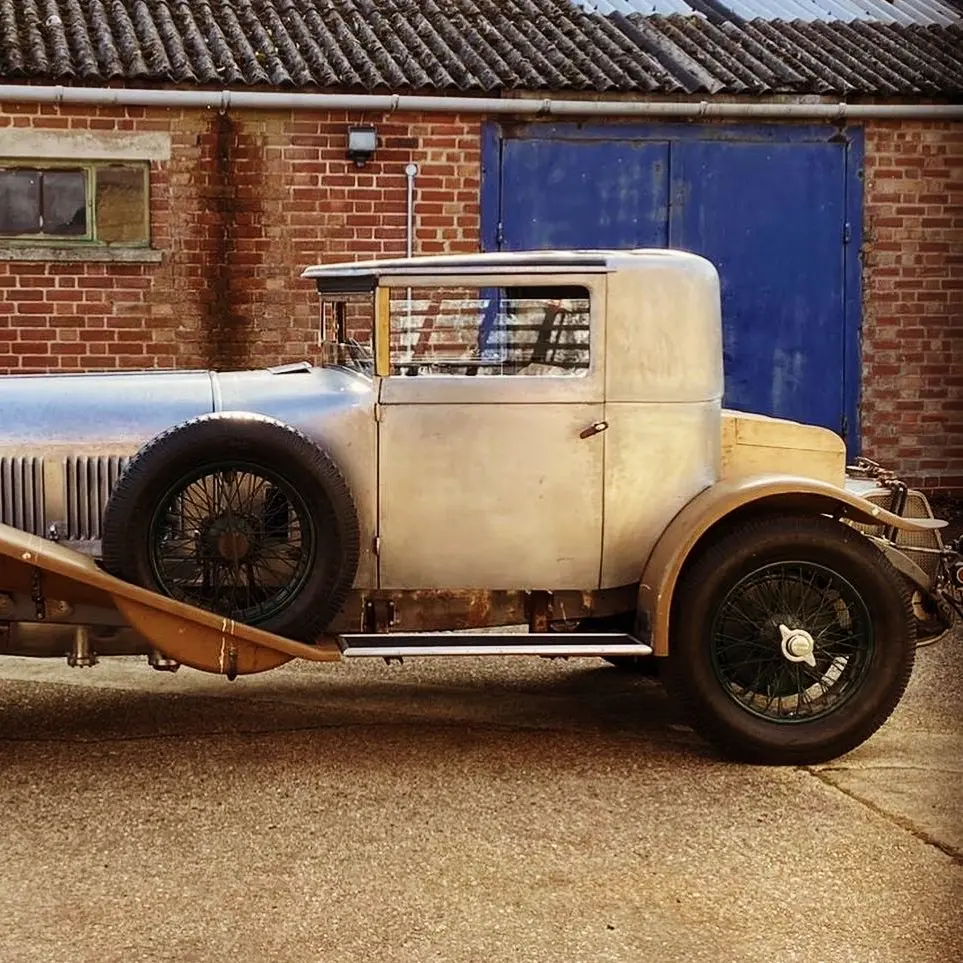
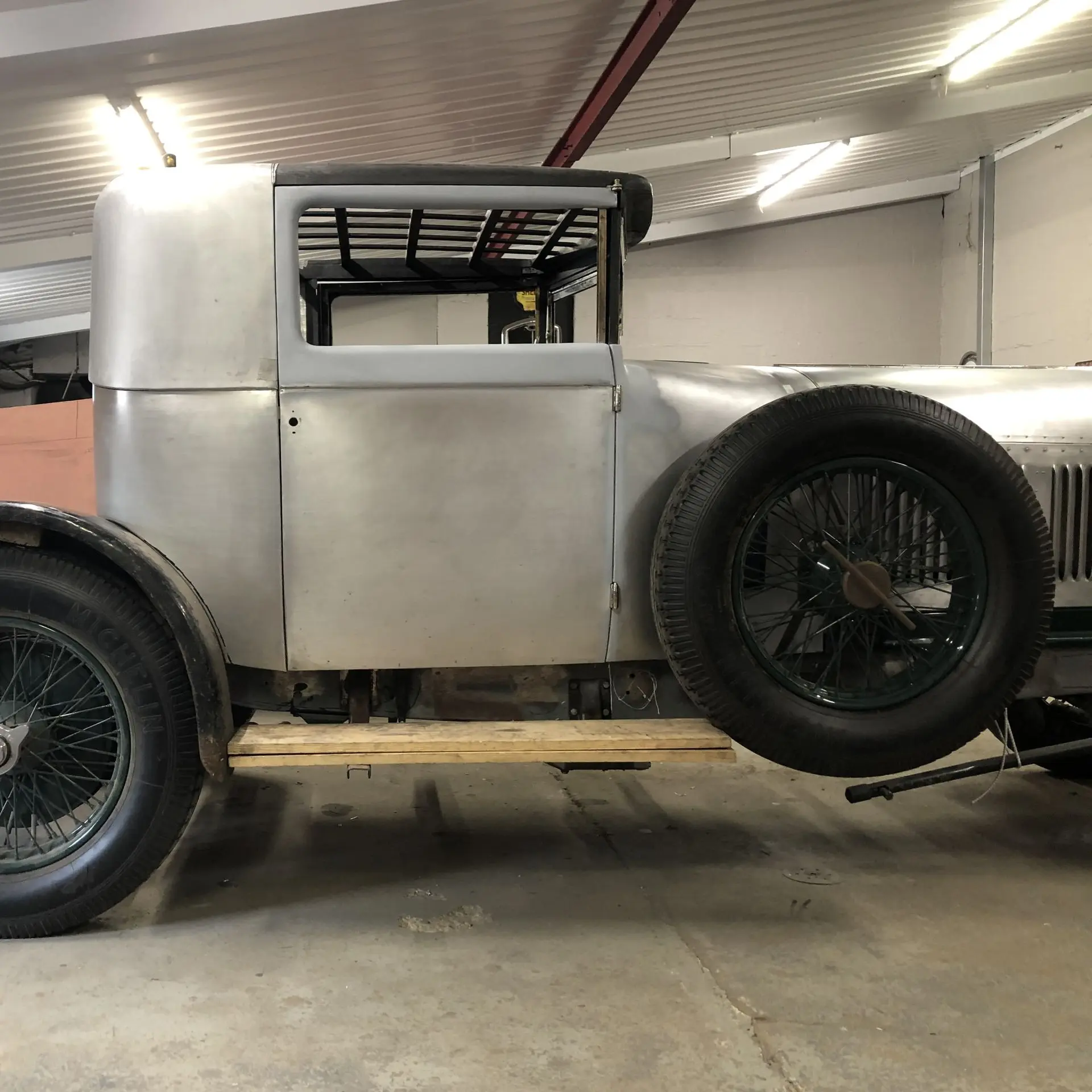
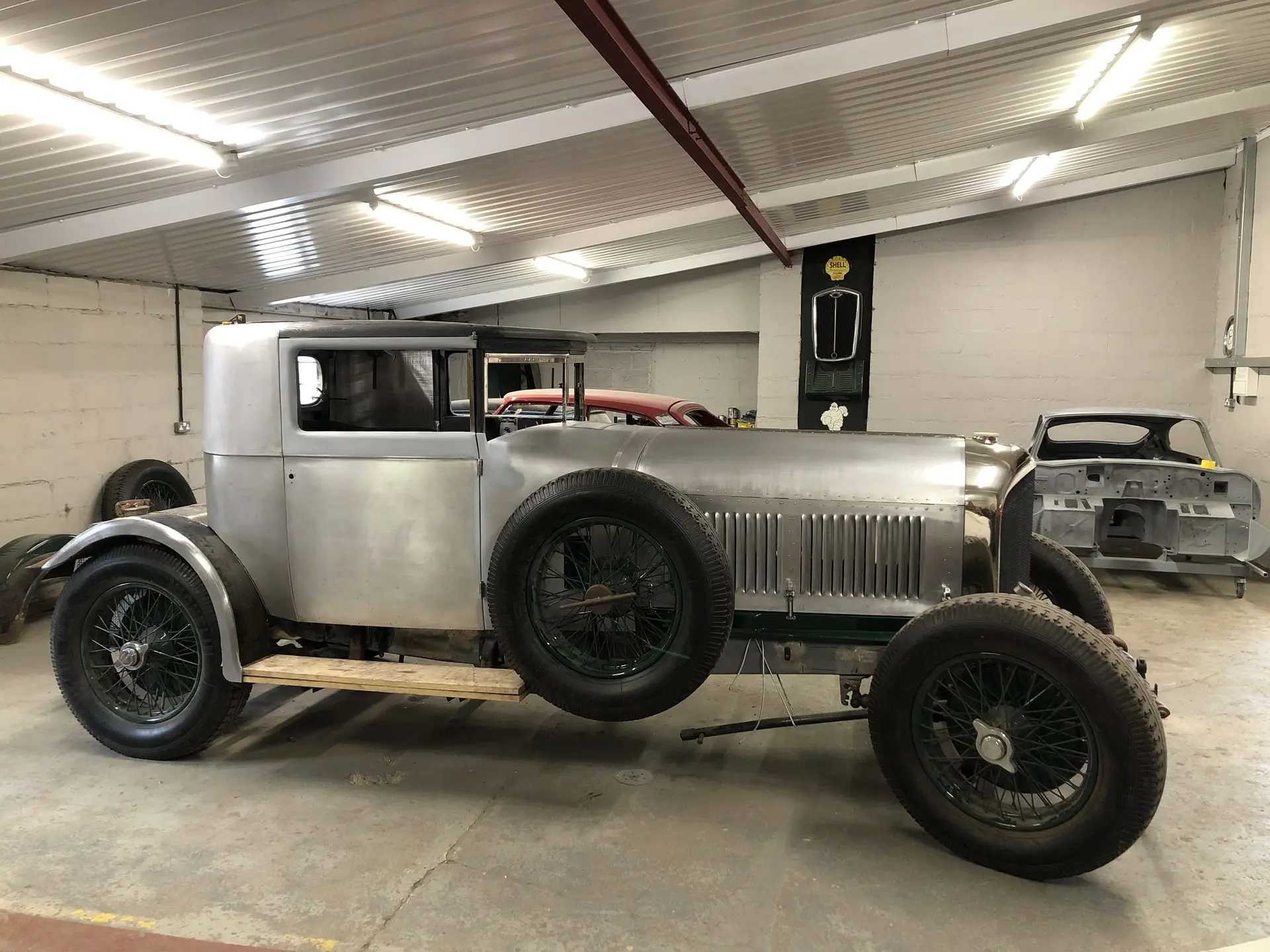
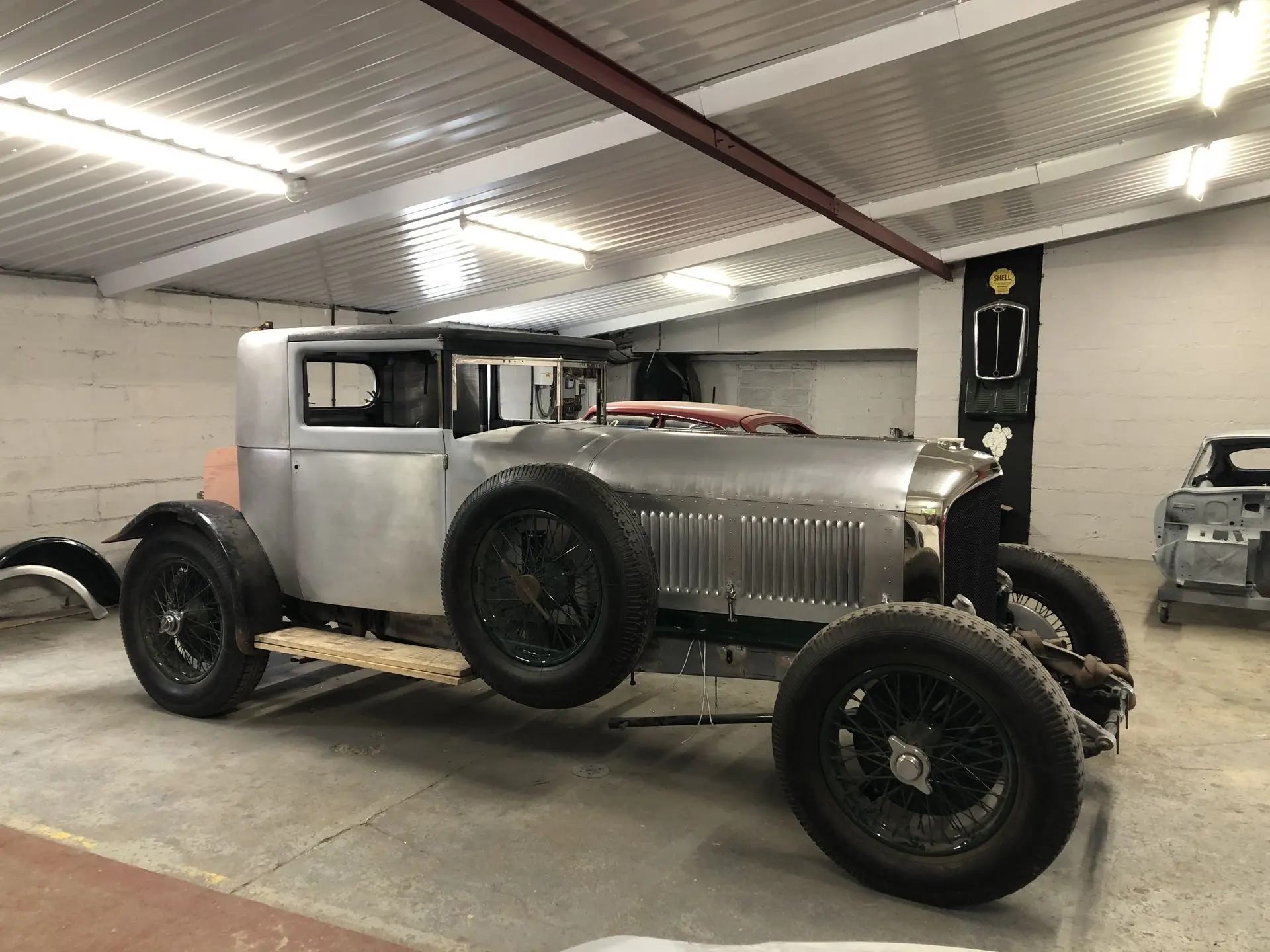
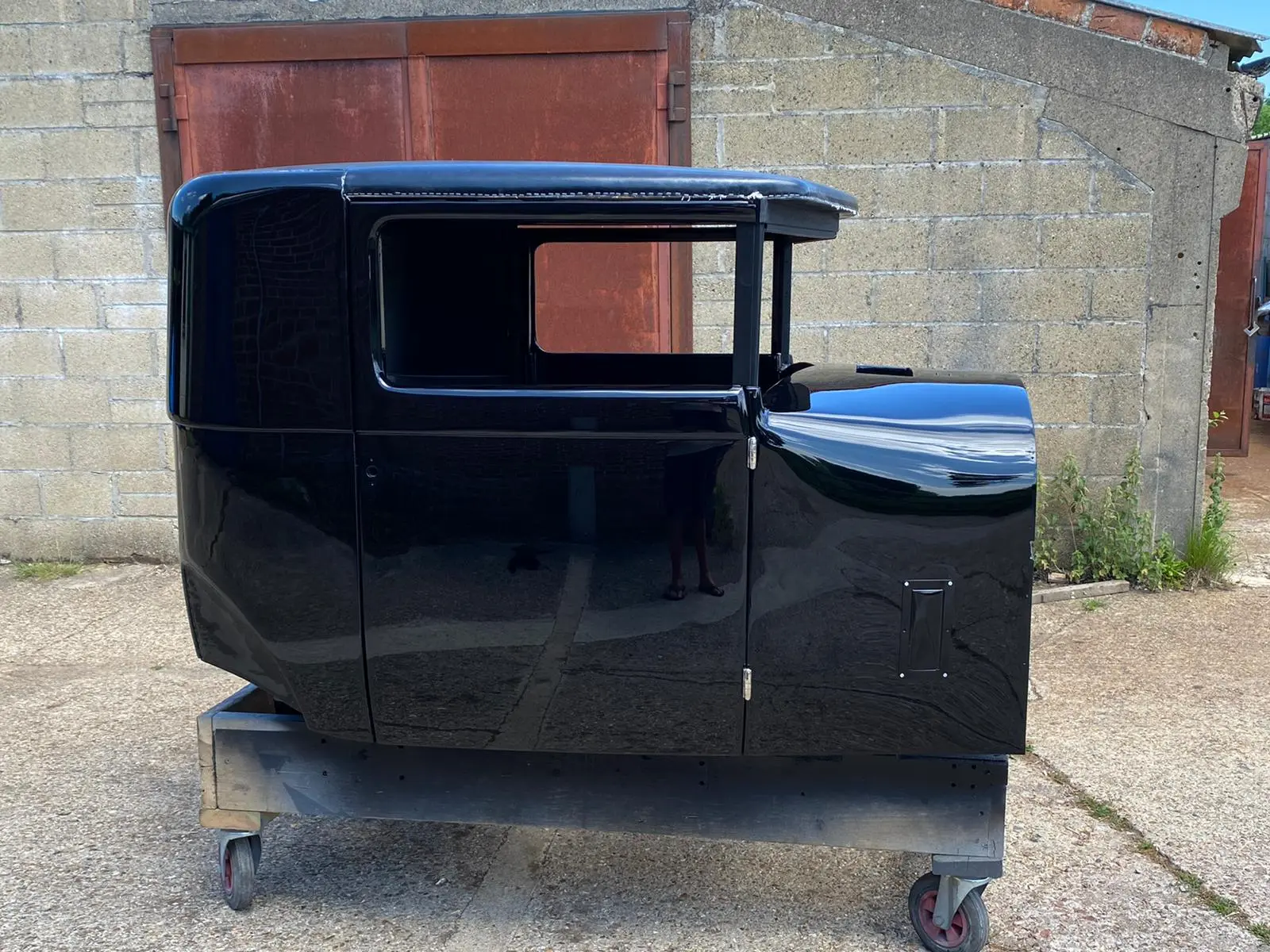
The defining visual feature of YF2186 today is its two-door fixed-head coupé coachwork by Harrisons. This is genuine period Bentley coachwork, but it is not the body originally fitted to BX2411.
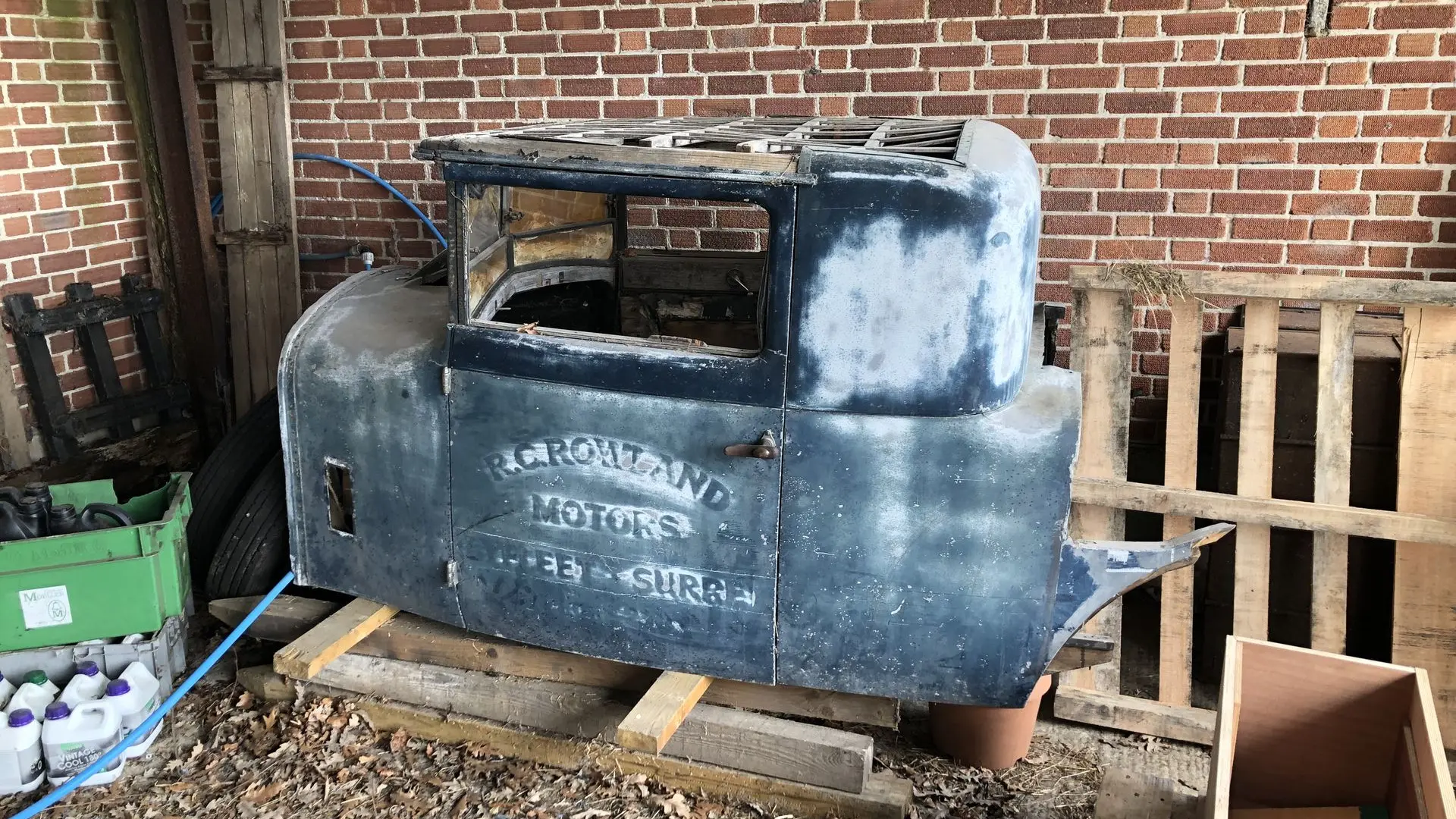
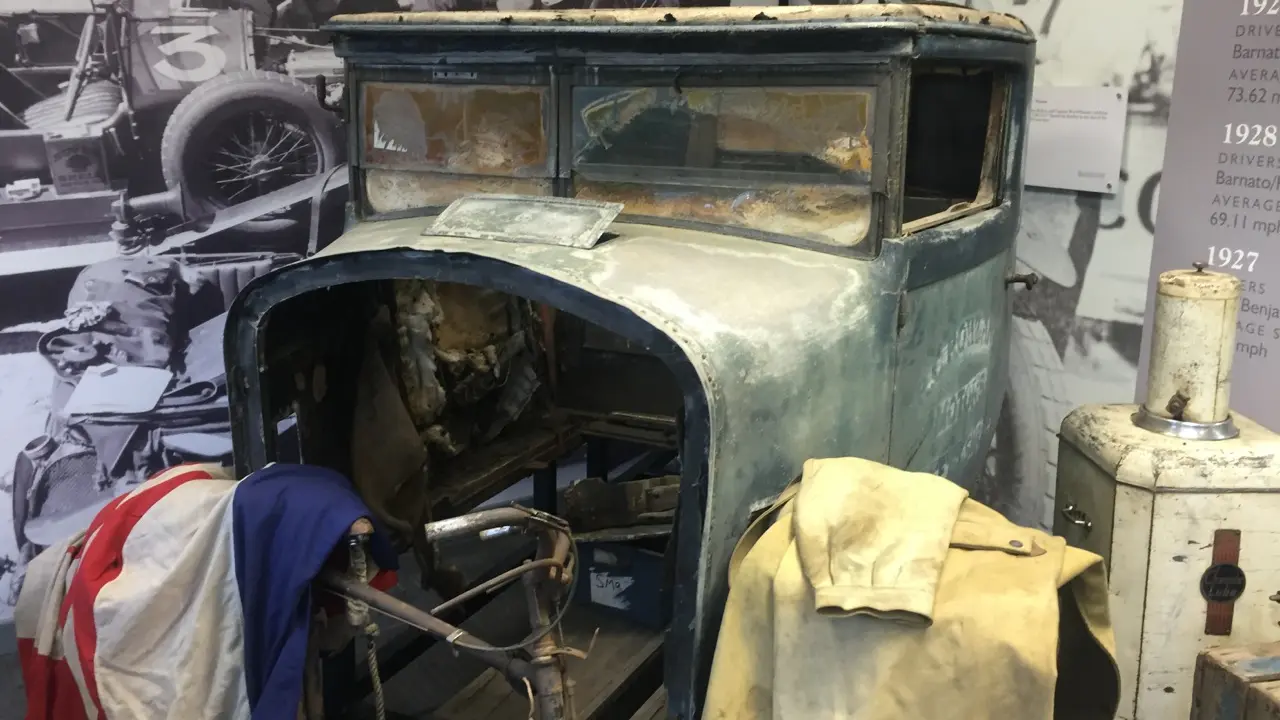
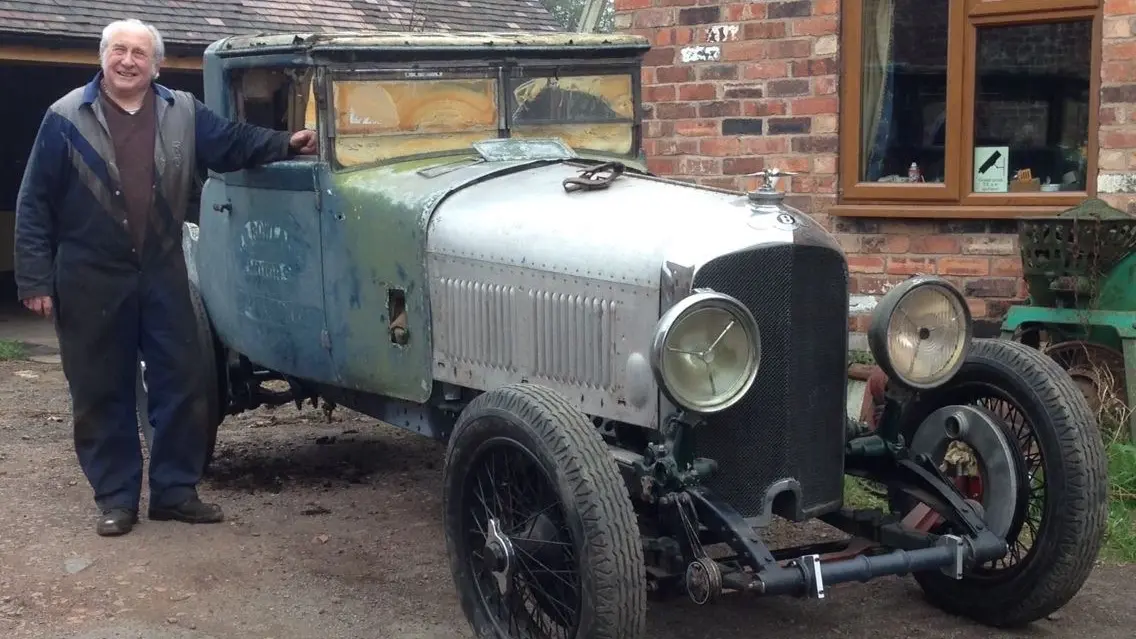
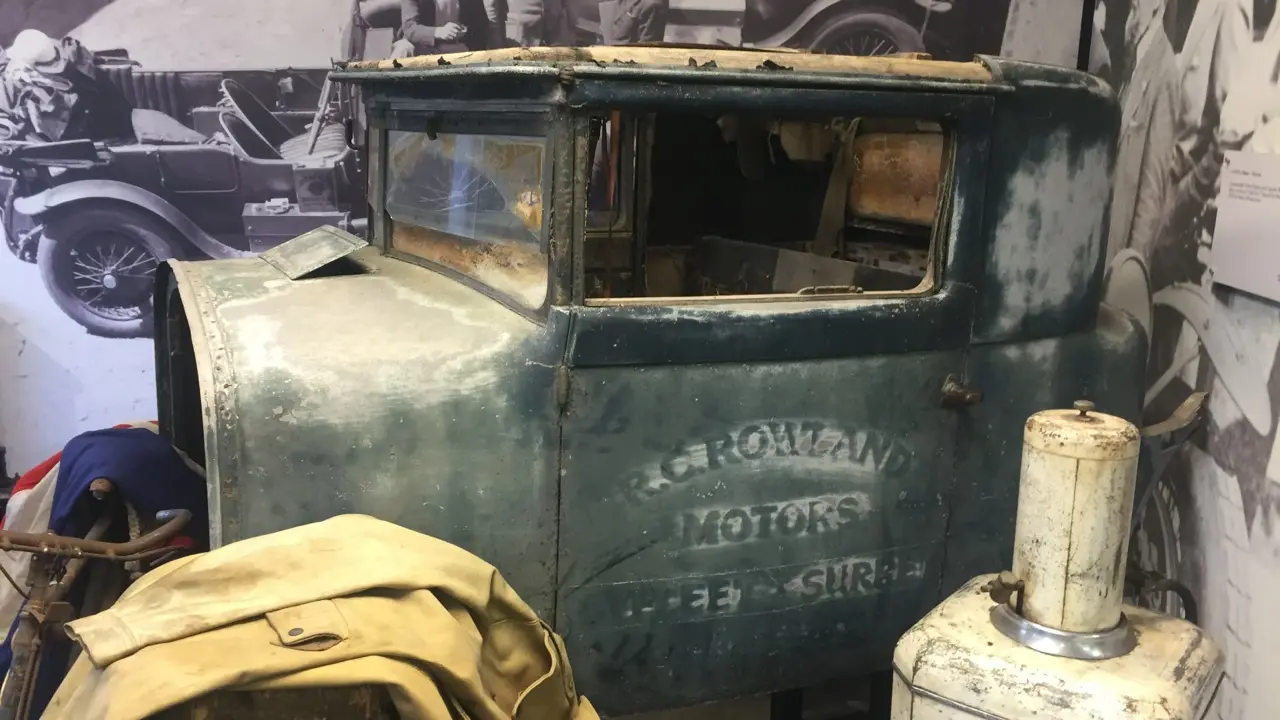
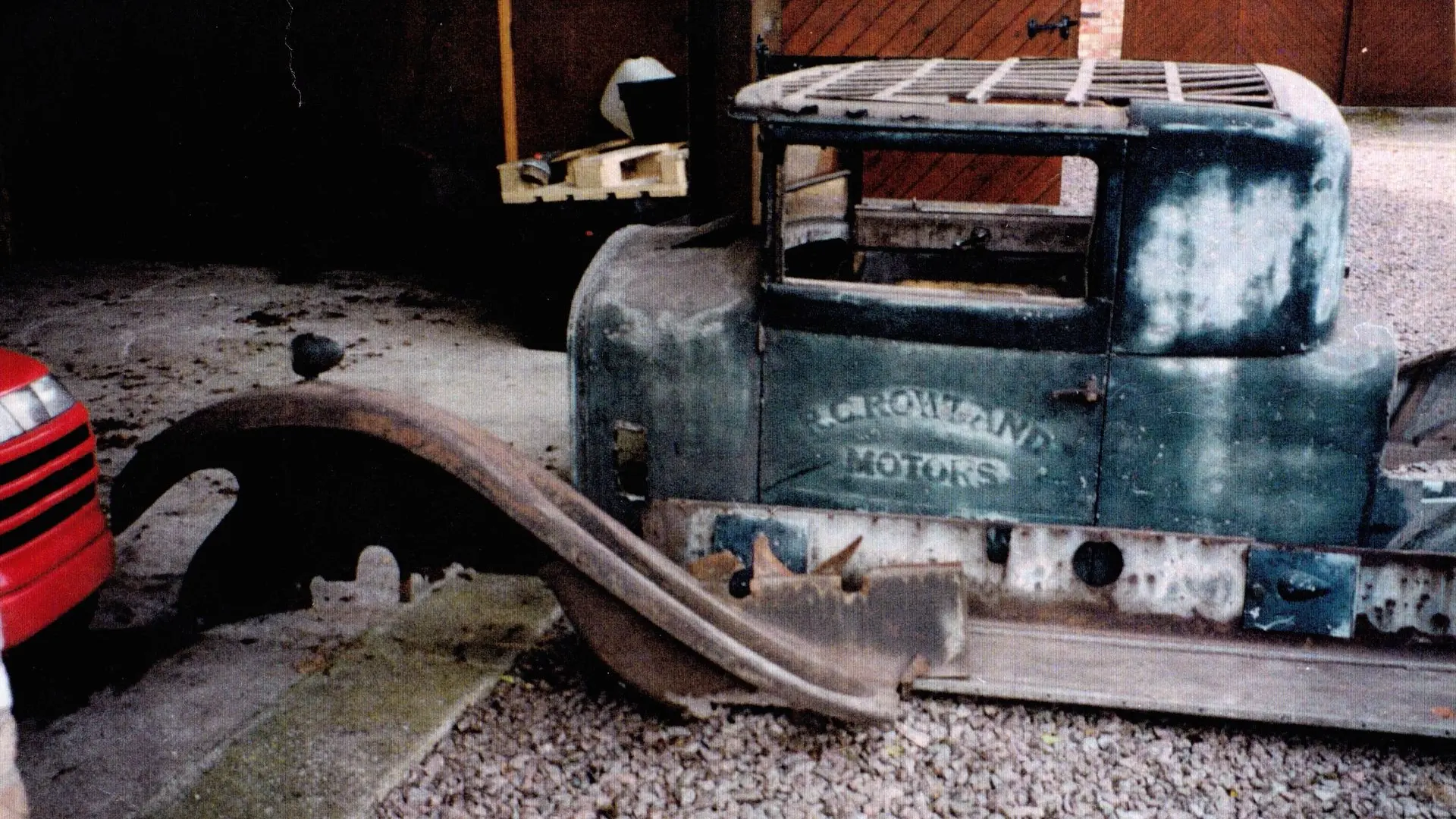
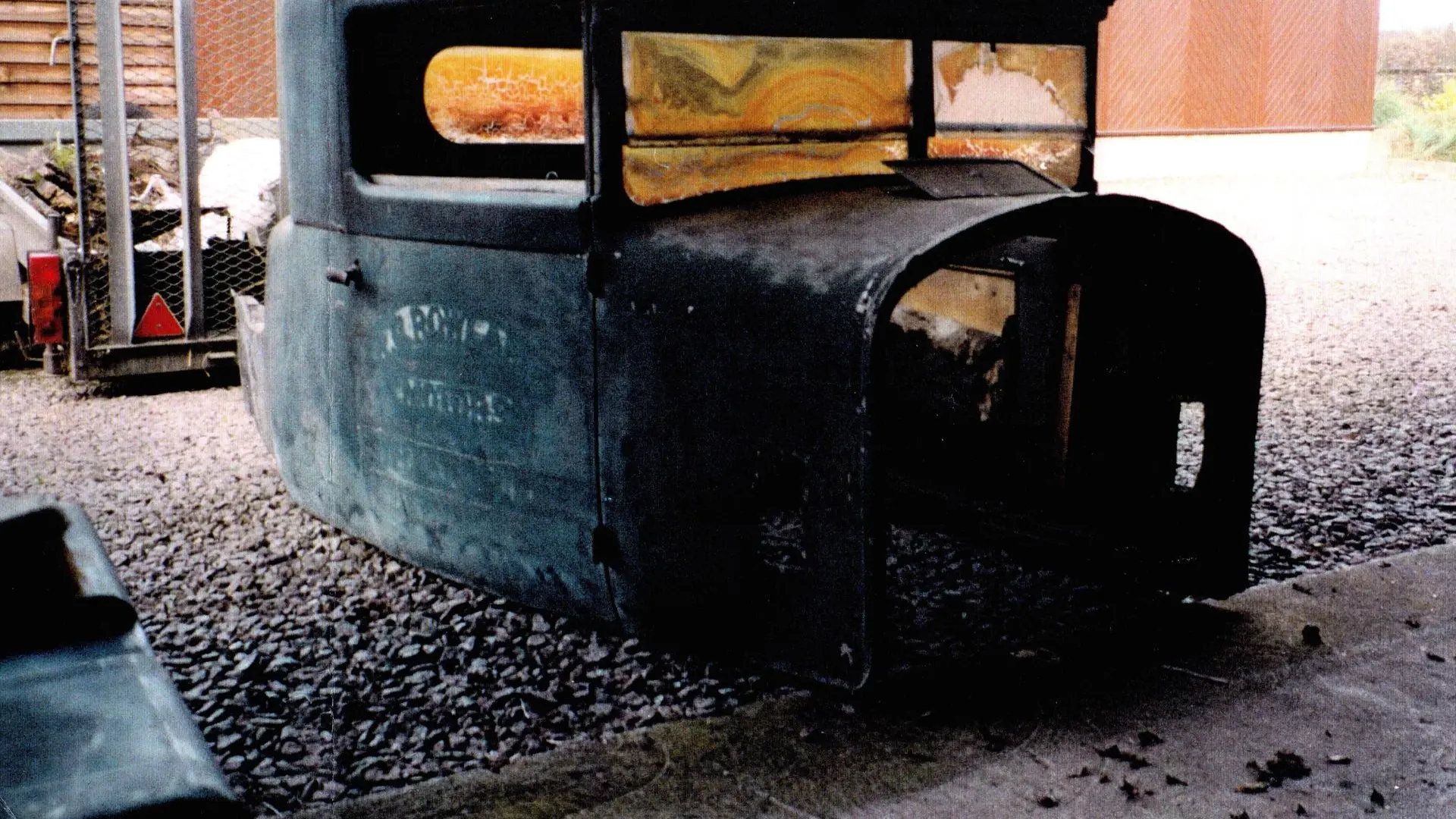
The Harrison body was originally fitted to another Bentley 6½ Litre, chassis BR2365, registration UC7983. In its original form it incorporated a boat-tail rear treatment and dickey seat. During its long life the coachwork was substantially altered, including later use in a utility/tow-truck configuration, before eventually being removed from BR2365 and preserved.
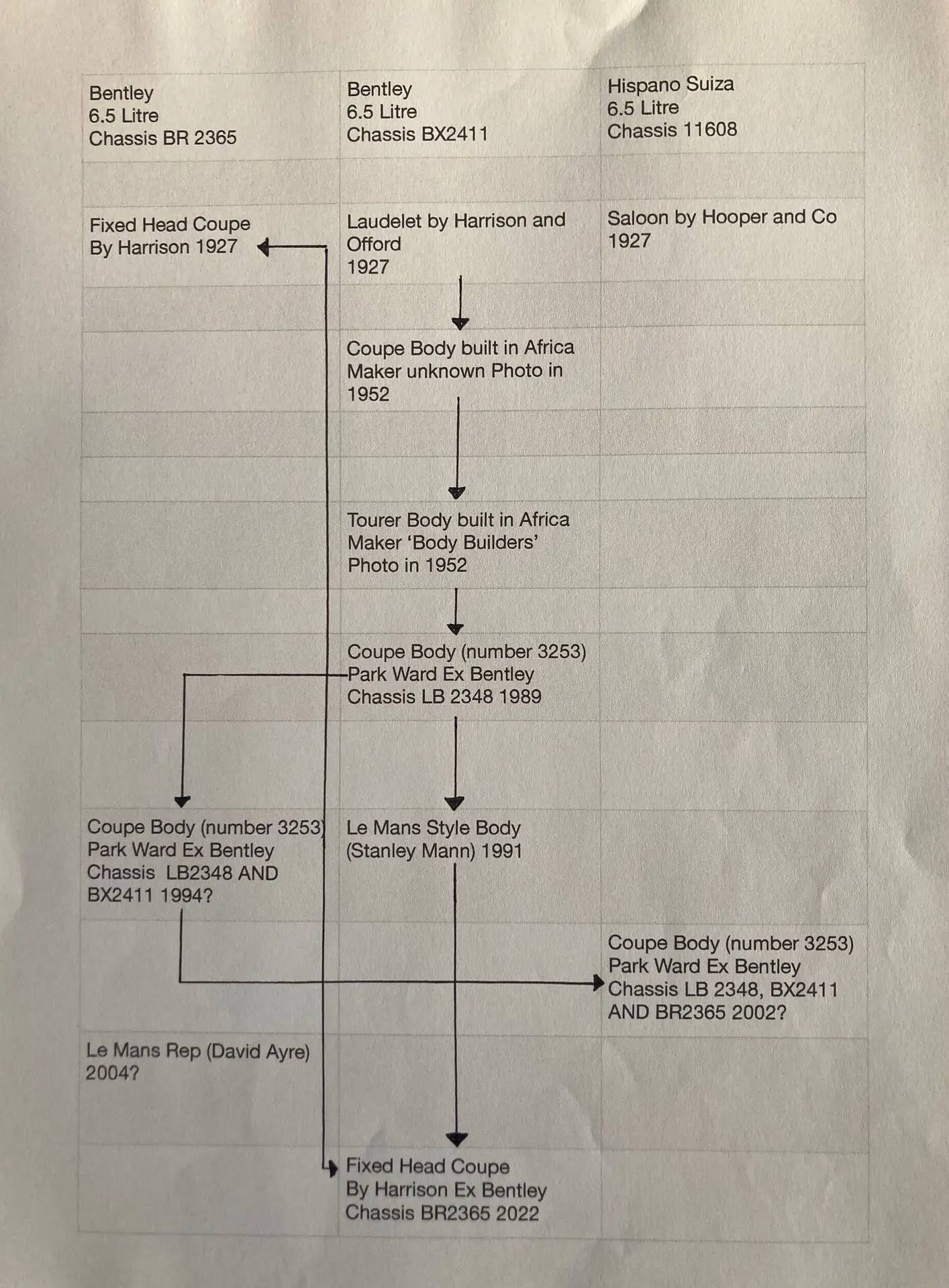
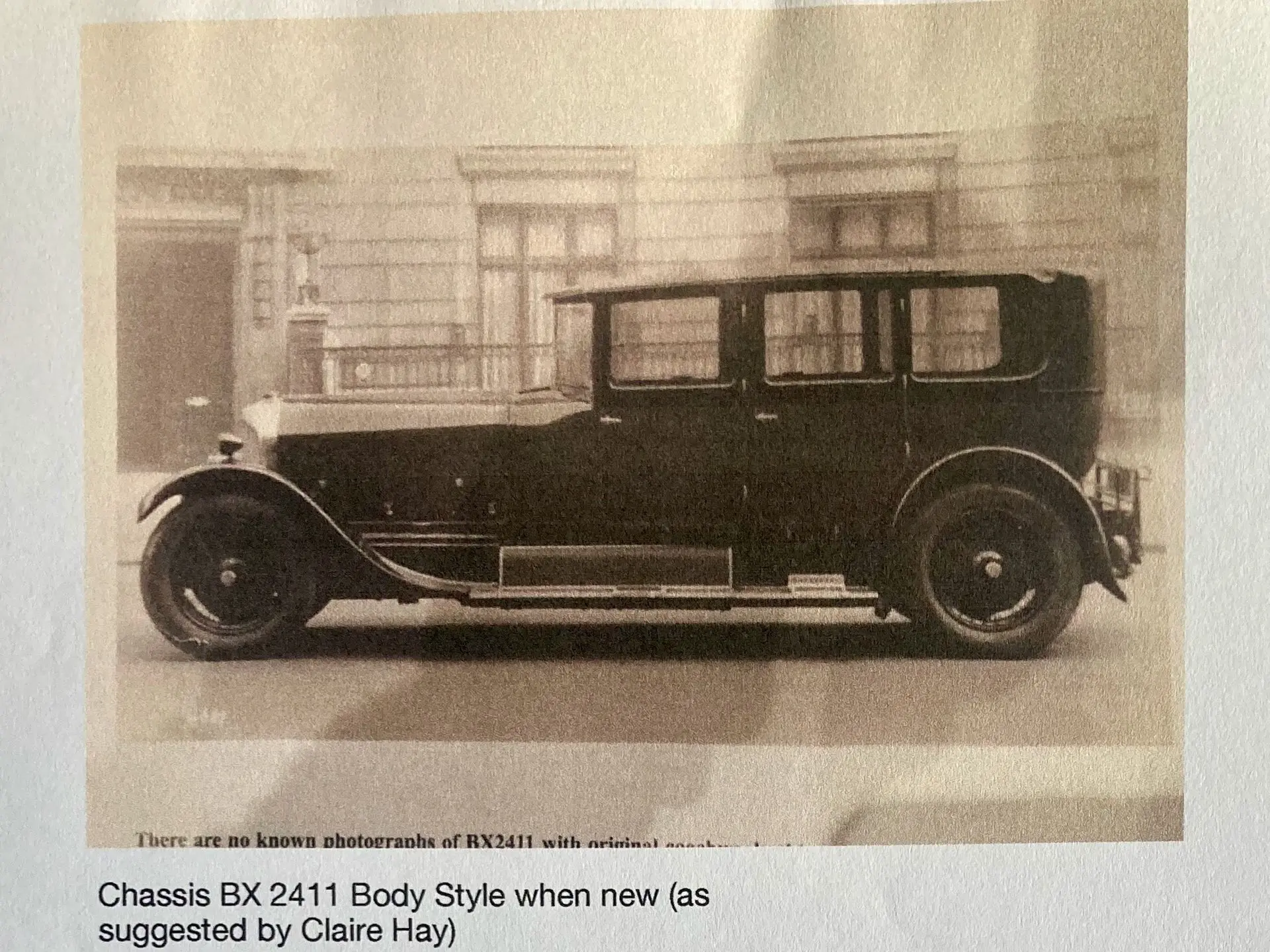
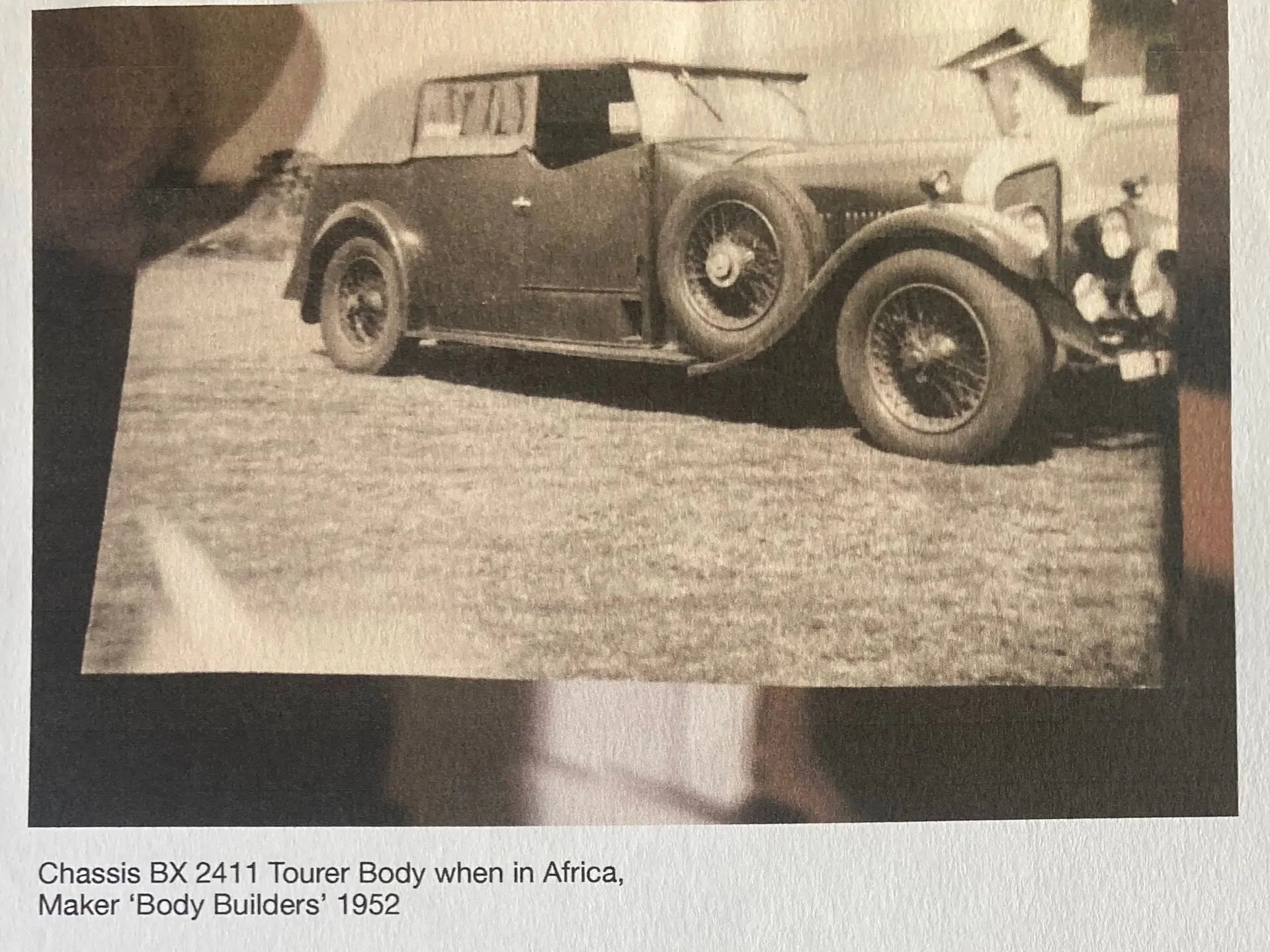
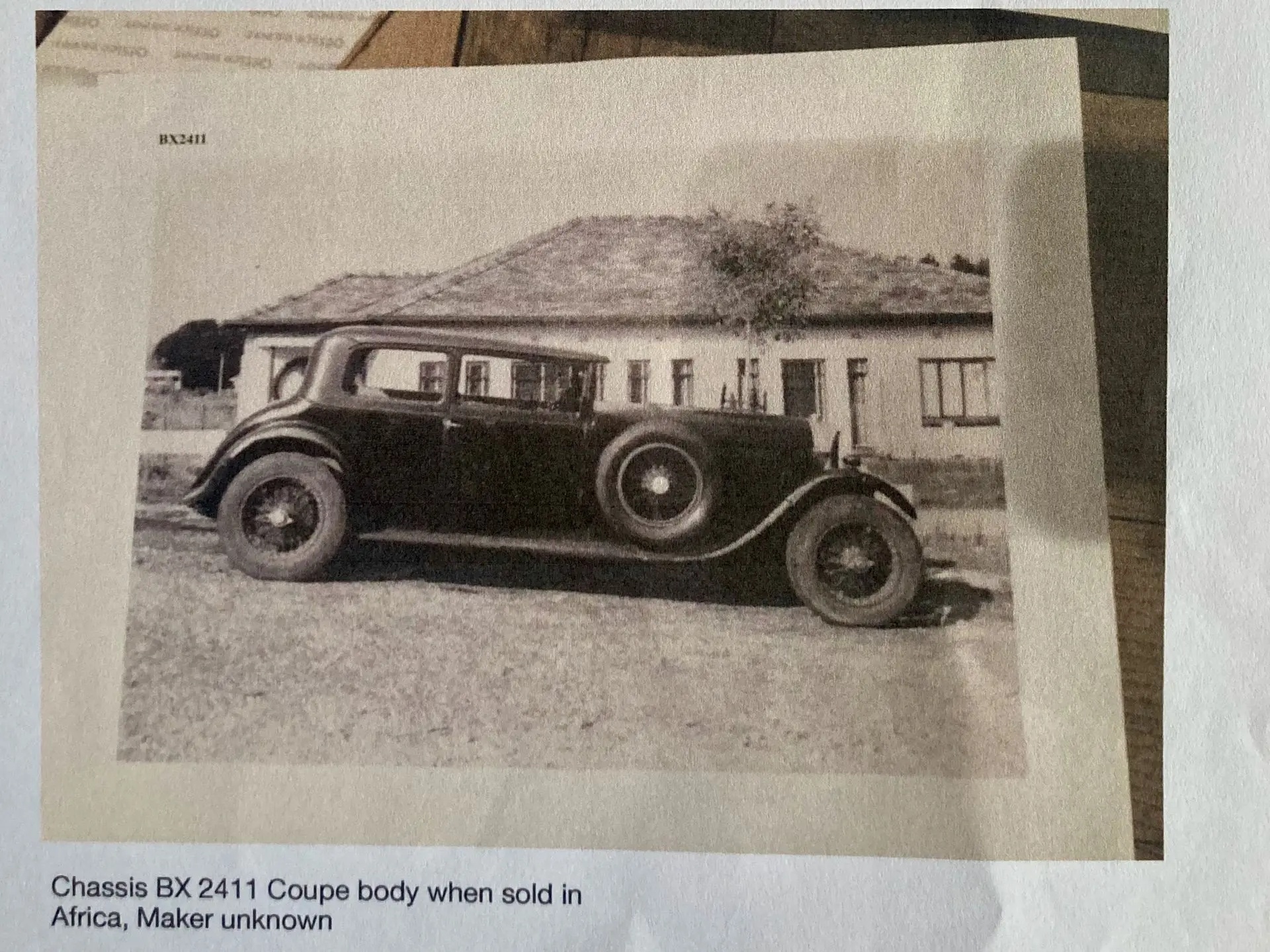
BX2411 has itself undergone a remarkable succession of transformations. It began life in 1927 as a formal landaulette, framed by Harrisons and finished by Offord, and is documented in six principal coachwork configurations during its subsequent history. These include its original landaulette, African coupé and open coachwork, later Park Ward coachwork, David Gaul's 1993 Le Mans Replica and finally the Harrison fixed-head coupé it carries today.
The present car therefore brings together two distinct histories: the continuing identity of Bentley chassis BX2411 and the surviving period Harrison coachwork of BR2365.
It’s even possible that the Laudelete body originally fitted to YF 2186 (Chassis BX2411) sat in the factory at the same time as the Harrison coupe, but that’s a detail lost to history.
What is certain is that YF 2186 began life as a saloon-bodied car in 1927. Over nearly a century, it has worn six different bodies, these being two tourers, three saloons and now the Harrison 2-door coupe. Despite the variety, the car has always seemed determined not to be an open topped car. Every time a tourer body was installed, circumstances conspired and another closed body found its way back on!
An unusually extensive photographic record survives of BX2411's changing appearance over the decades, supplemented by Bentley records, BDC material, period documents and later research. Together these allow much of the car's changing coachwork history to be reconstructed, although not every period is documented equally.
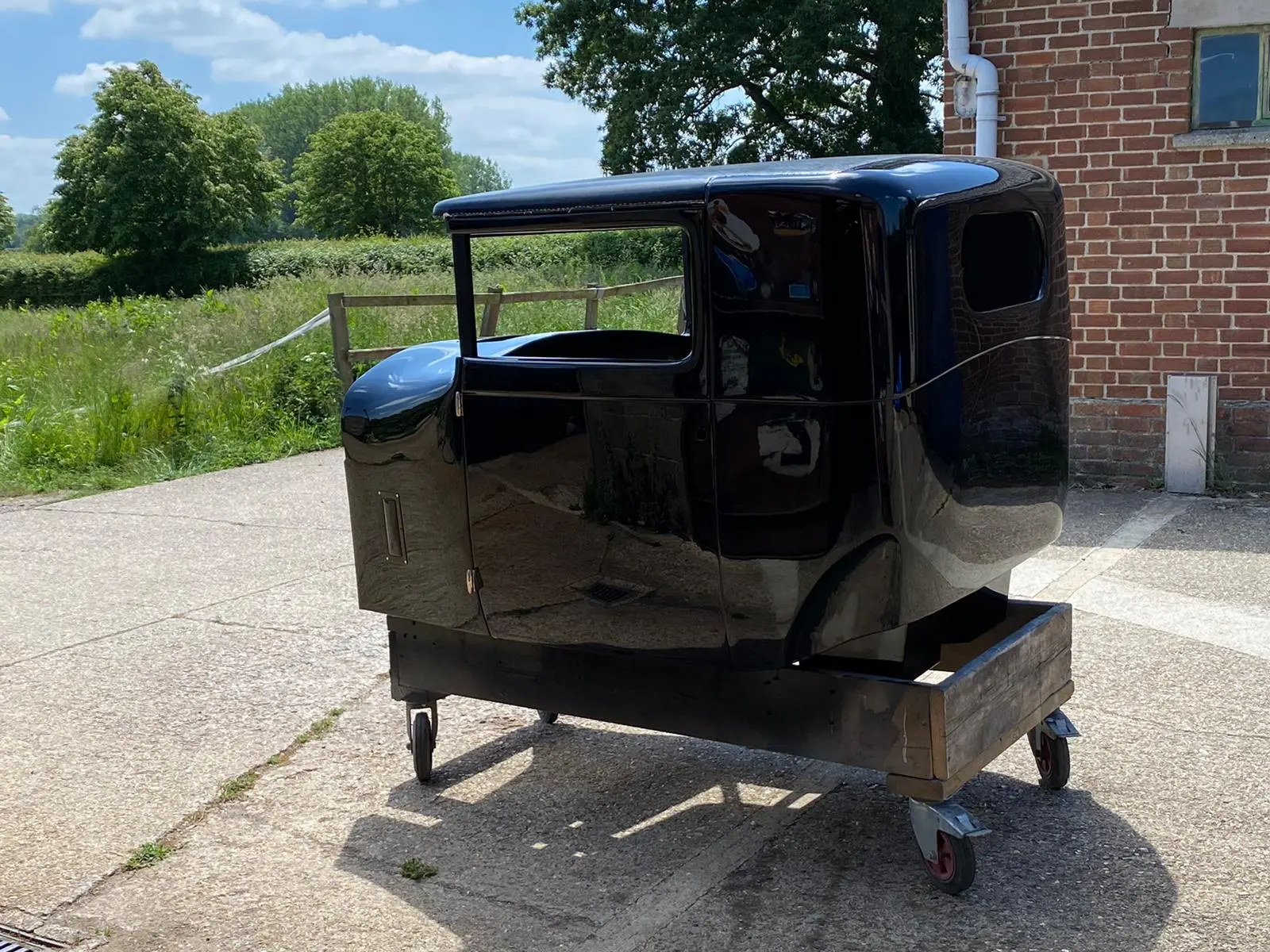
The present form was created around surviving original-period Harrison fixed-head coupé coachwork formerly fitted to chassis BR2365. After losing its boattail, the body was used as a pickup truck just after the war. Restoring it required painstaking craftsmanship and thoughtful design to return it to elegance.
The evolution of the design is fascinating to study, from early concepts to the final shape seen today. Subtle details define the finished result, especially the treatment of the rear wings, the form of the rear trunk, and the distinctive Le Mans-style petrol tank.
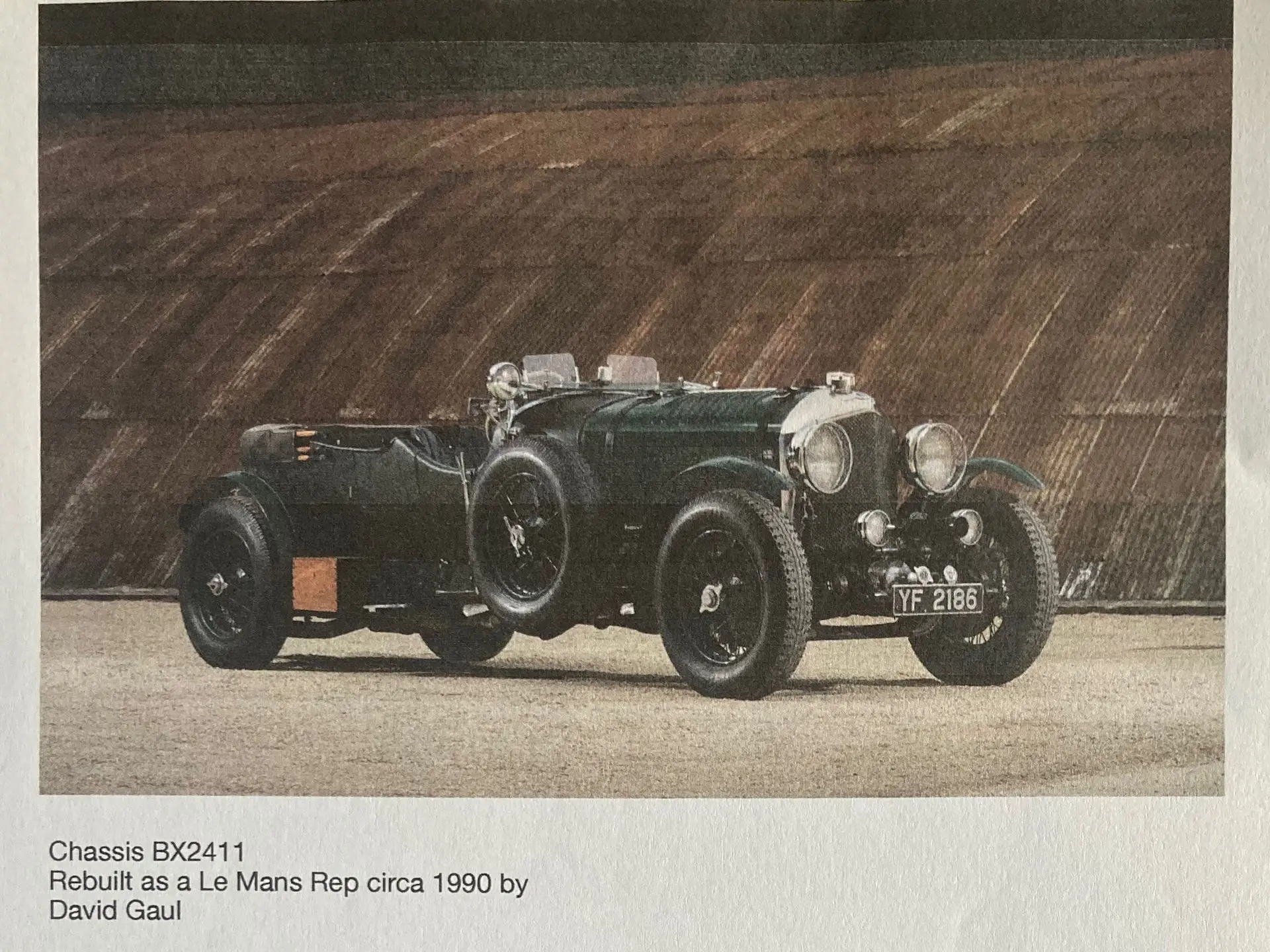
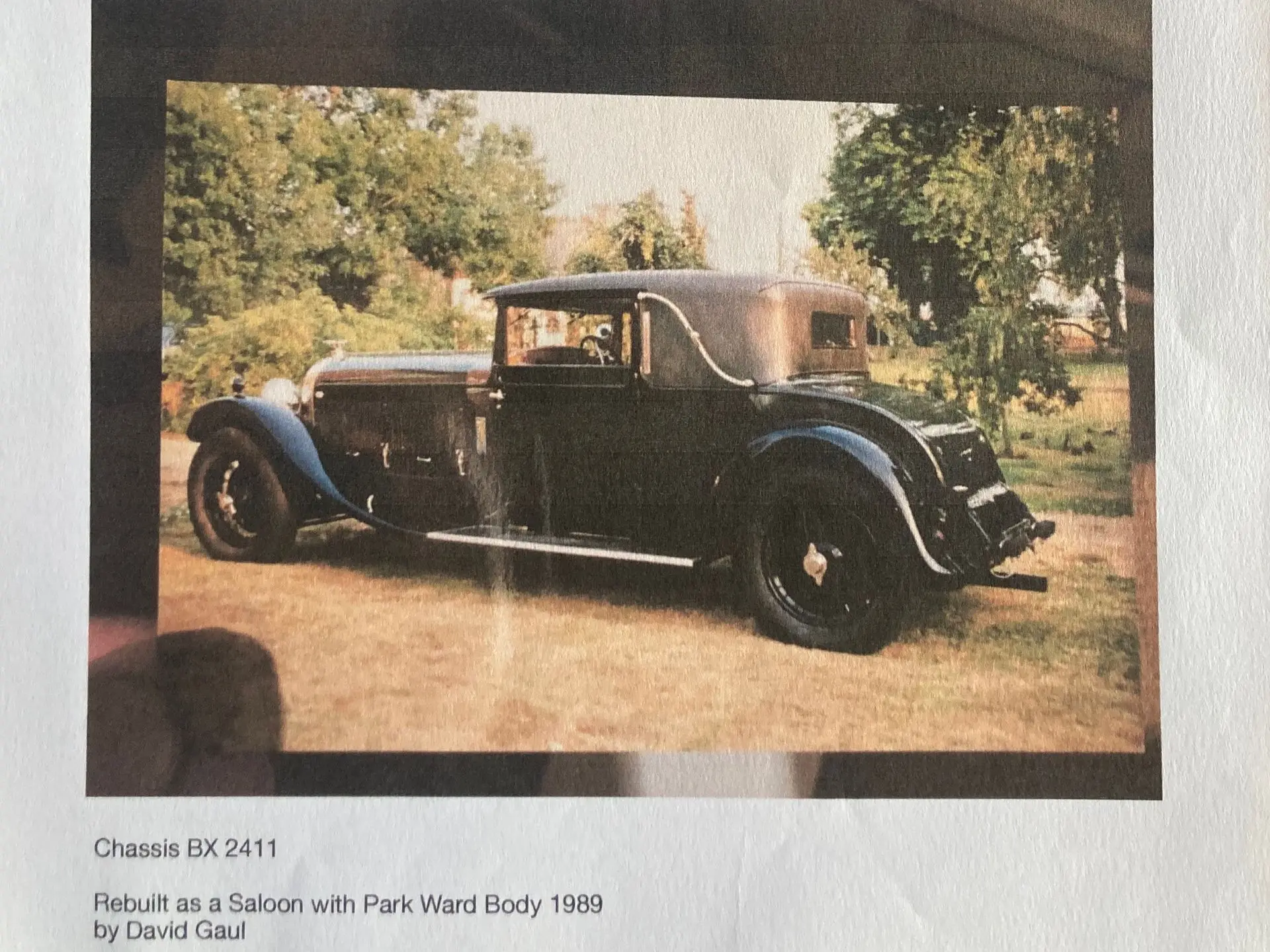
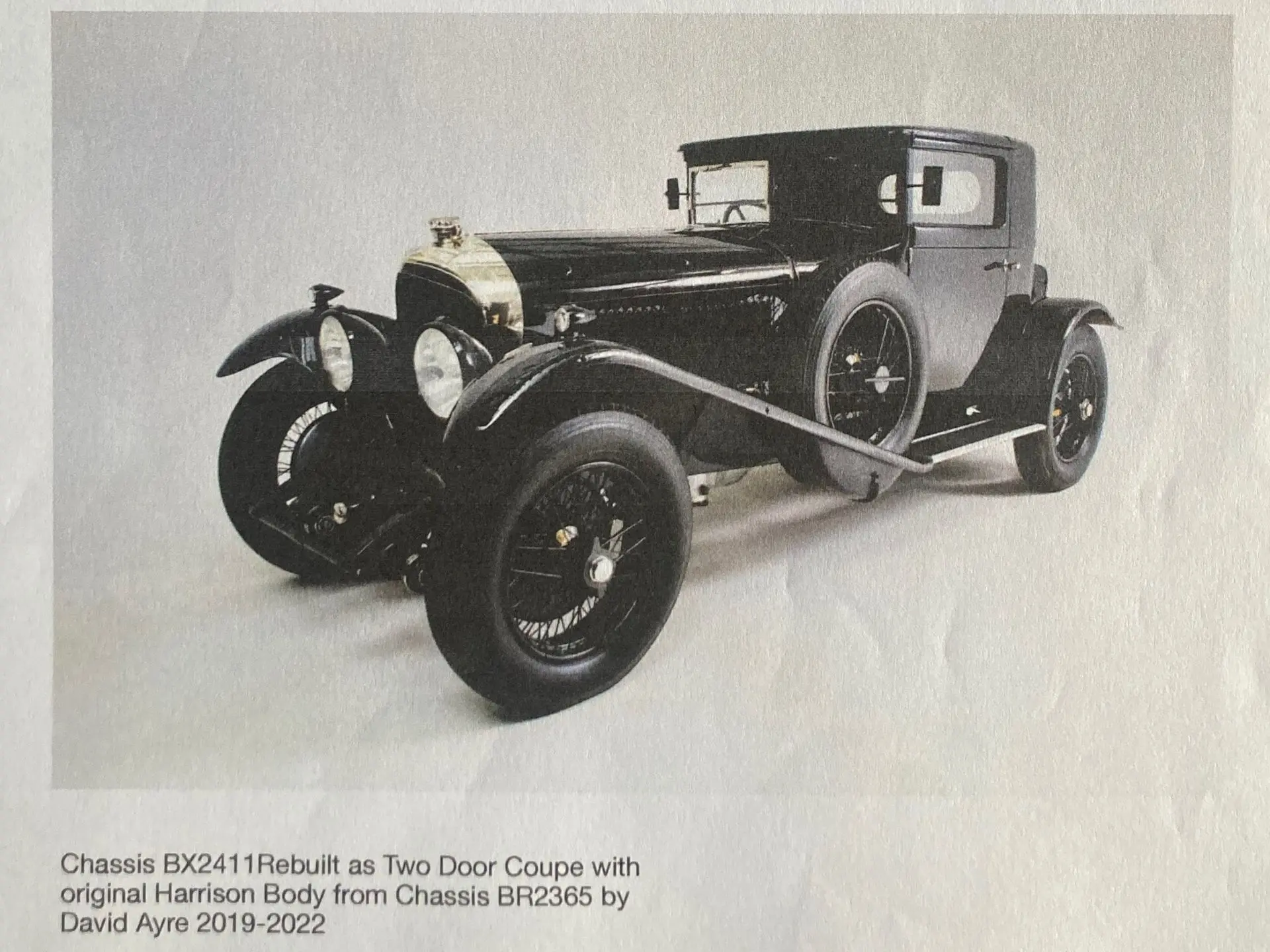
The Harrison Body
The striking two-door Harrison coupe body is, in many respects, the soul of the car. It is the reason we went to such lengths to return the car to closed coachwork. The ‘Le Mans’ coupe styling, a name I gave the body in reference to its overall design and the Le Mans fuel tank at the rear, makes it a truly bespoke, one-off design.
The Harrison body was originally built as a boat-tail with a dickey seat. After the Second World War it was modified for use as a tow truck. It first left the factory fitted to chassis BR2365 and registered as UC7983. During a later restoration of BR2365, its Harrison body was removed and set aside. BR2365 subsequently received Park Ward fixed-head coupé coachwork, body no. 3253, which had originated on chassis LB2348. Remarkably, that same Park Ward body had previously been fitted to BX2411.
The two chassis therefore became linked through two different pieces of period coachwork: the Park Ward body passed through BX2411 before reaching BR2365, while the Harrison coachwork travelled in the opposite direction and now resides on BX2411.
In an extraordinary twist of fate, both BR2365 and BX2411 (YF 2186) have, at different times, carried the Harrison body and the Park Ward body. More remarkably still, BR2365 was a chassis that David had previously worked on and converted into a Le Mans replica. Years later, he was about to restore my car and reunite it with the long-lost Harrison body, this time fitted to chassis BX2411.
Fate, perhaps. These details are recorded on pages 378 and 382 of Bentley: The Vintage Years.
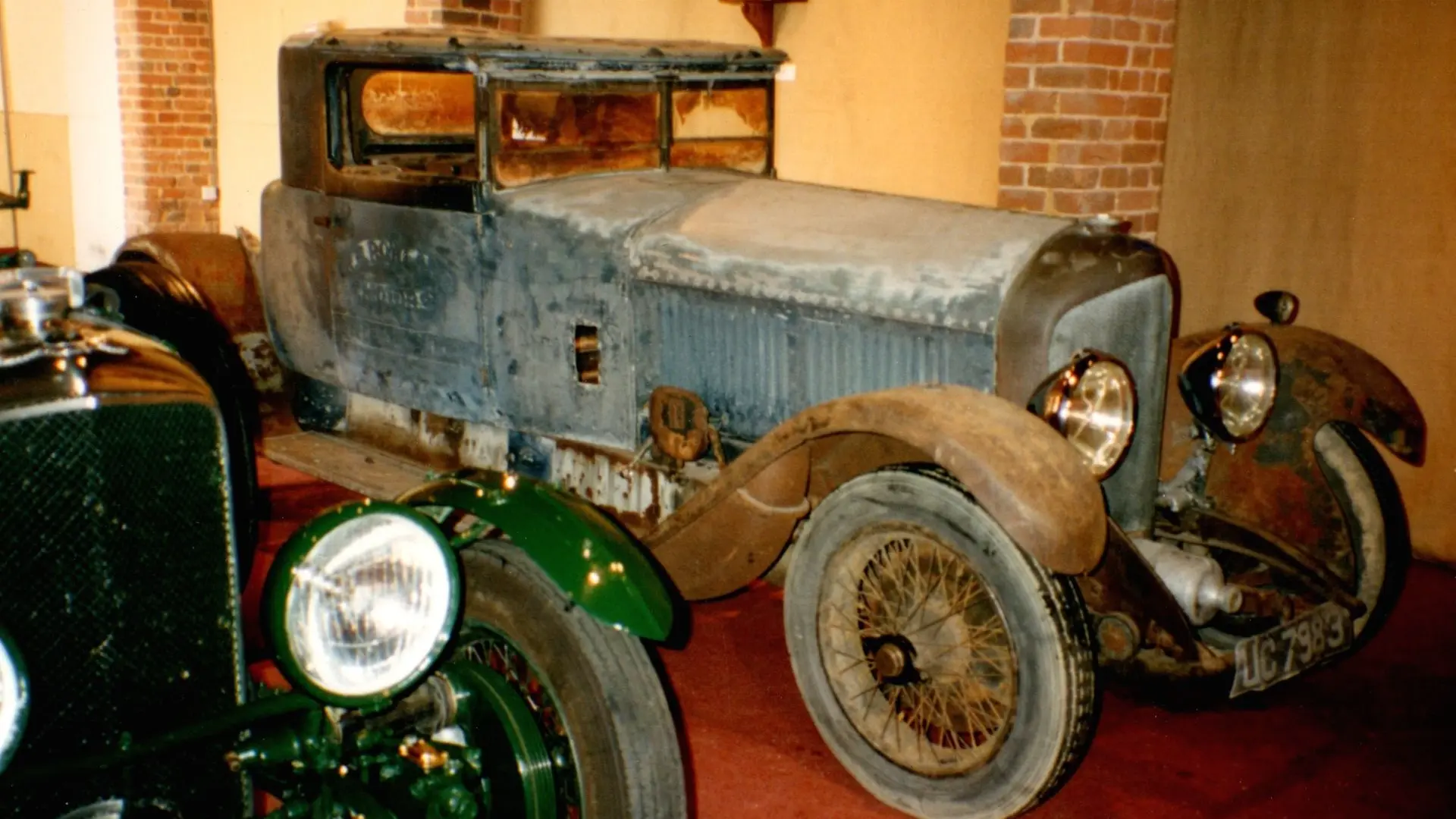
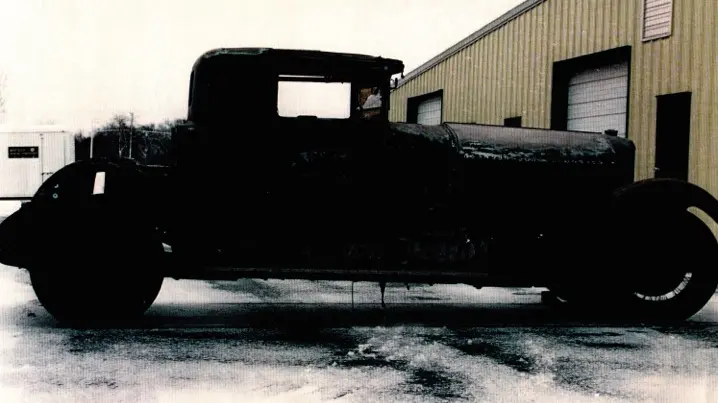
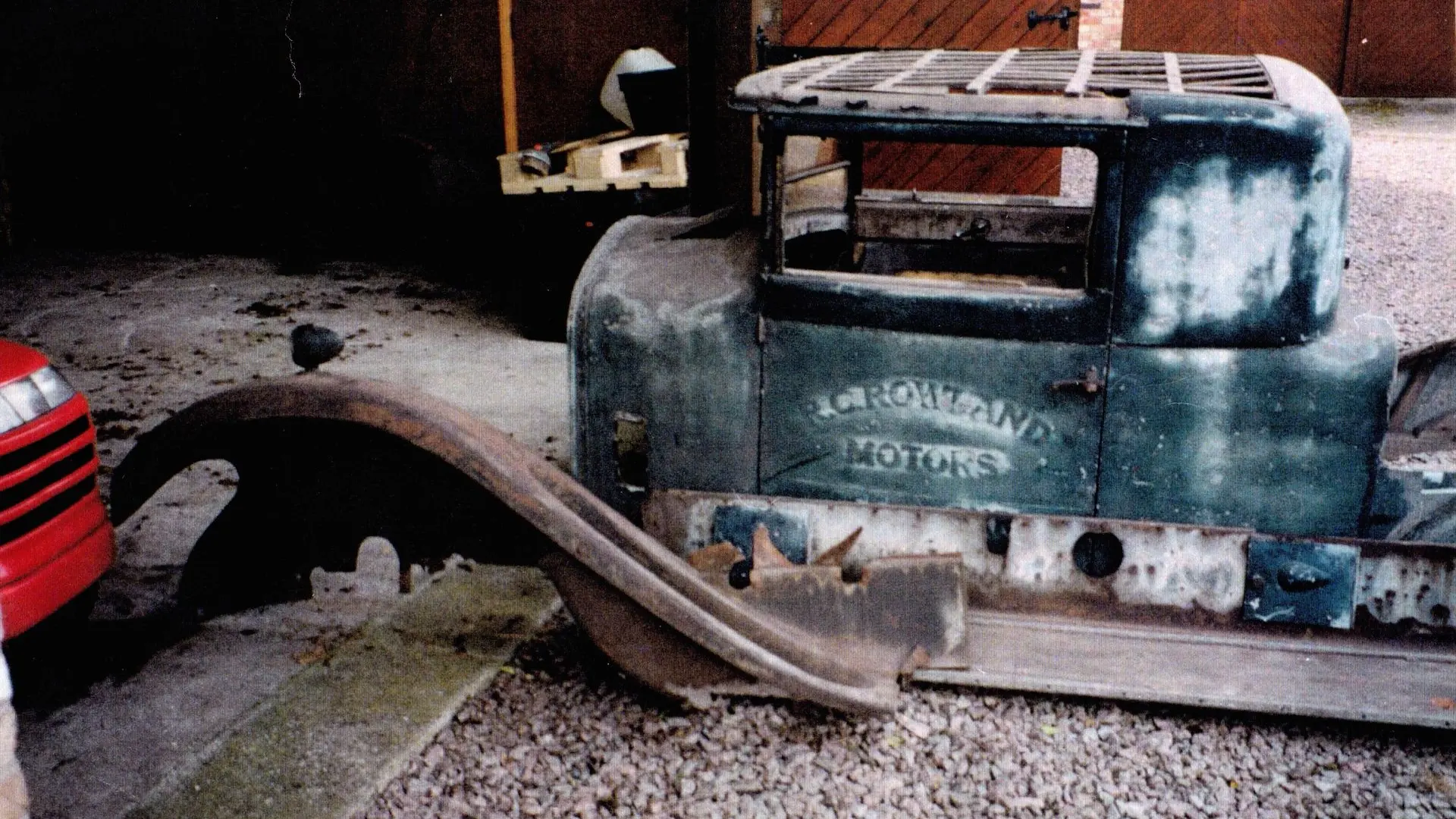
The Harrison Le Mans Coupe Body Evolution
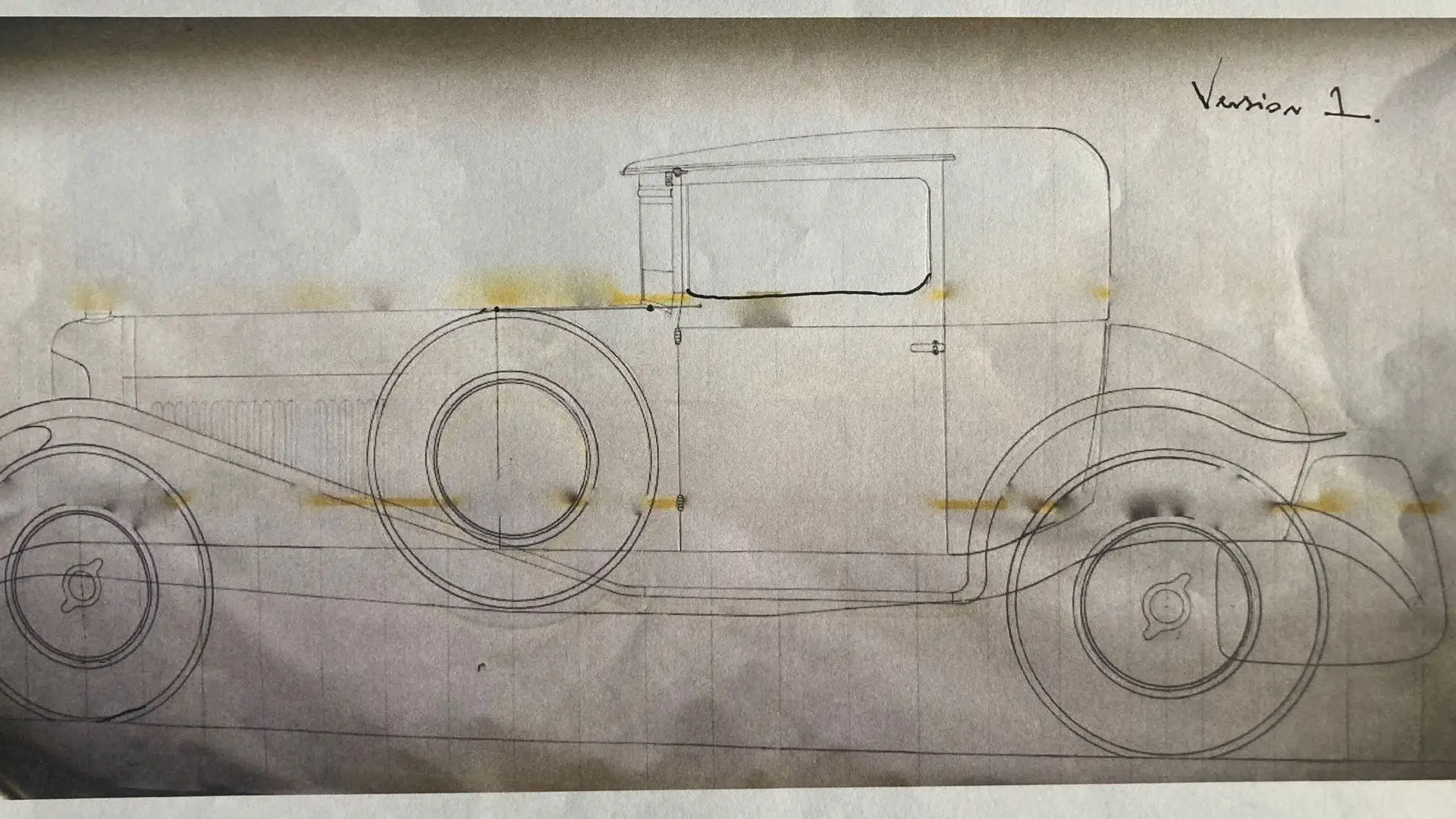
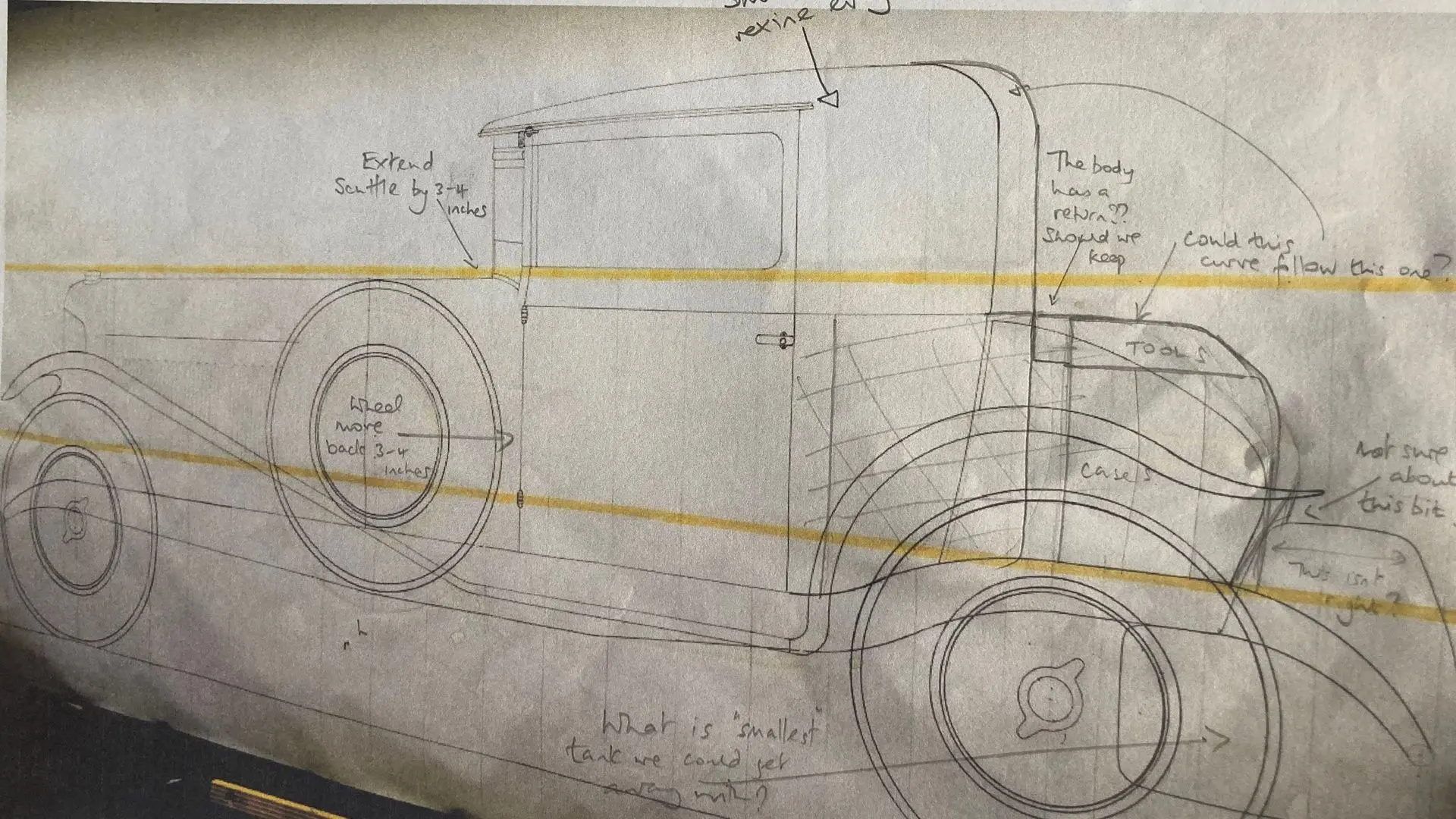
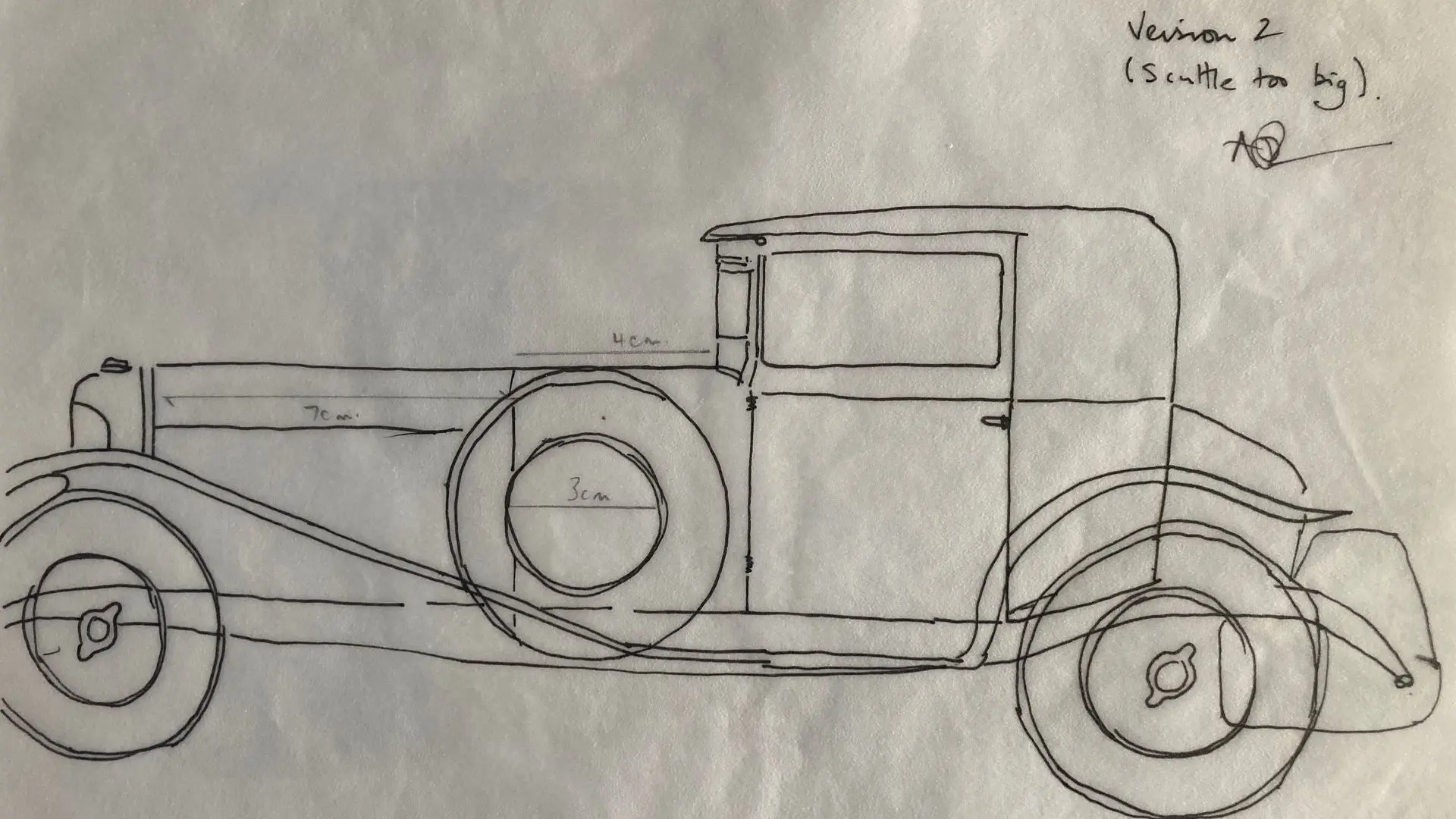
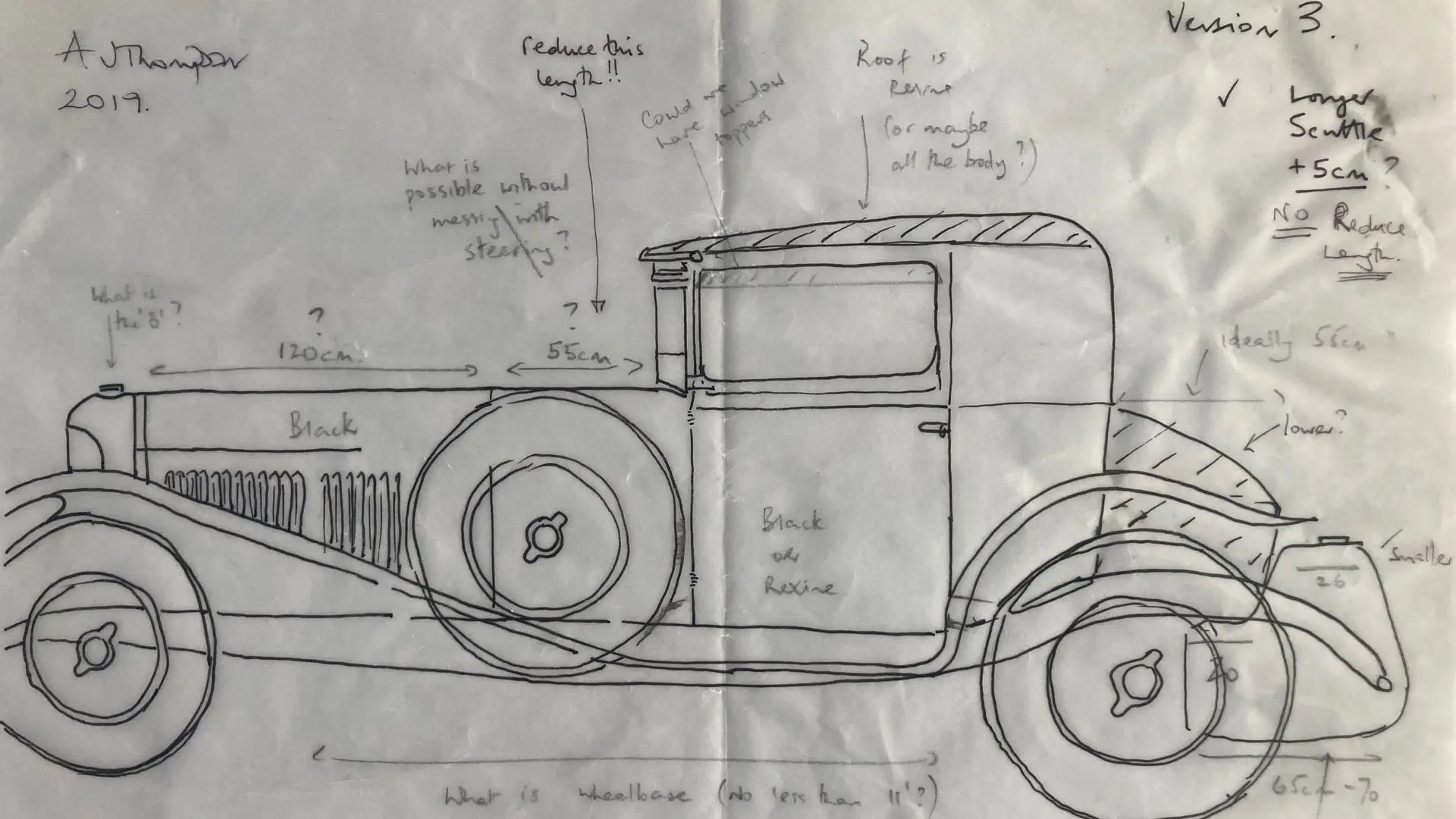
I fell in love with the Harrison two-door coupe body at first sight, although I was not the only one. David Ayre had already recognised its potential and had discussed possible directions with William Medcalfe. By that point, a full-size side-profile drawing had already been produced, exploring a final design that retained the surviving Harrison coachwork while reworking the rear end.
David’s vision was to incorporate a Le Mans fuel tank at the rear and to transform what had originally been a slightly awkward boat-tail, later converted into a tow truck, into a distinctive and elegant Le Mans-style coupe. My own input focused on proportion: overall length, visual balance, and how the space above the Le Mans tank would be resolved with a properly integrated and beautifully shaped trunk.
Together, we reviewed the car from front to rear, carefully following the flow lines from the radiator shell through to the rear lights. The aim was to create a car that could plausibly have been designed in the 1920s, using the Harrison two-door coupe as the foundation but without the boat-tail, and drawing inspiration from contemporary Le Mans touring bodies.
As the drawings show, the details were continually refined and adjusted. The process was evolutionary rather than fixed. In the end, I believe we achieved exactly what we set out to do.
Restoring the Harrison Body
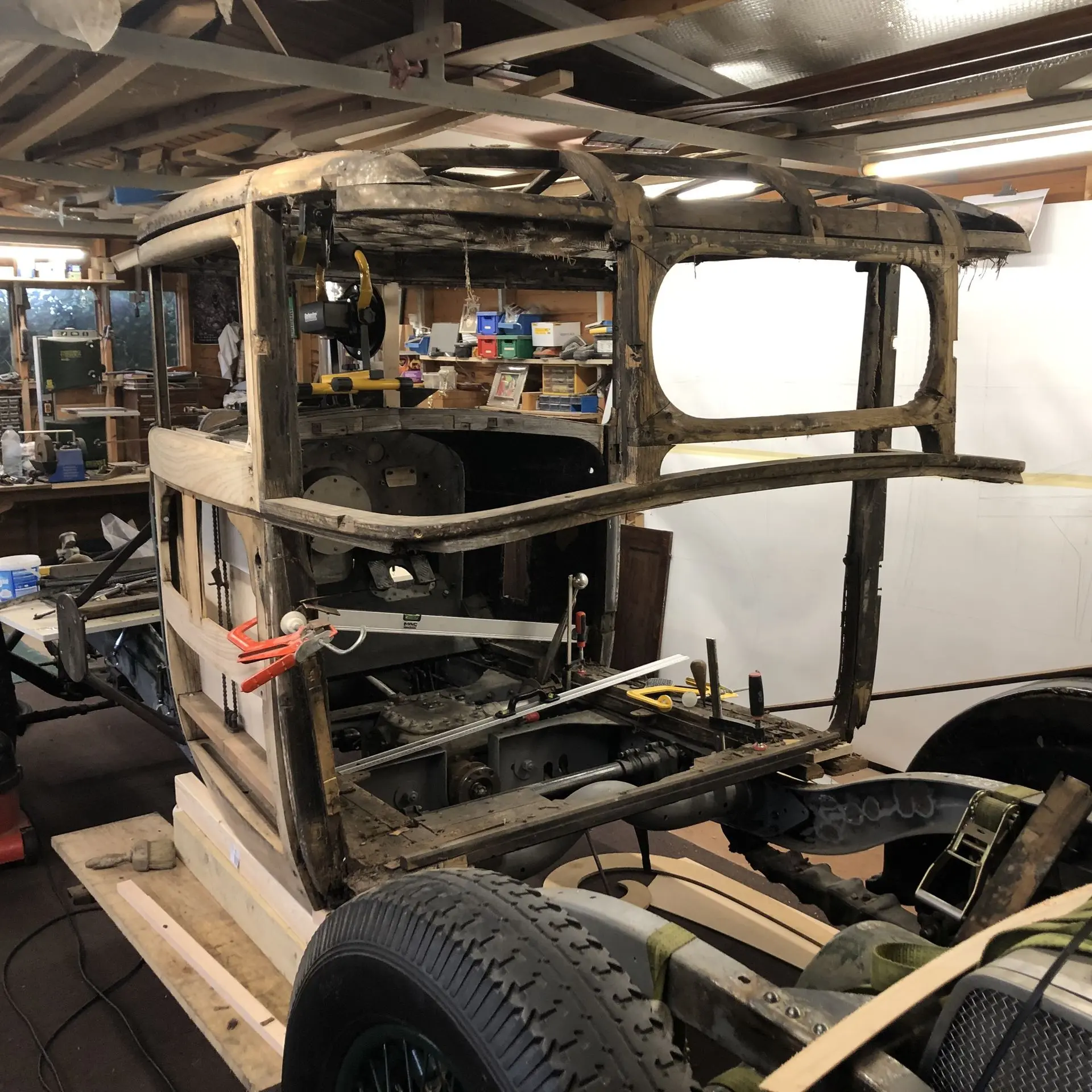
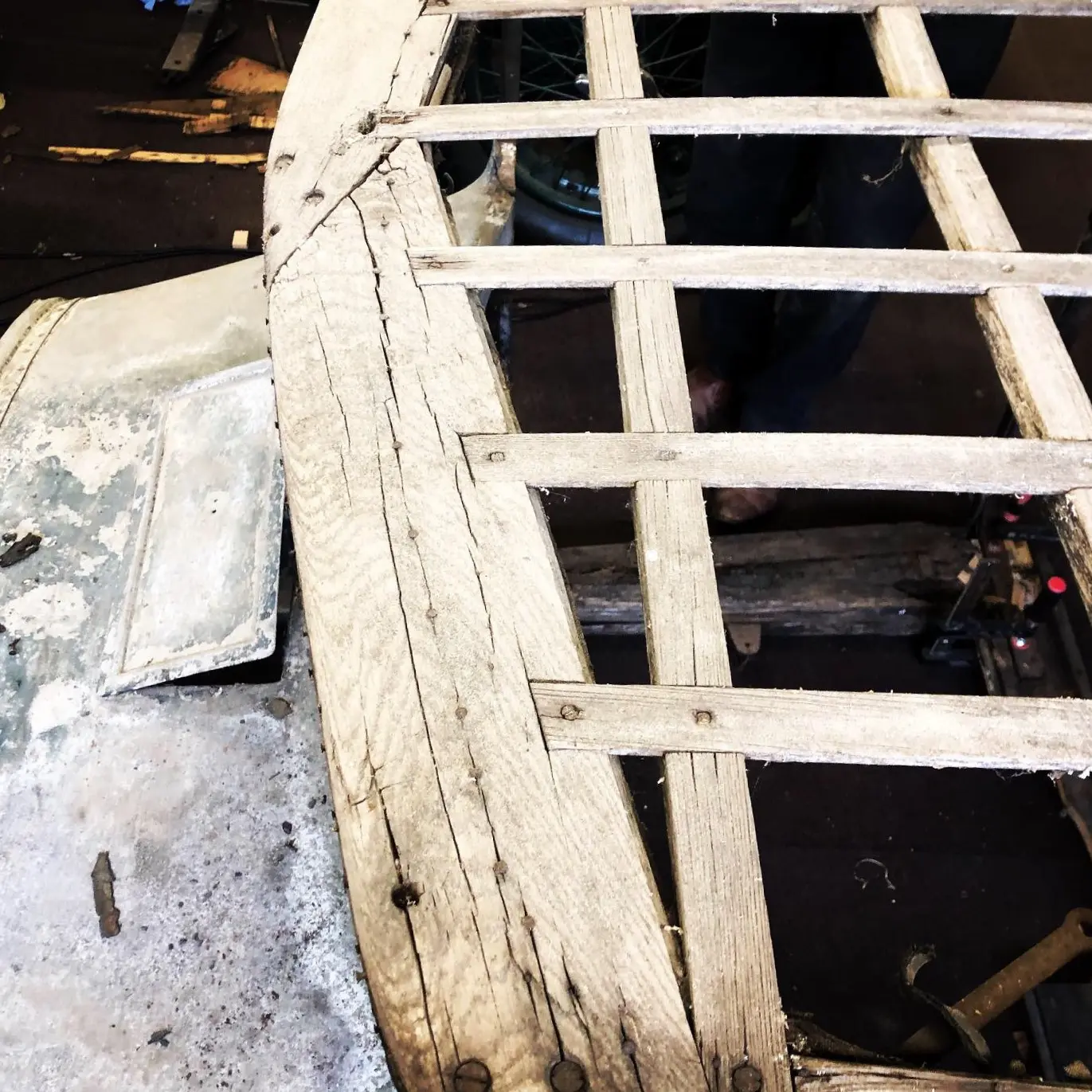
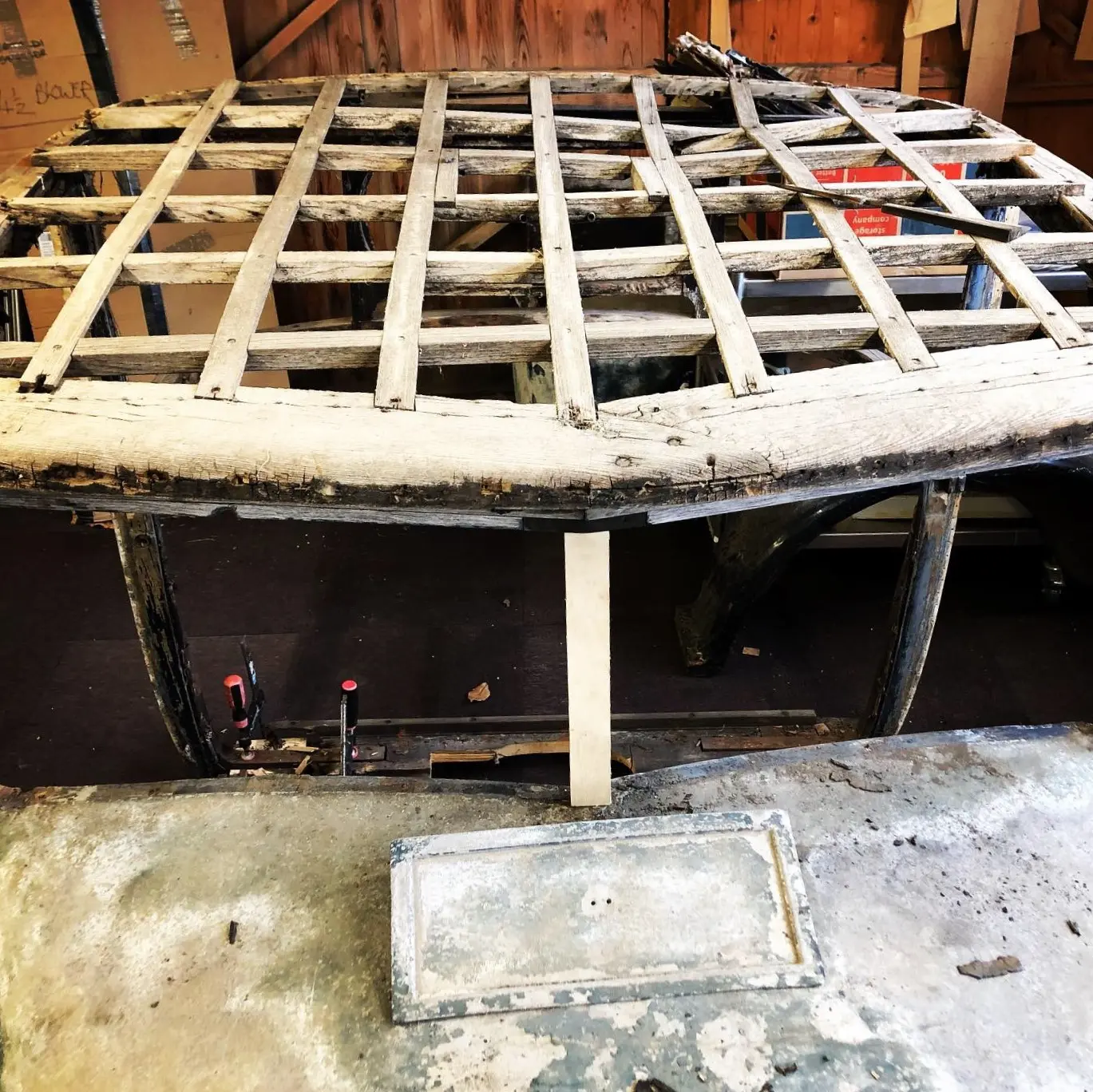
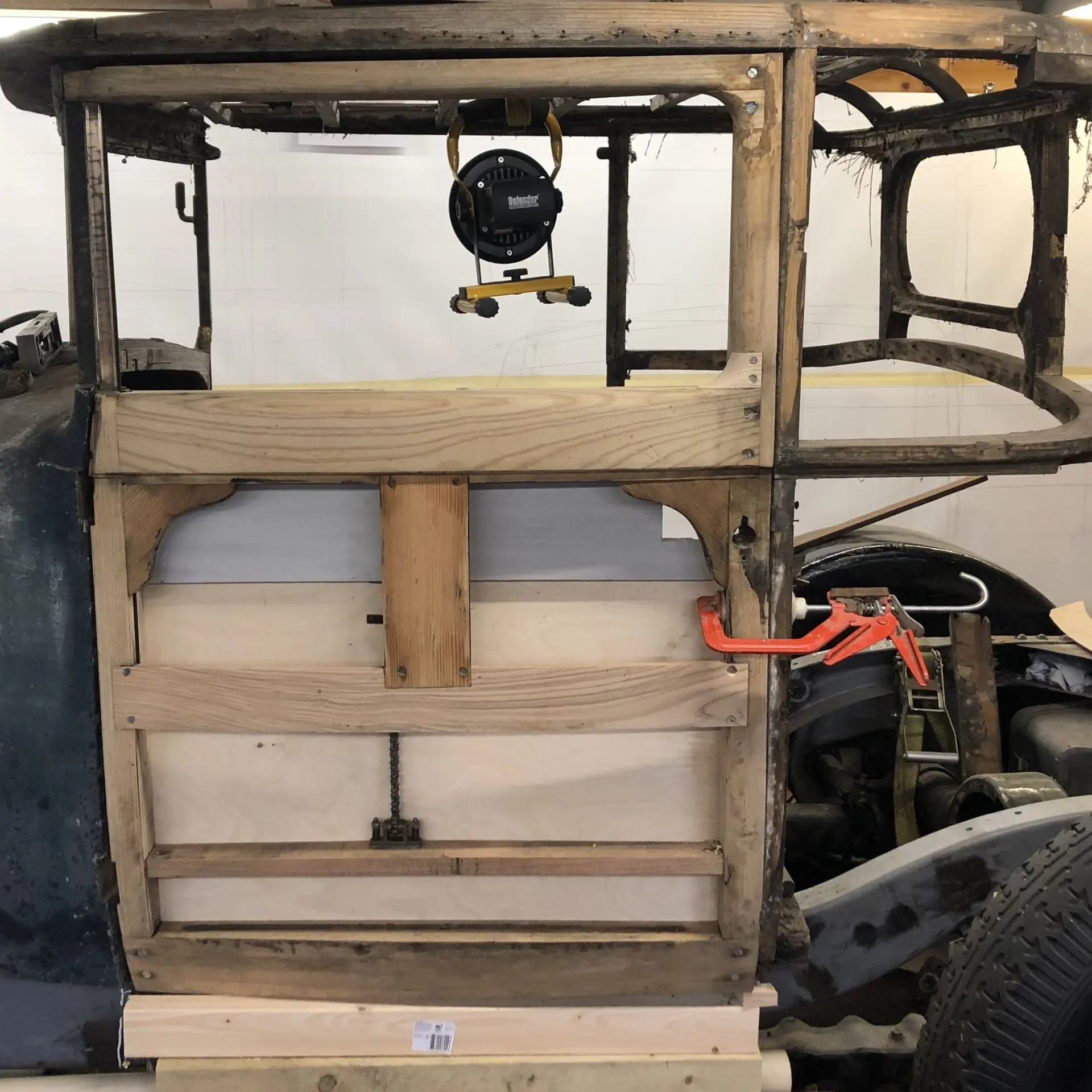
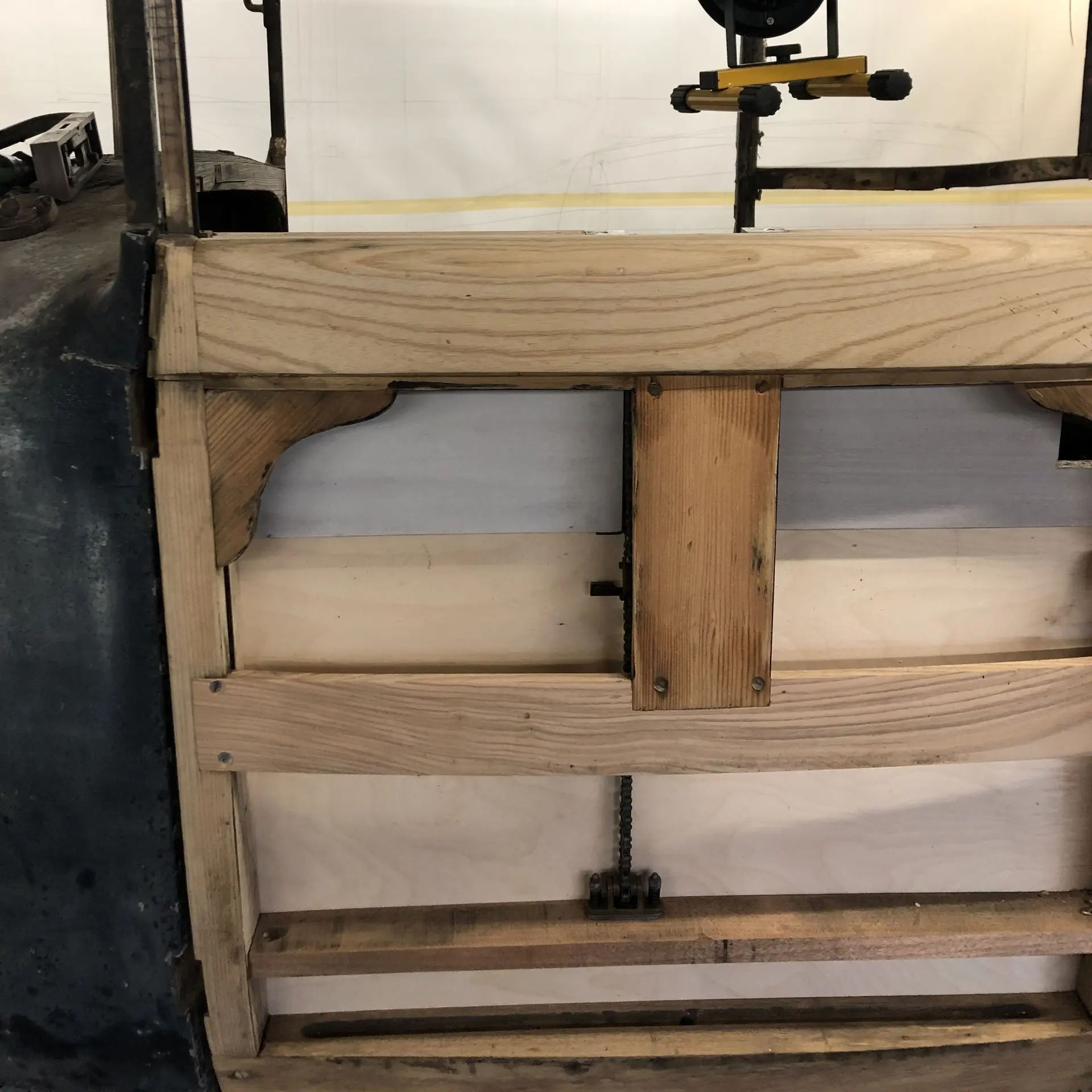
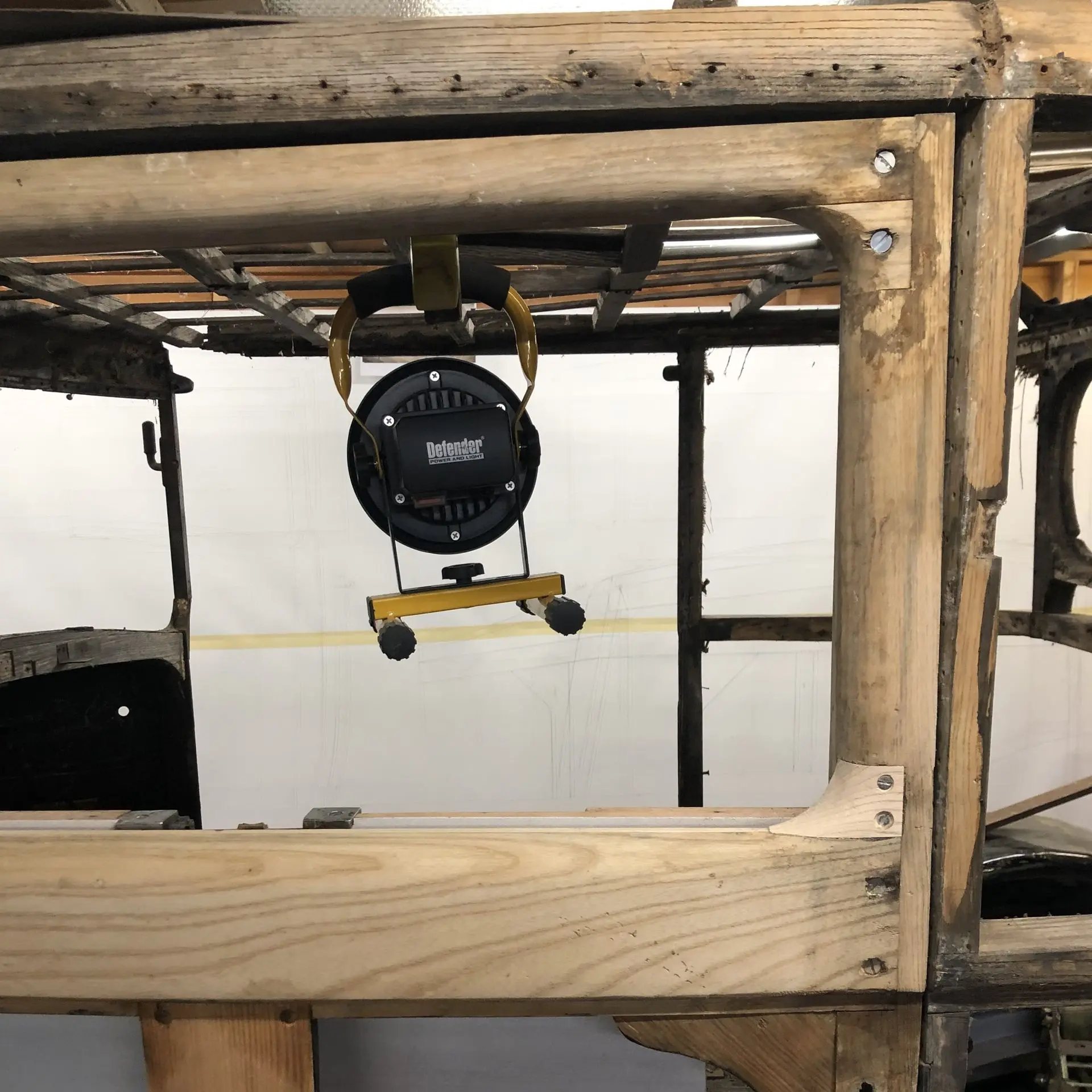
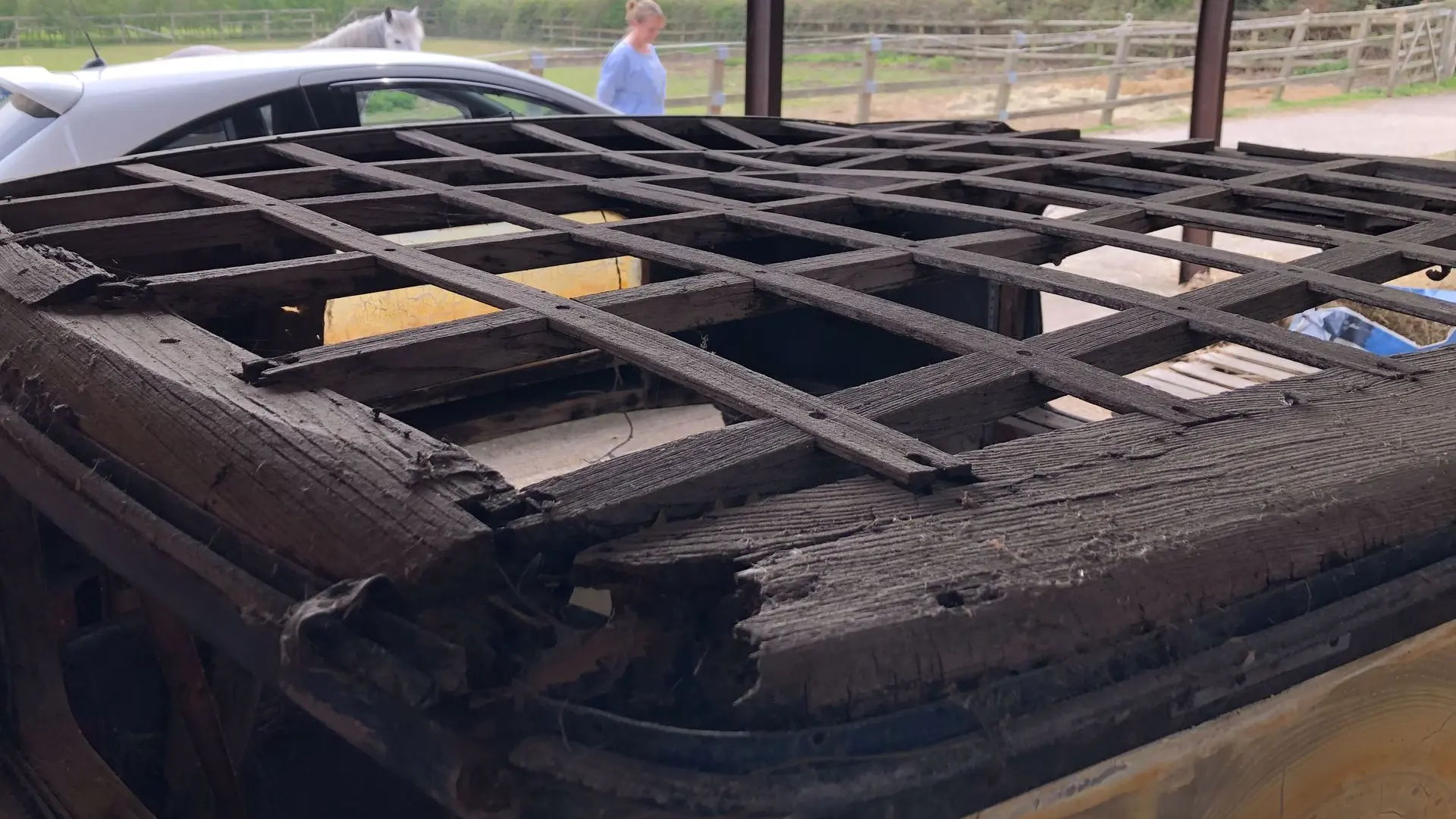
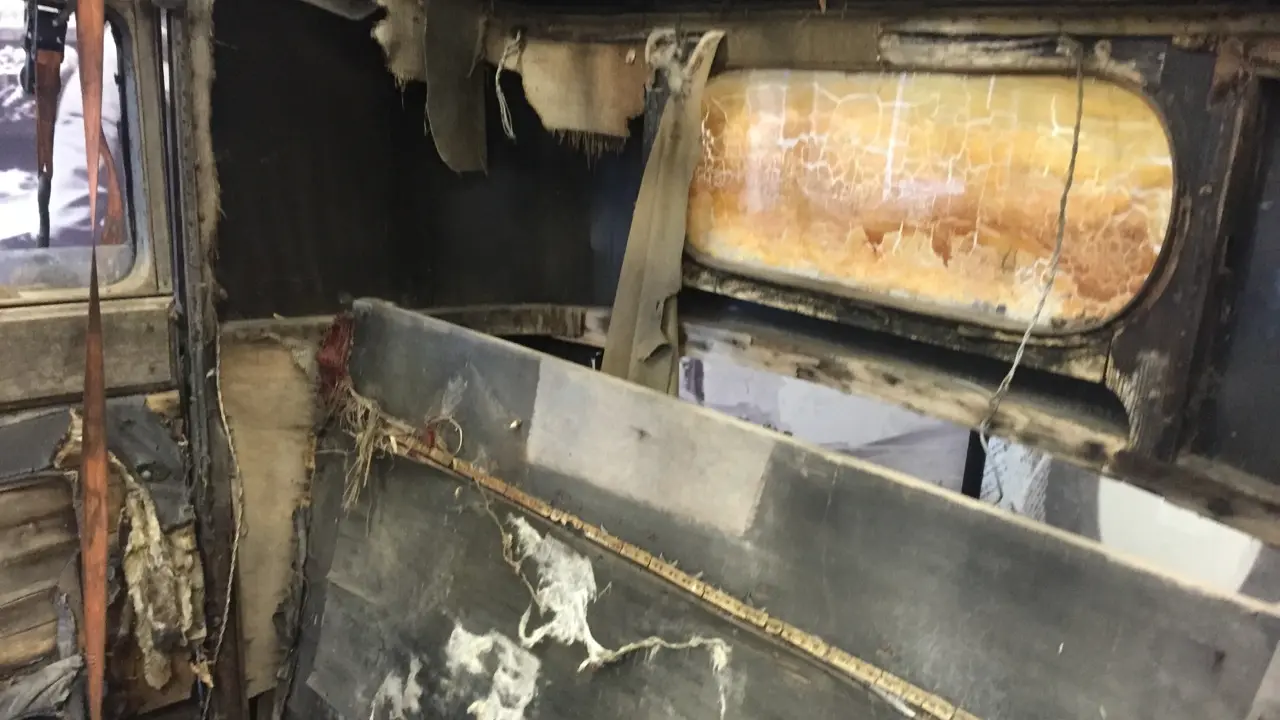
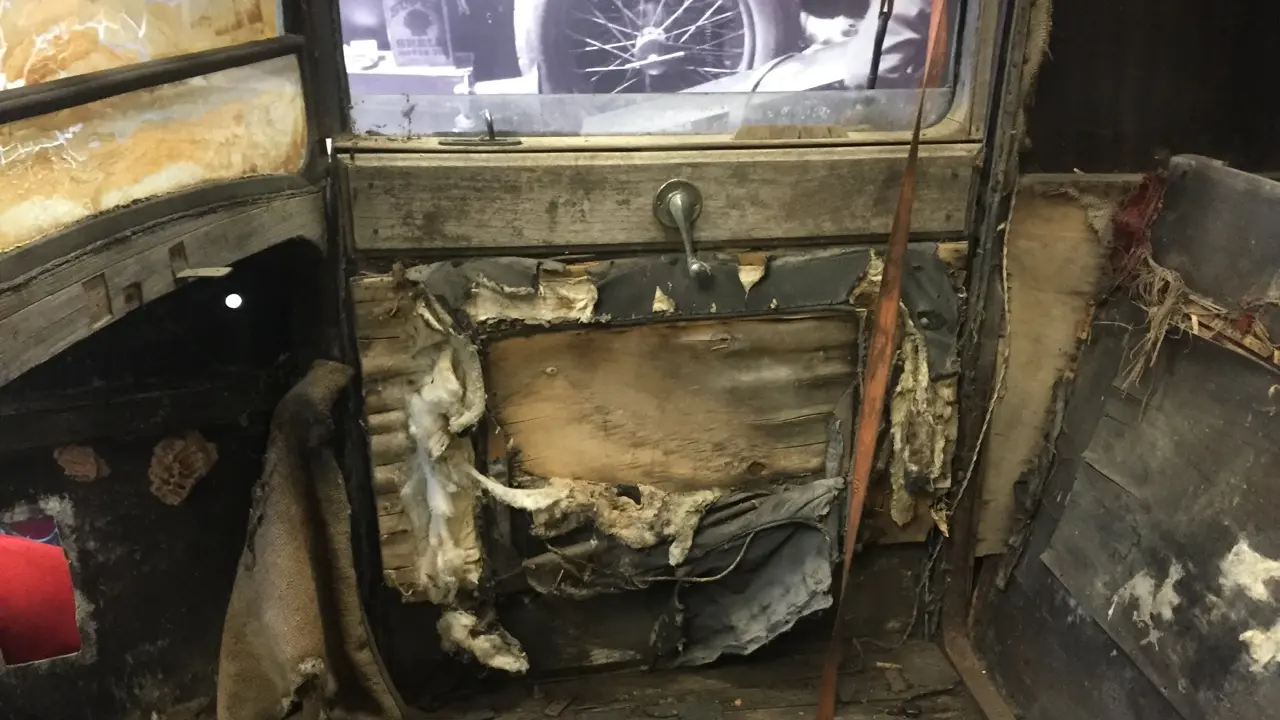
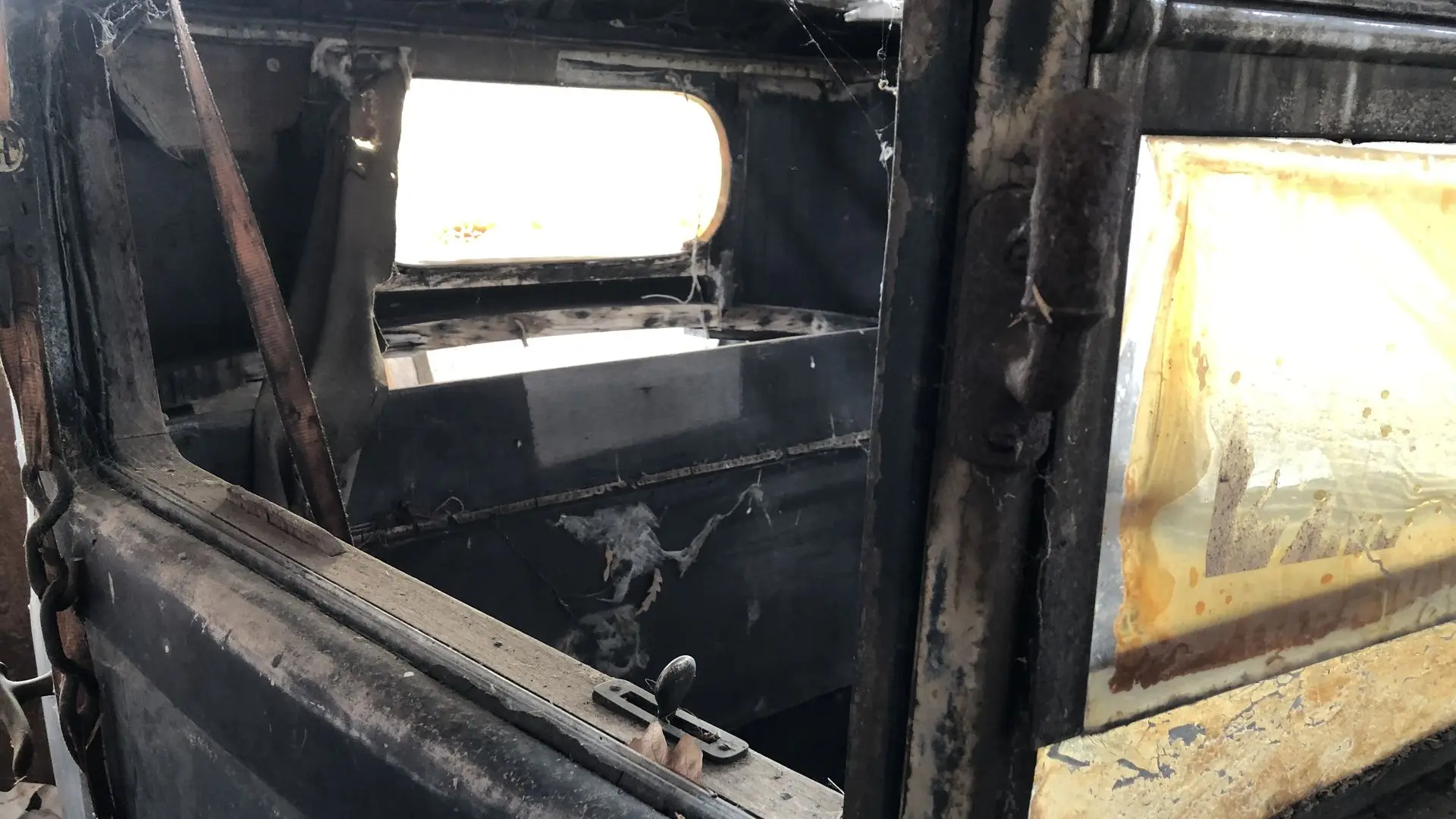
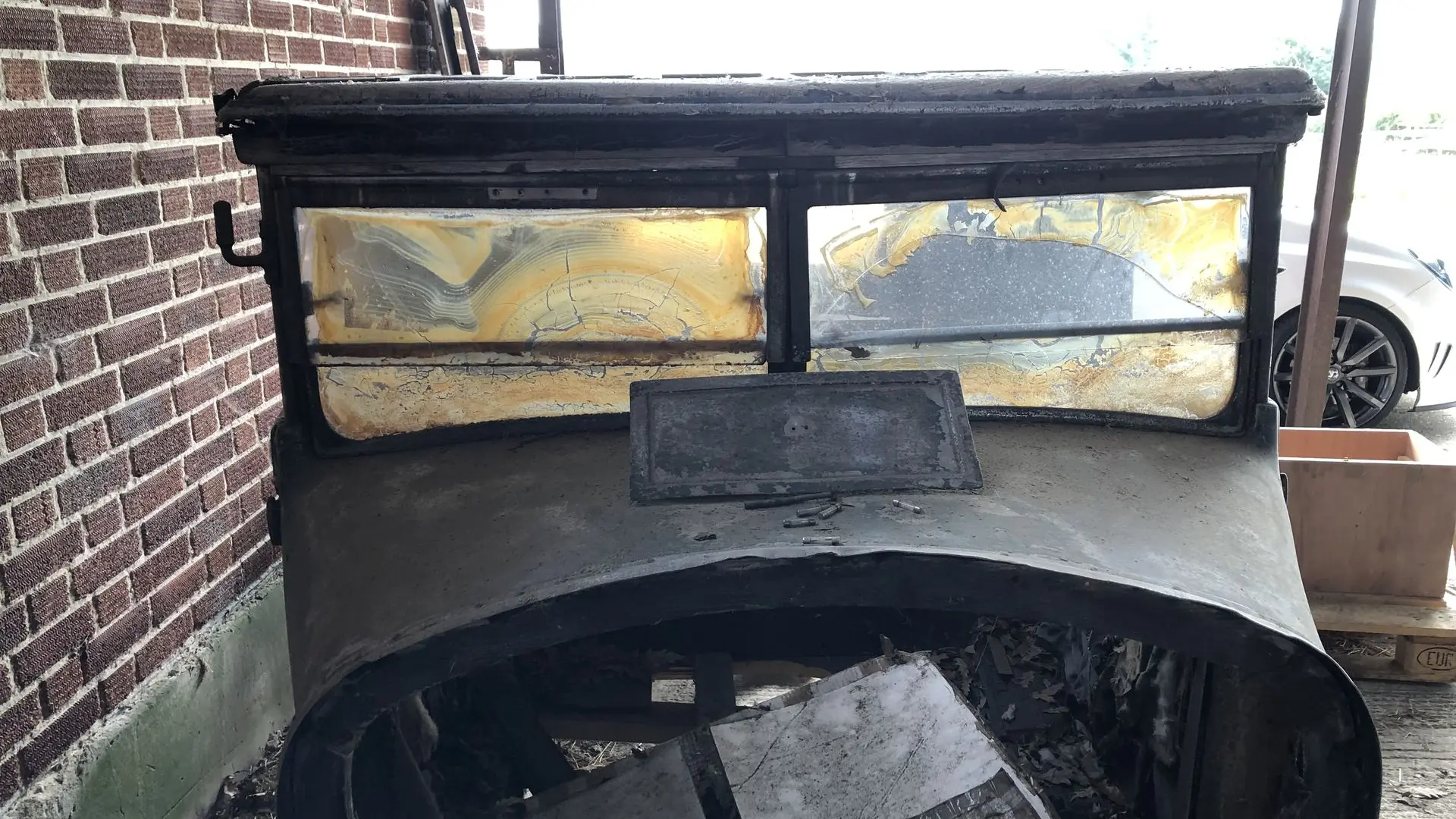
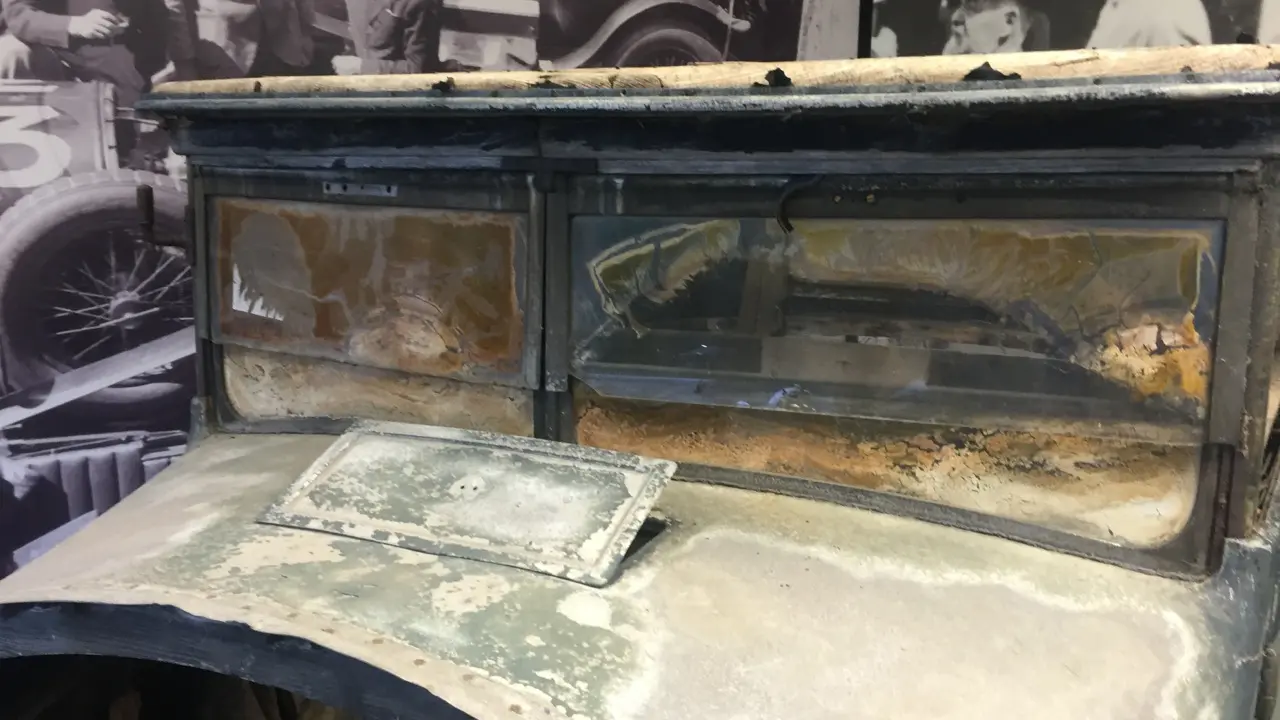
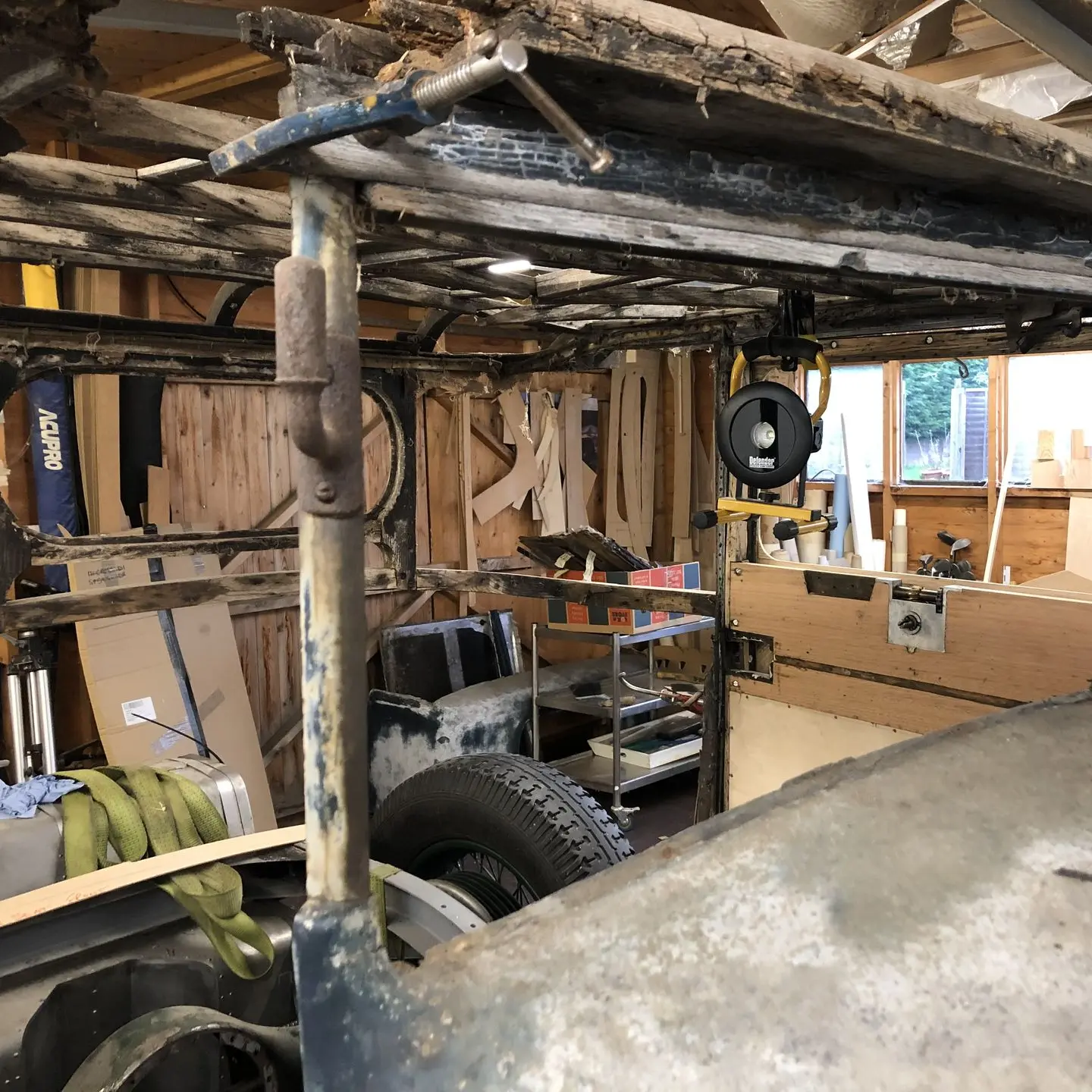
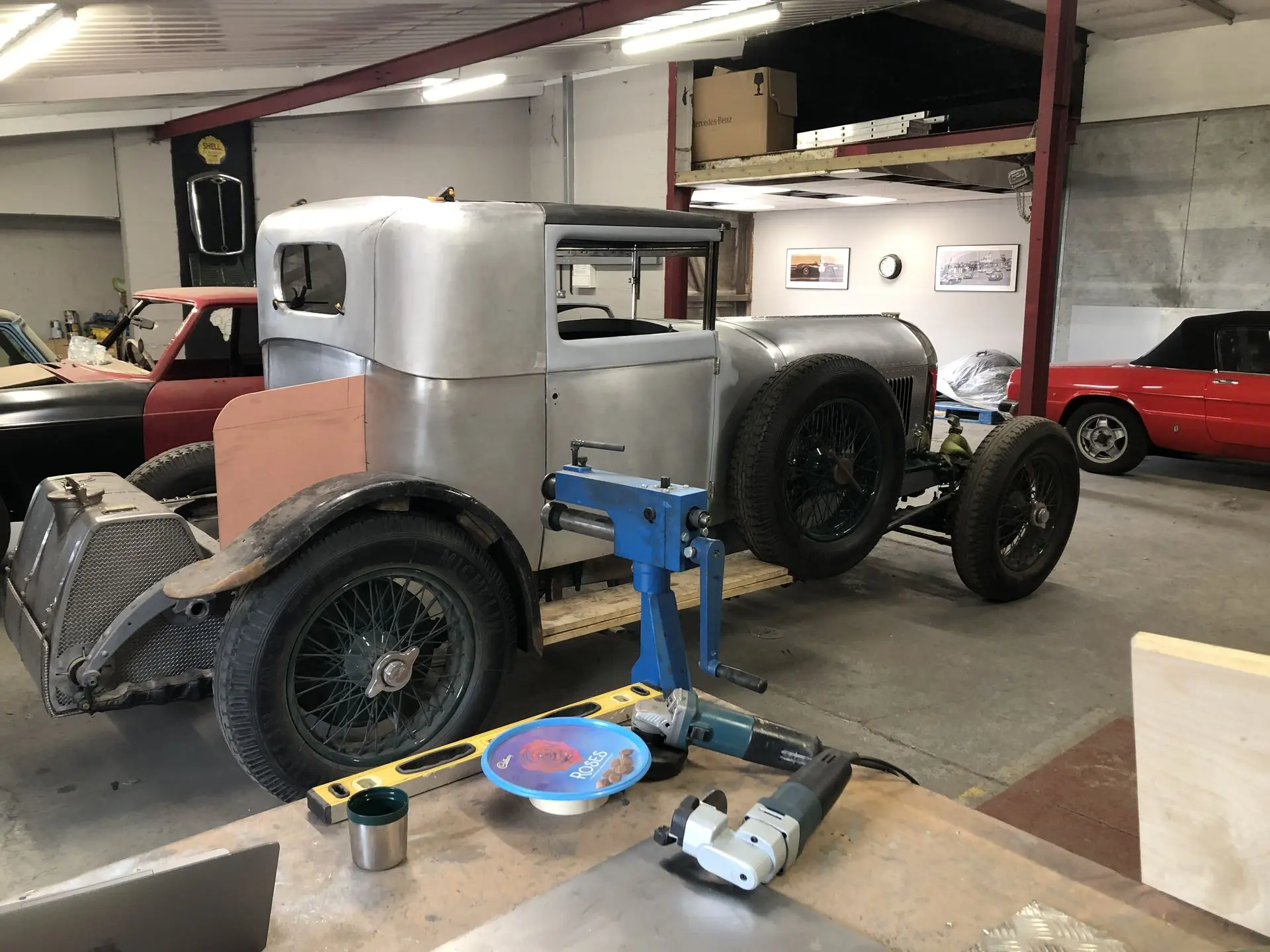
By the time the Harrison coachwork entered the project, it had survived decades of alteration, use and deterioration. Restoring it was therefore not simply a matter of refinishing an old body. The structure was dismantled so that its surviving timber, metalwork, doors and fittings could be properly assessed.
Historic material was retained wherever it remained serviceable. Where the original ash structure or metalwork had deteriorated beyond practical reuse, it was reconstructed using traditional coachbuilding methods. The result is best understood as a comprehensive reconstruction around surviving original-period Harrison coachwork, rather than an untouched 1920s body.
That distinction is important. The purpose of the project was never to disguise new work as old. It was to preserve what could responsibly be preserved, understand the original construction, and recreate what was necessary to give the surviving Harrison coachwork another working life.
The body’s restoration was carried out by three exceptional craftsmen. Robert Dean undertook the detailed assessment and reconstruction of the Harrison body's ash structure, as well as playing a major role in developing the rear treatment and trunk.
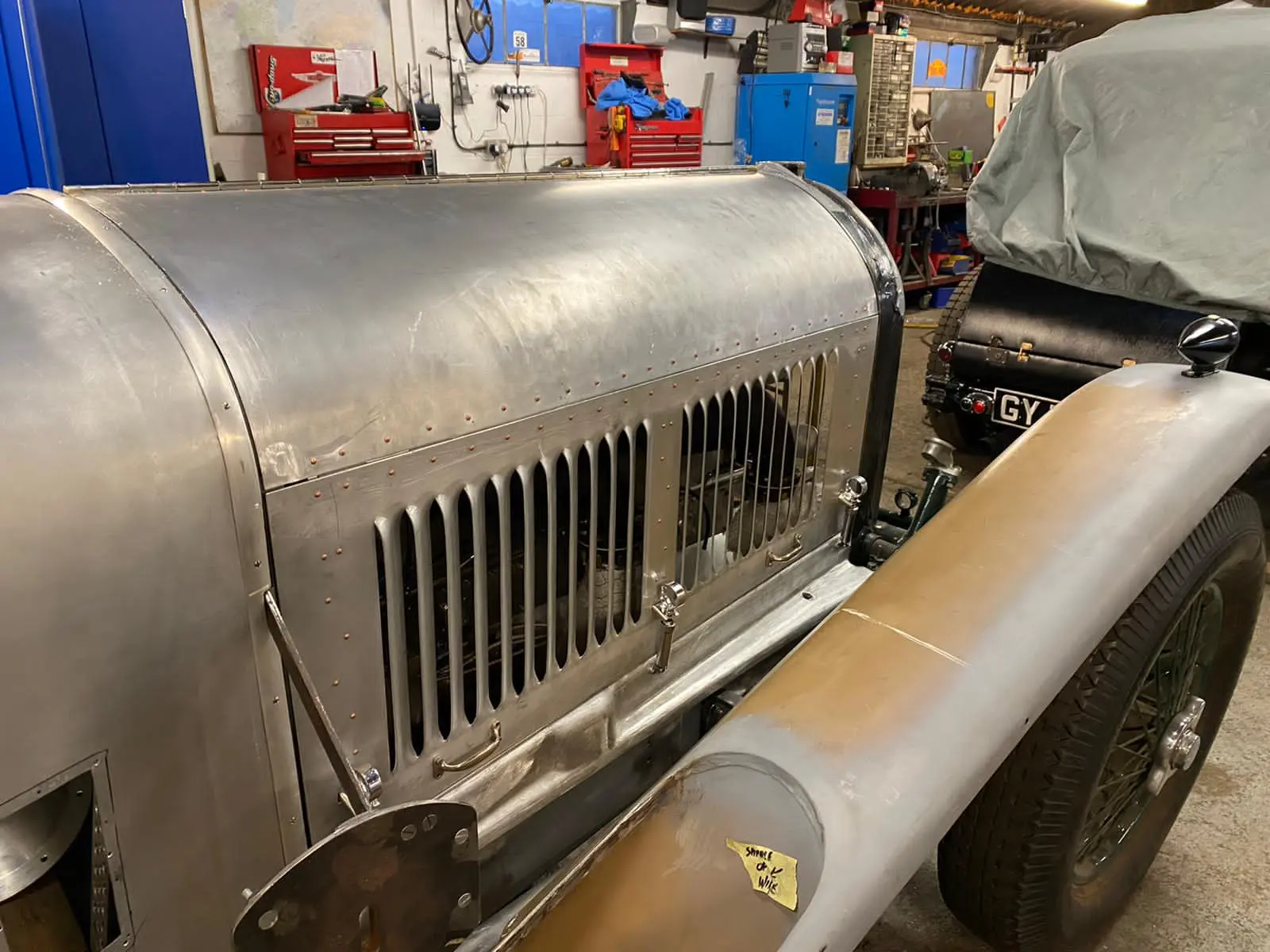
Gary Fowler carried out extensive coachwork metal finishing and panel work, including the wings and body panels.
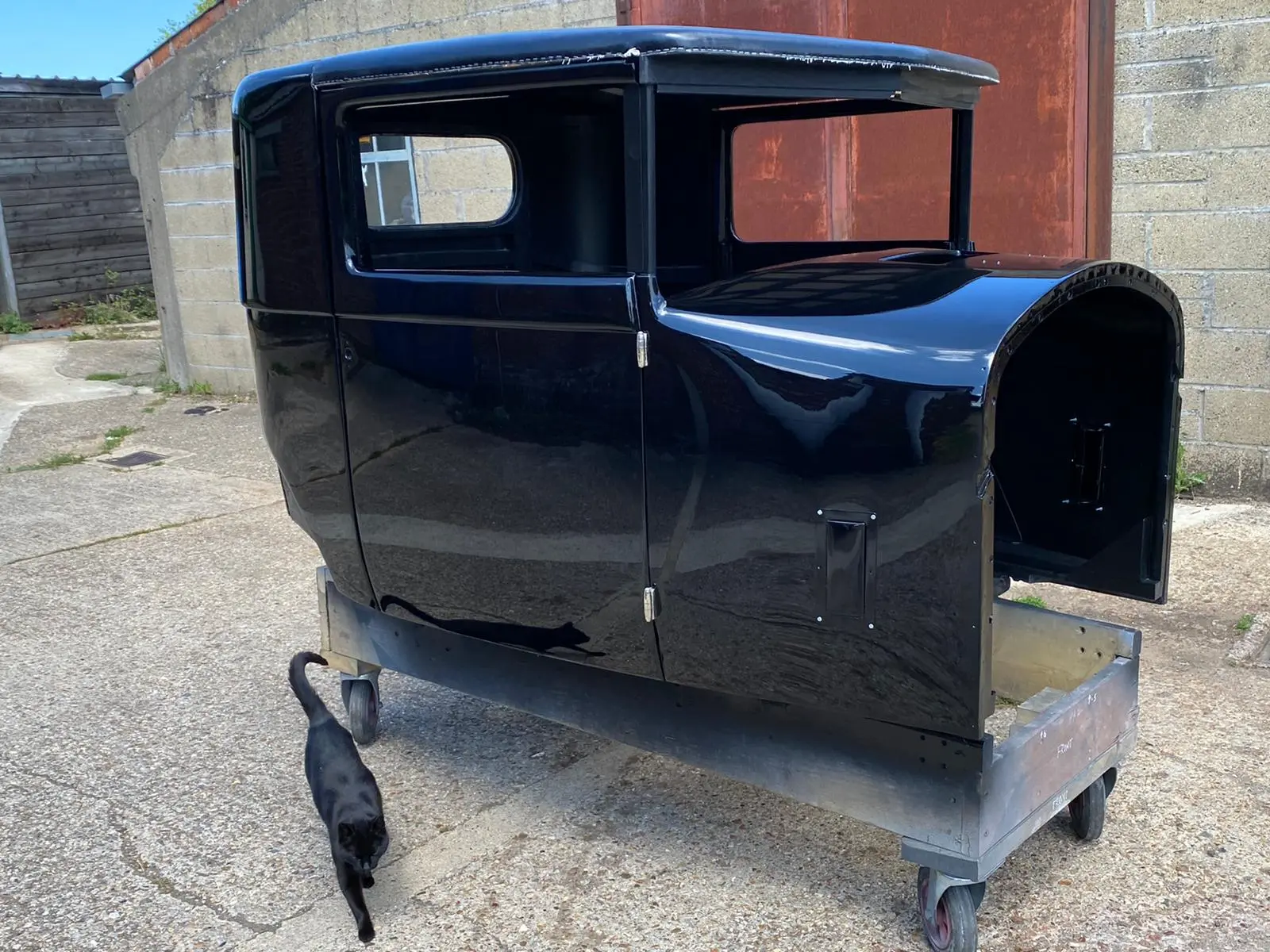
Graham Moss completed the Rexine roof treatment, while Sean Watson was responsible for the finished paintwork. David Ayre oversaw the integration of the restored coachwork with BX2411 and the wider engineering of the finished car.
When the body was completed the car was painted by Sean Watson.
Historic Harrison coachwork and the reconstruction
Surviving historic material
Original-period Harrison coachwork from BR2365, including surviving body structure, doors, metalwork and fittings where serviceable.
Reconstructed
Deteriorated structural timber and metalwork where original material could not responsibly be reused.
Created for YF2186
Bonnet and scuttle treatment, wings and running boards, rear treatment, Le Mans tank integration, Brooks-style trunk and finished interior.
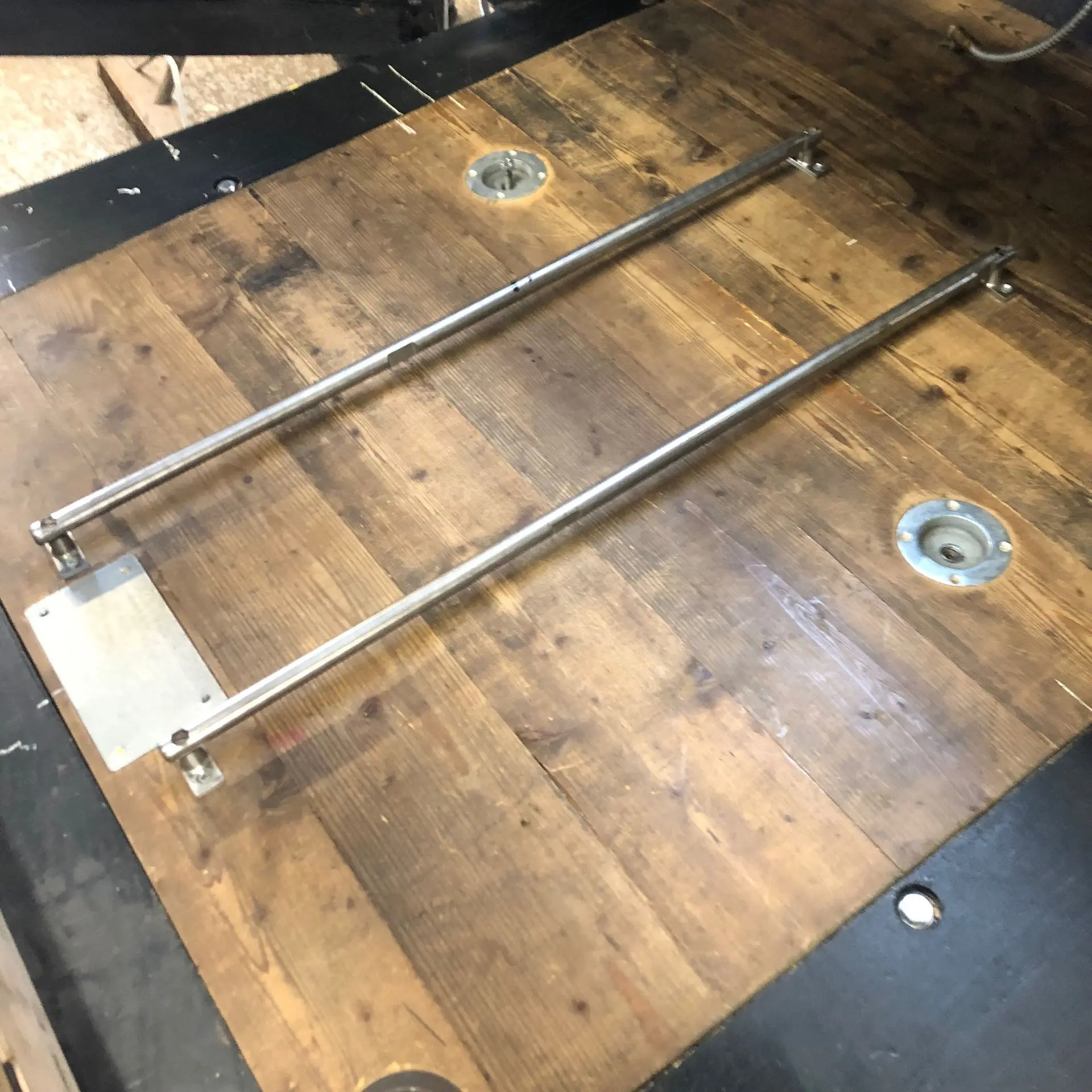
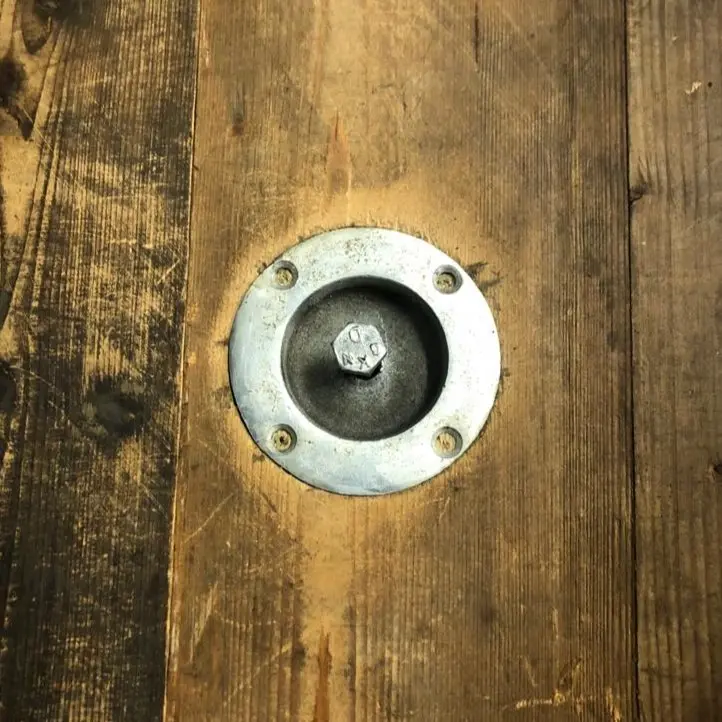
The 'Co-Op' Floor
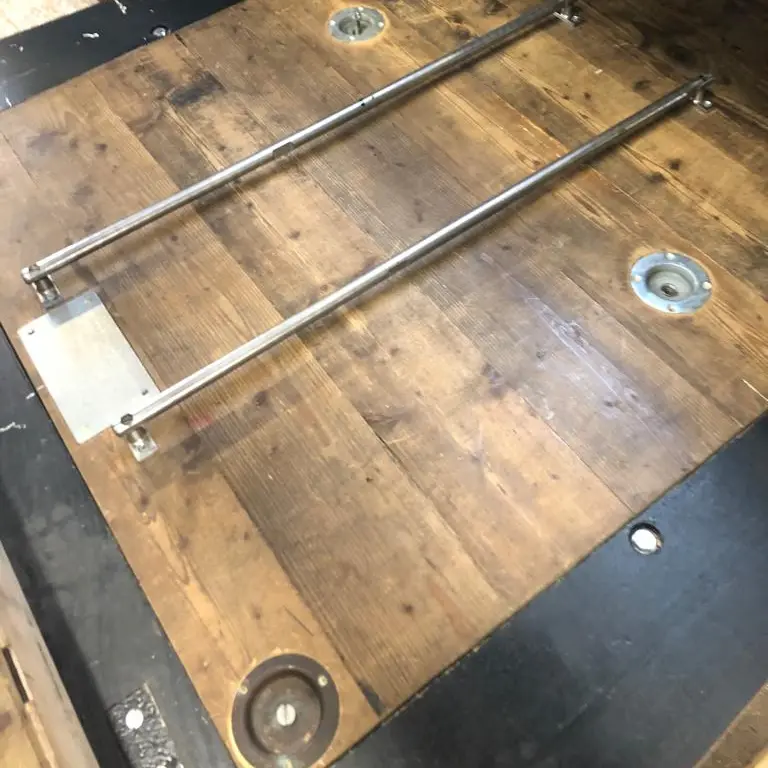
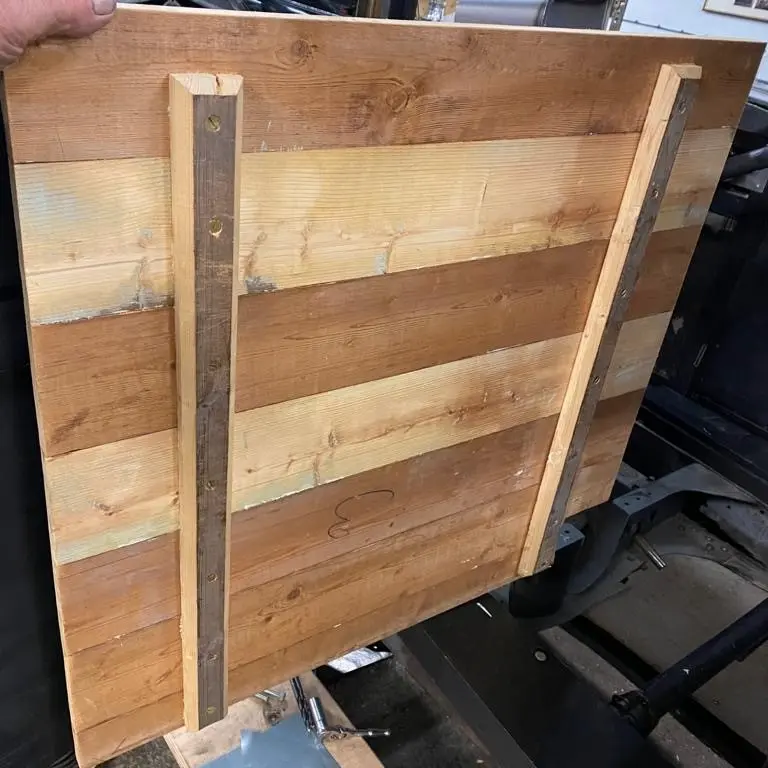
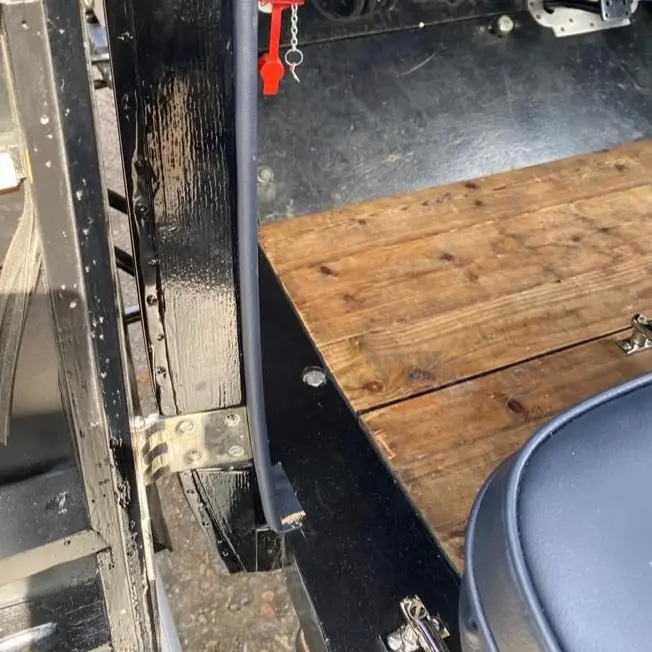
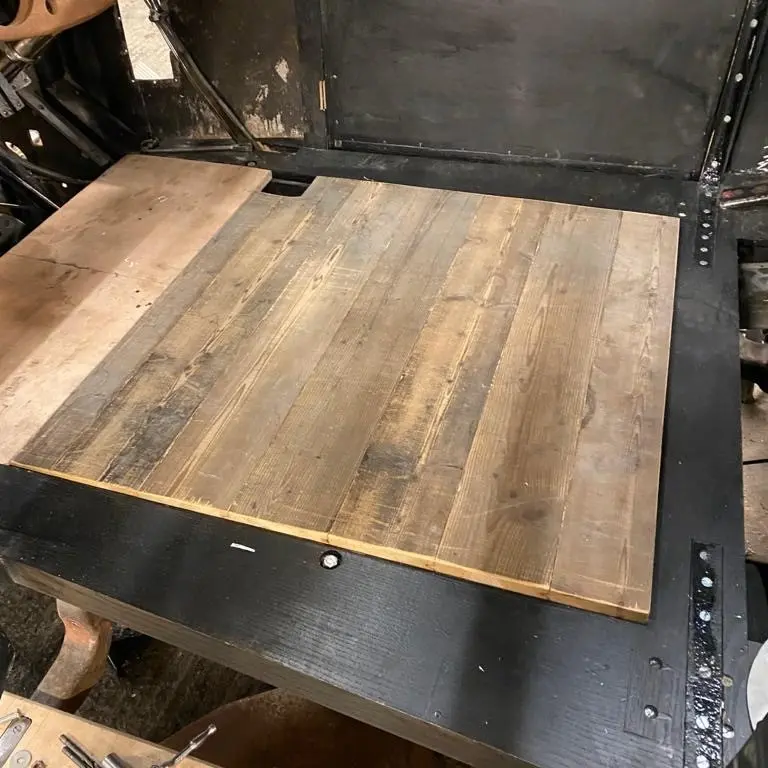
During reassembly, David Ayre fabricated a new floor using high-quality plywood. A few weeks earlier, while visiting William Medcalfe’s showroom, I had seen an exceptionally original 4.5-litre Bentley. When the carpet was lifted, the car still retained its original numbered floor planks and fittings. We were both surprised that they had survived intact.
I discussed this discovery with David and we considered how best to replicate the construction of that original floor. David quite rightly noted that the result we wanted would ideally use timber of a similar age, which is not exactly easy to source.
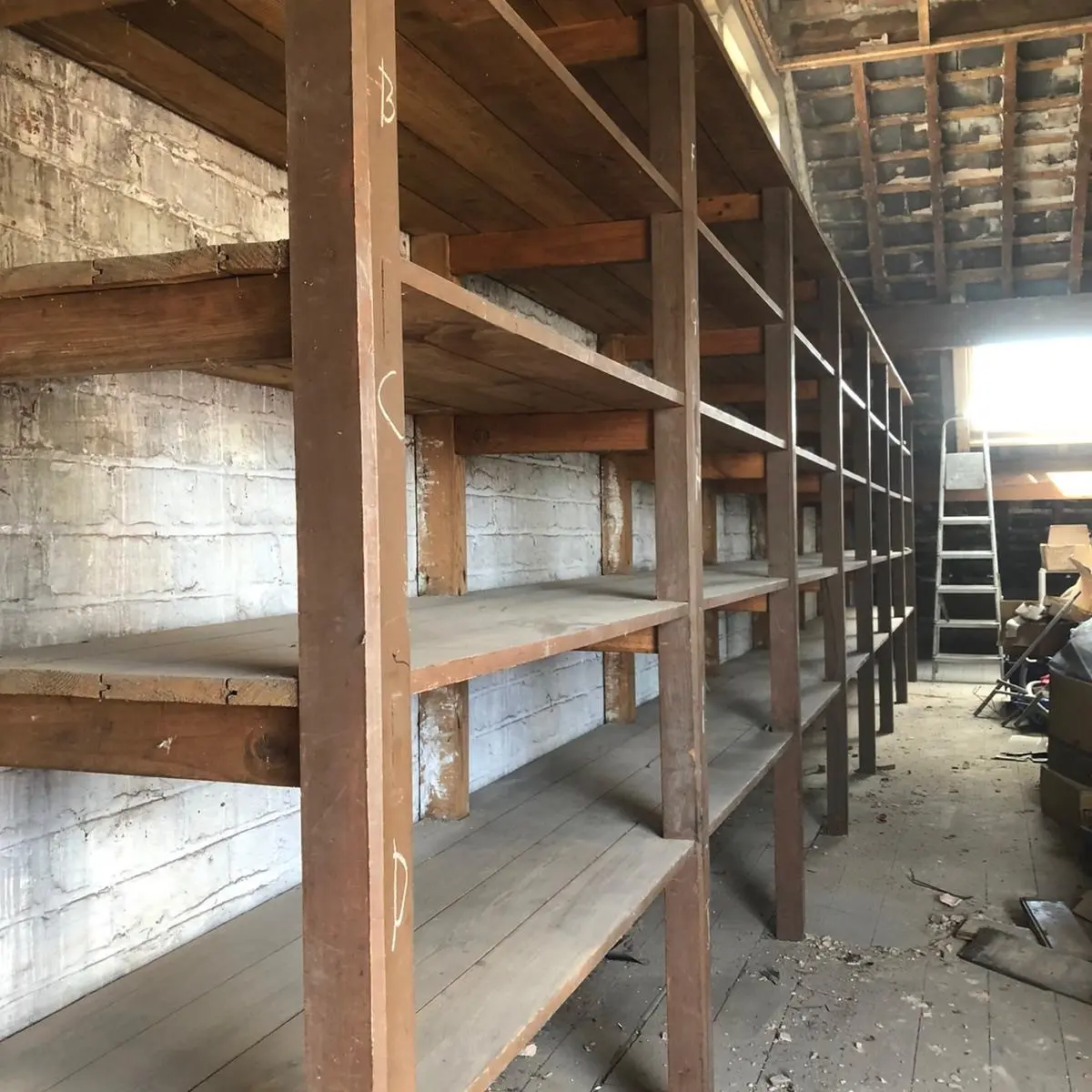
By coincidence, my brother was in the process of converting the upper floor of a former Co-op food store dating from the 1920s or 1930s. The original timber wall linings and warehouse shelving were being removed. The boards were beautifully patinated and of bead-and-butt construction rather than tongue and groove. I made a 320-mile round trip to the North West, selected the best pieces, and we remade the floor using these original planks.
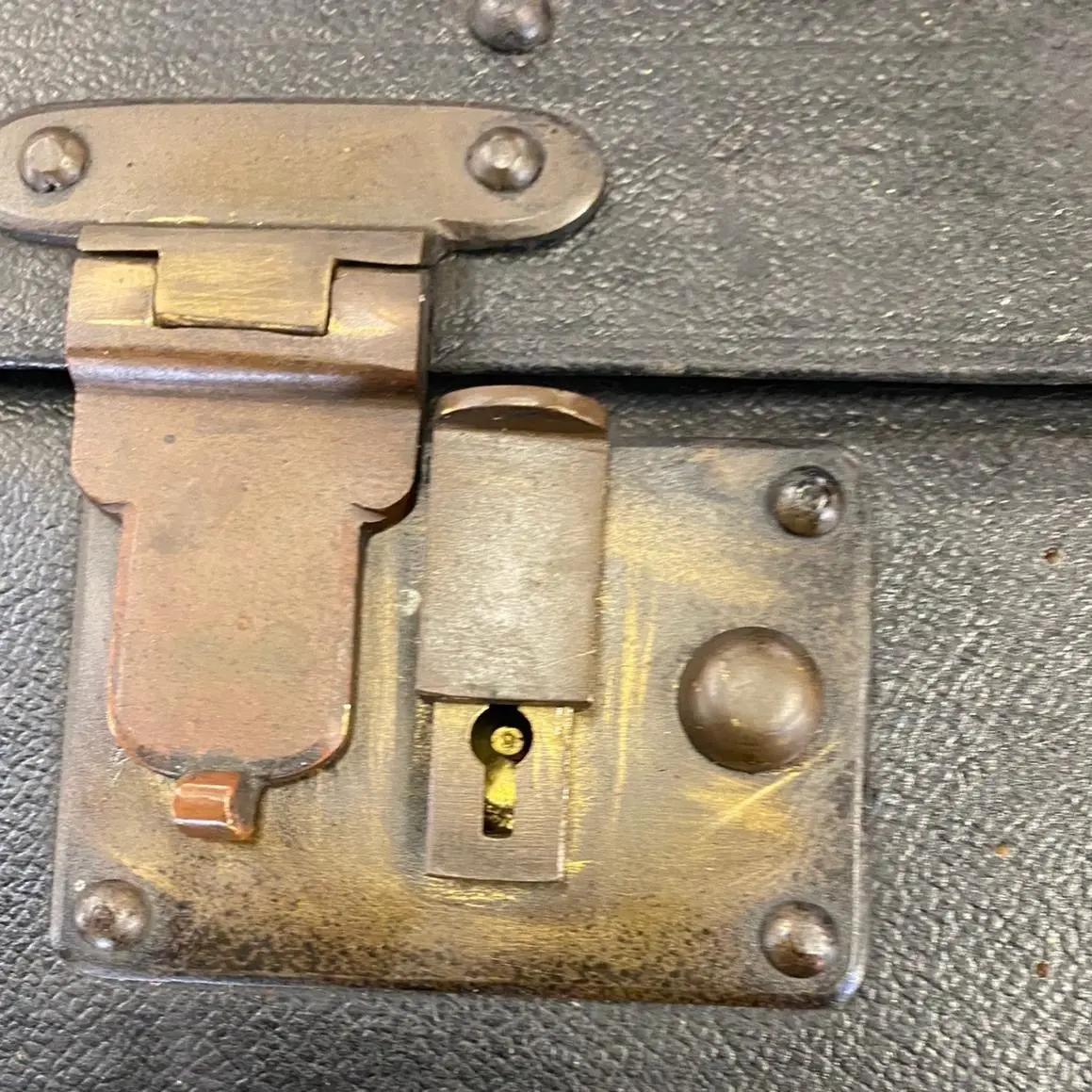
David also managed to source an original metal fitting and catch. Using this as a pattern, several more were made by hand and fitted to the floor. ‘Of course no one will ever see them,’ David remarked at the time. But we know they are correct, and more importantly they function exactly as intended when the car requires servicing or access to the drivetrain.
The Bonnet and Scuttle
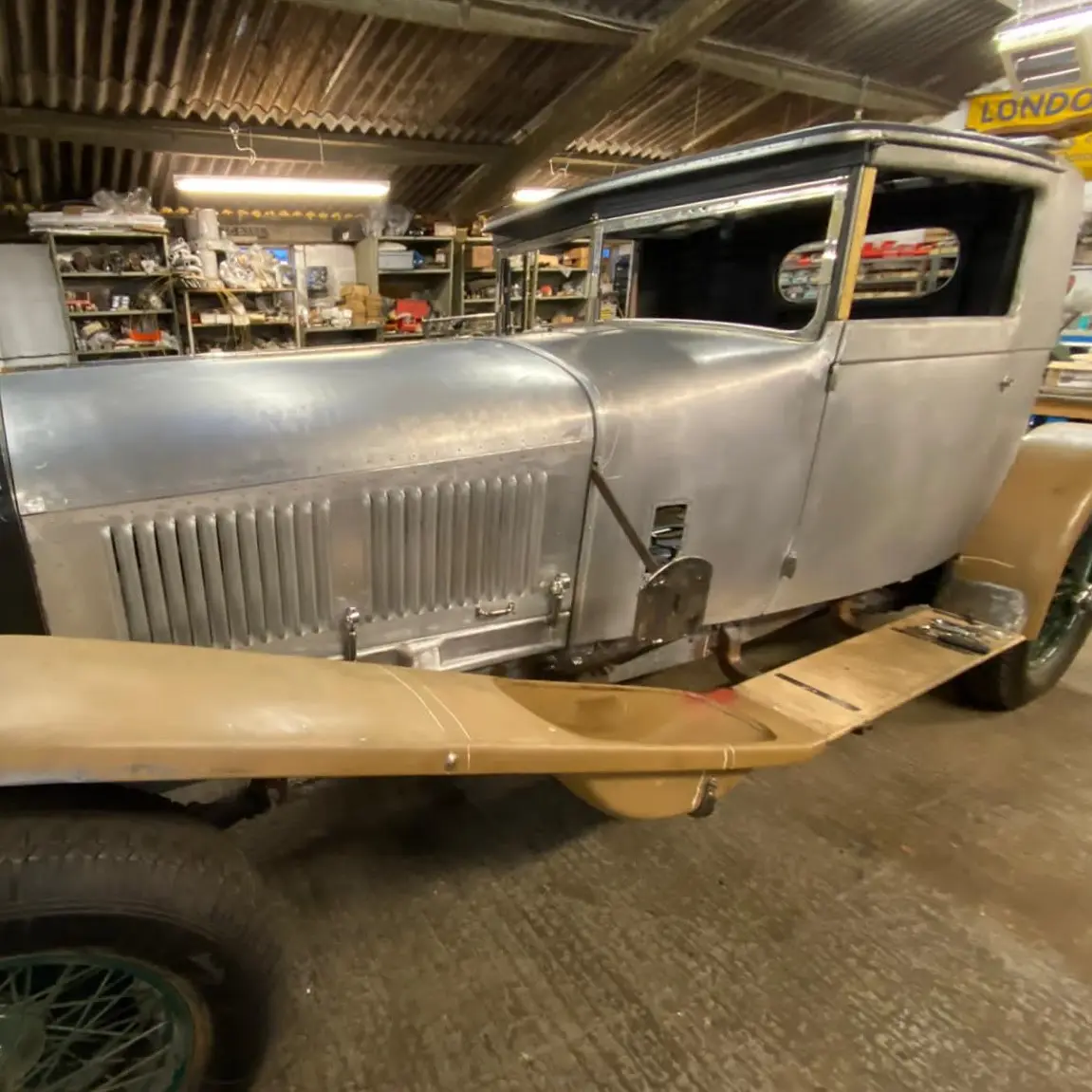
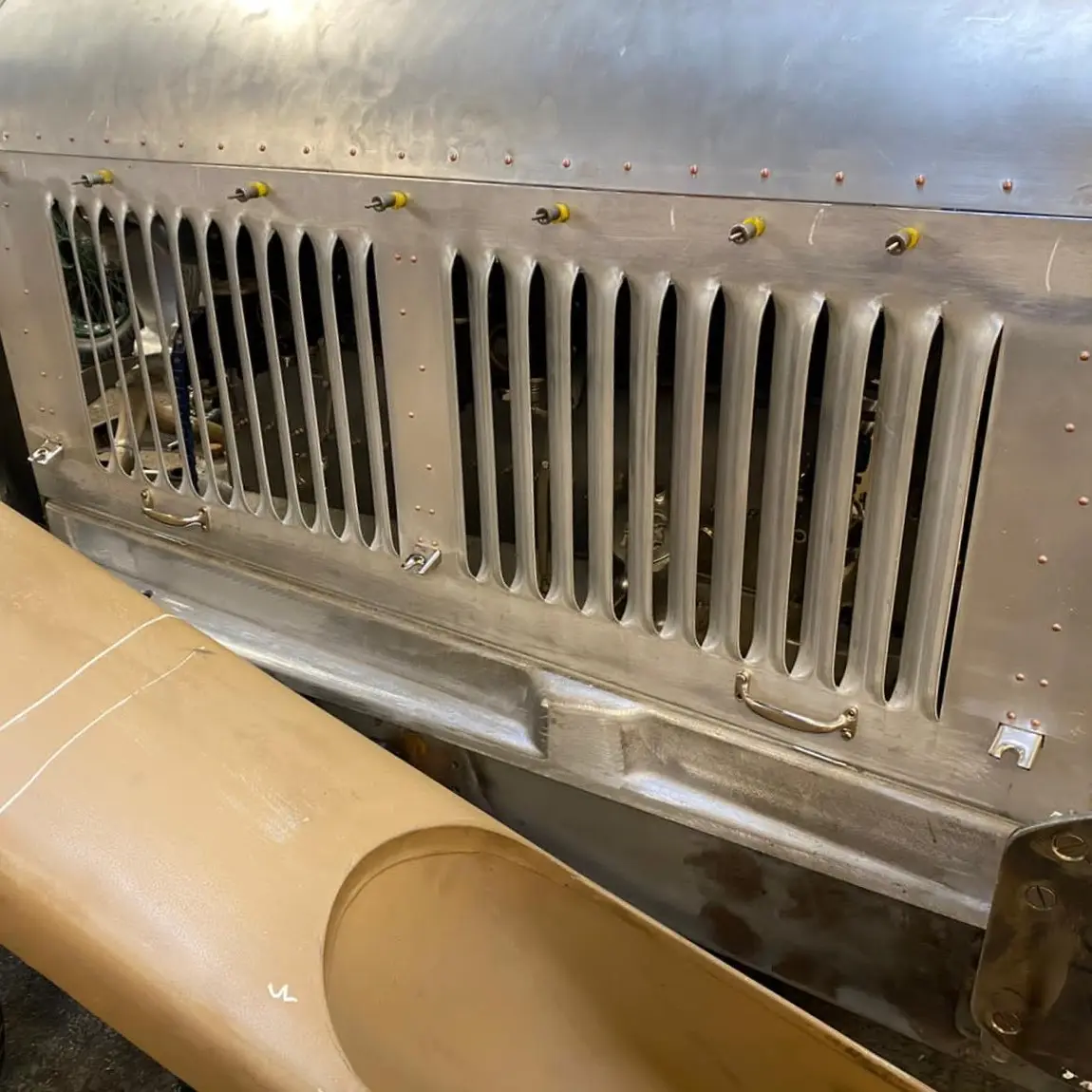
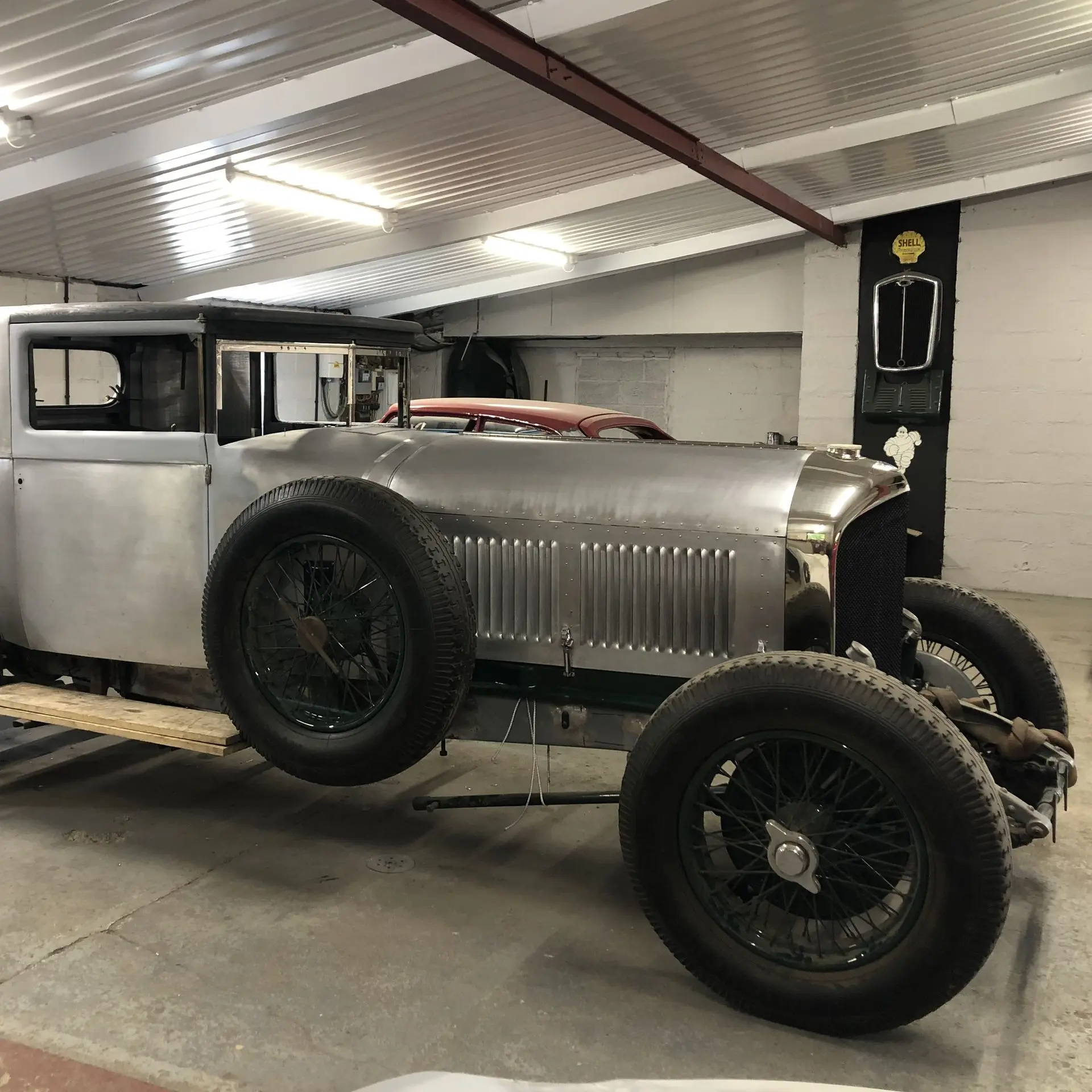
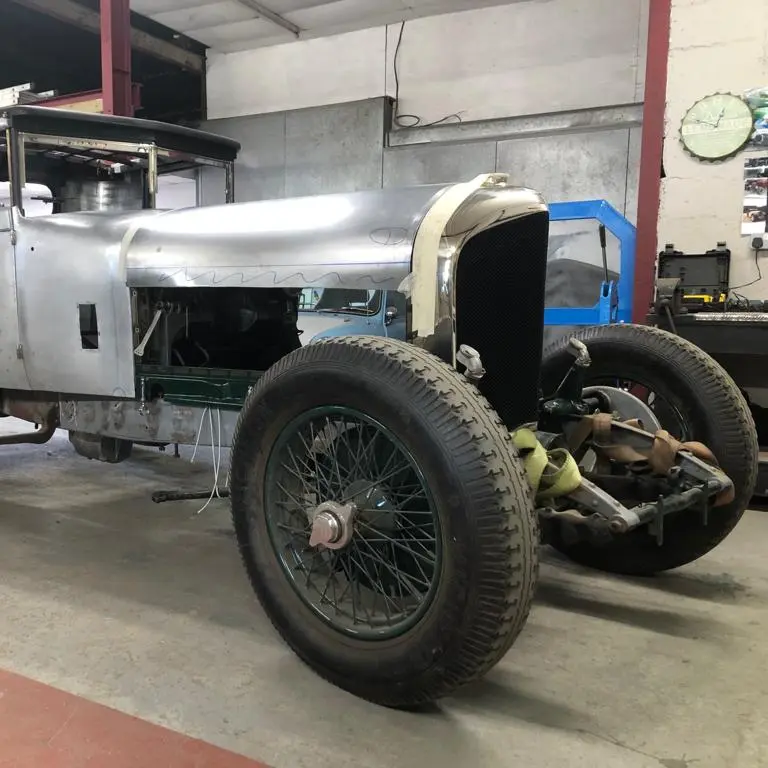
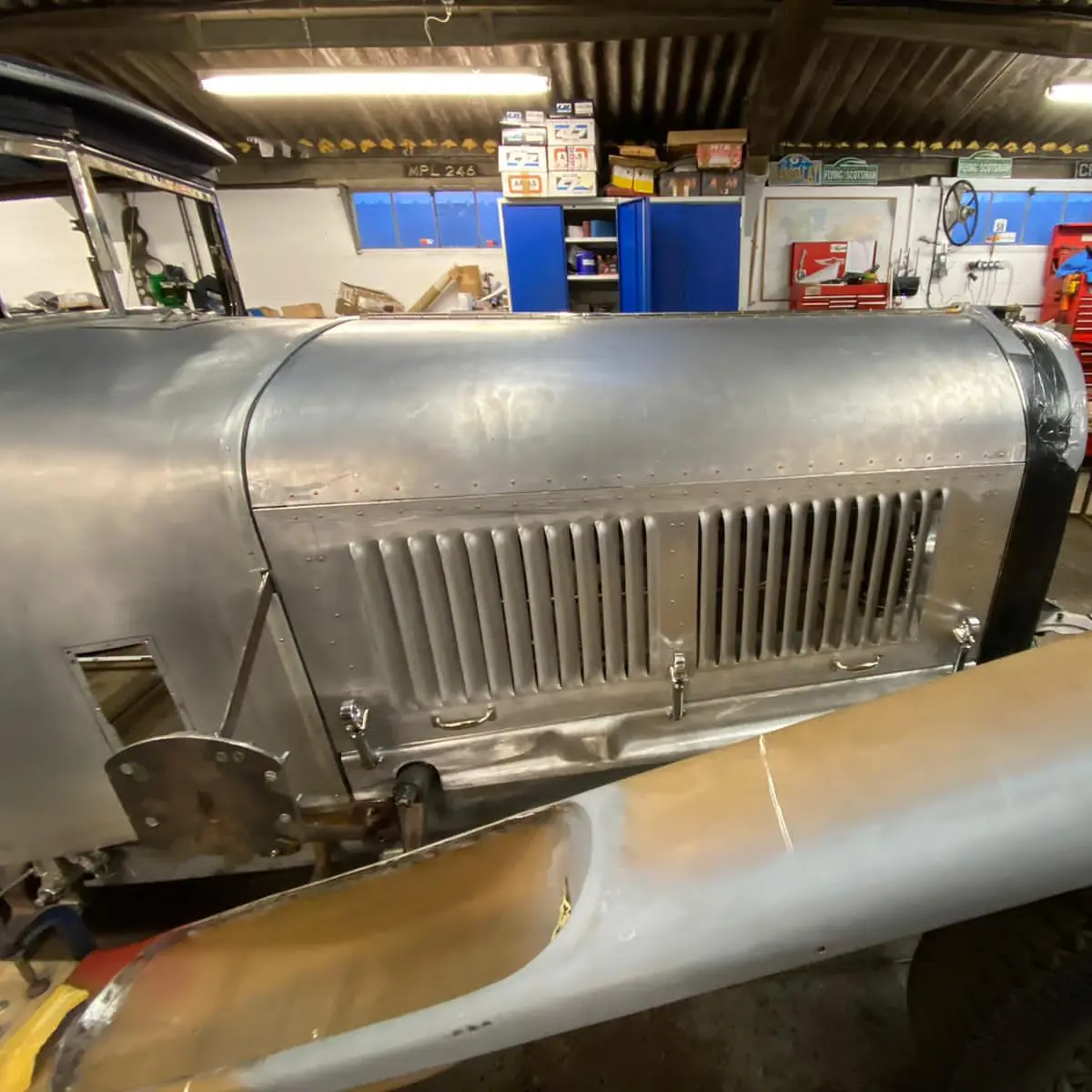
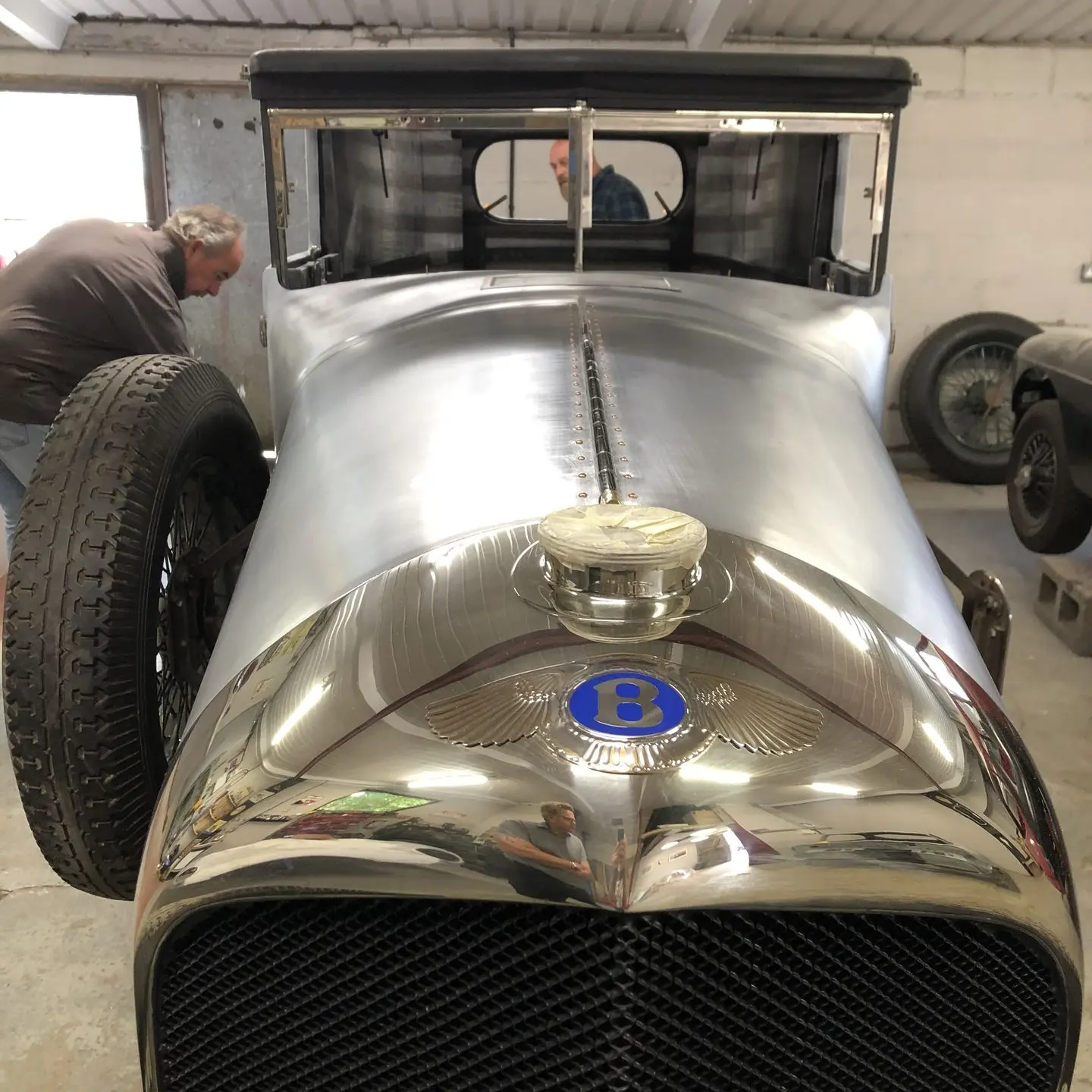
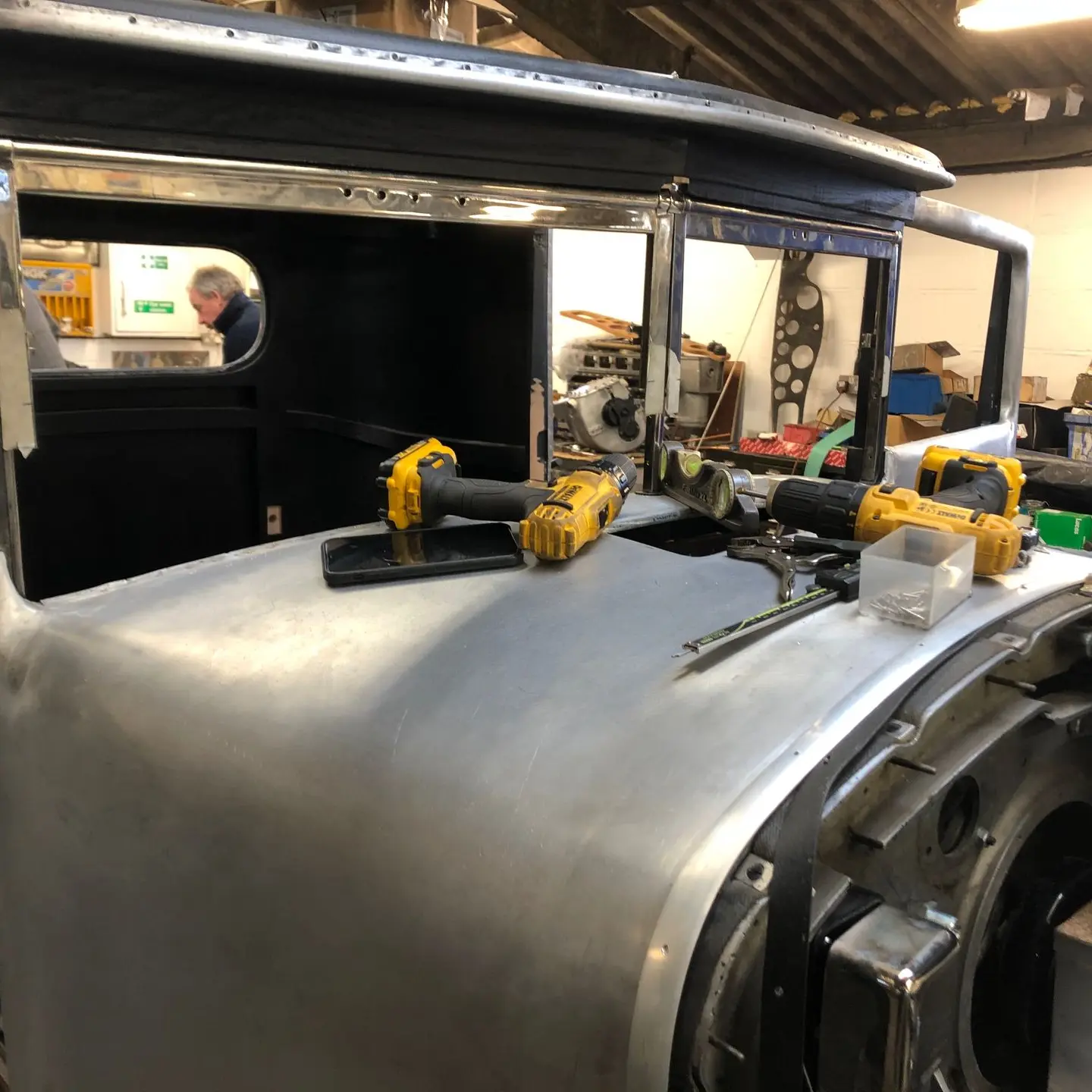
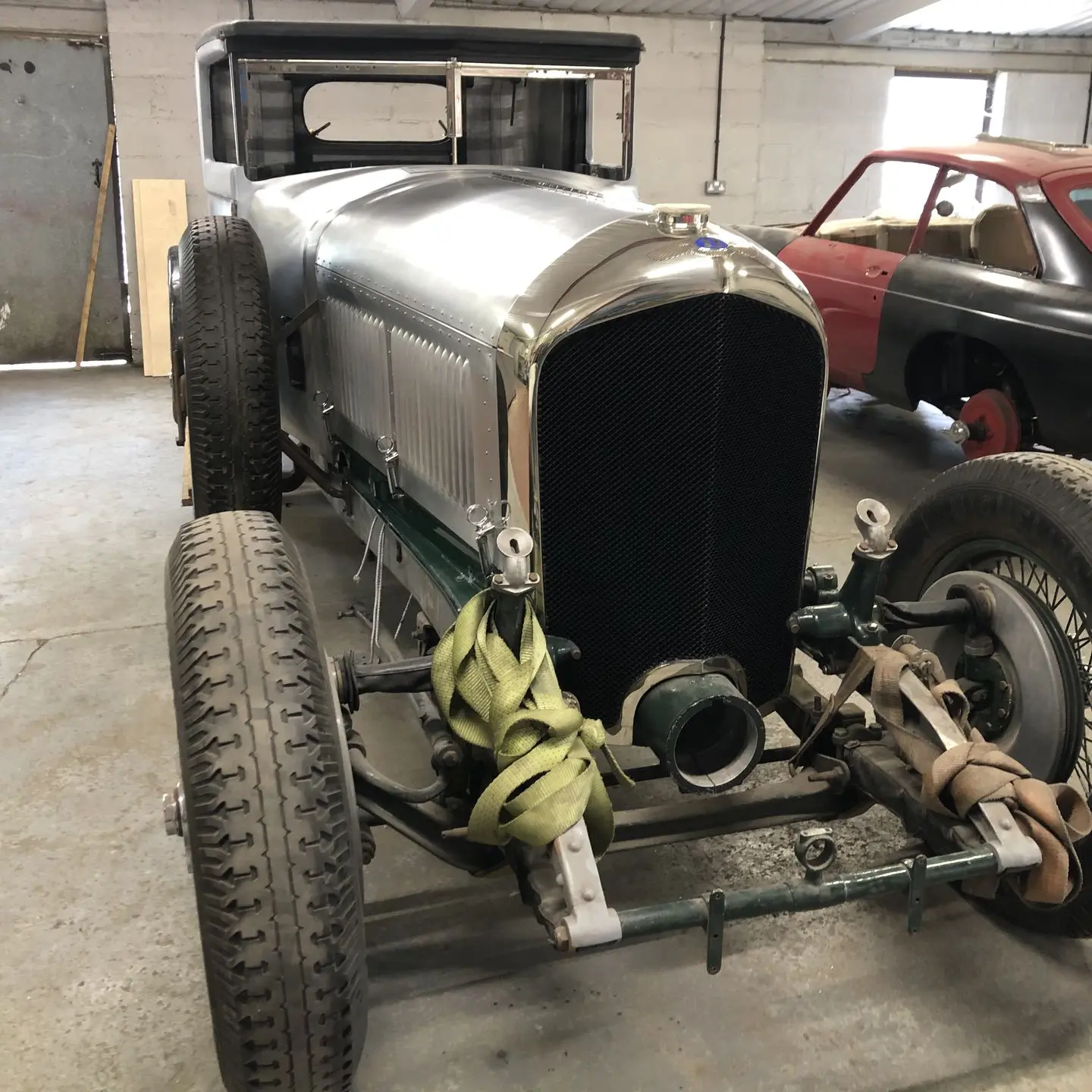
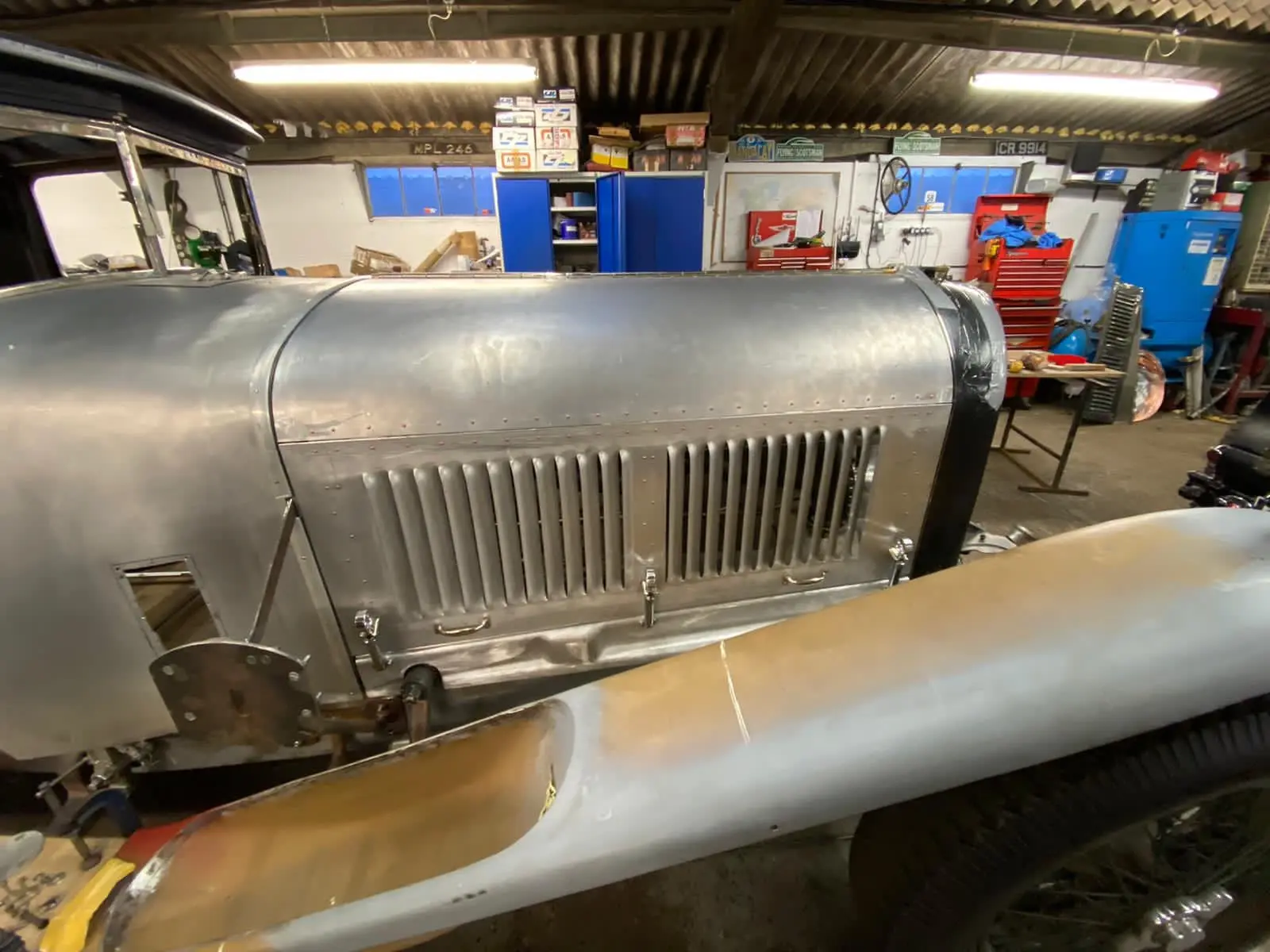
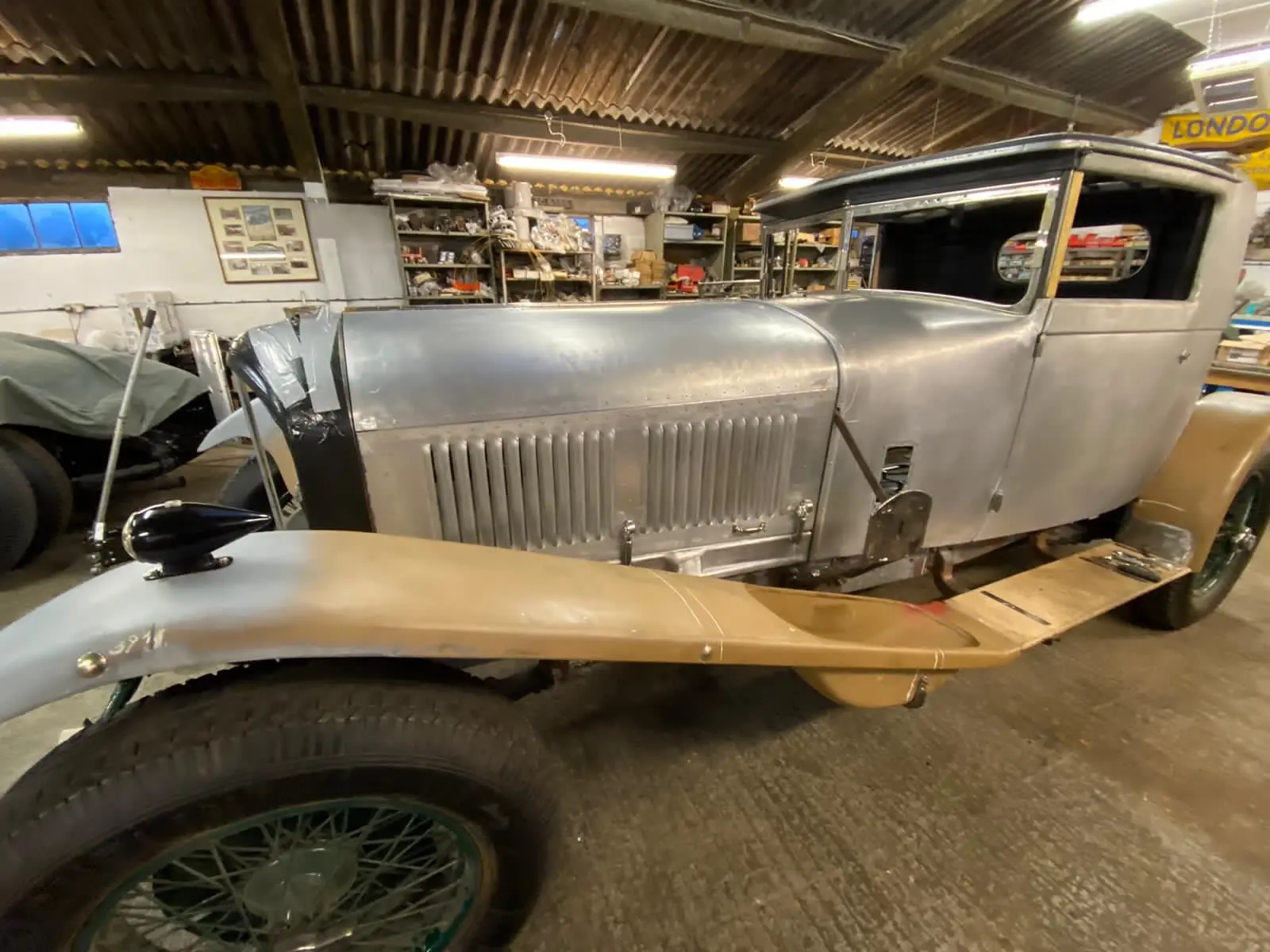
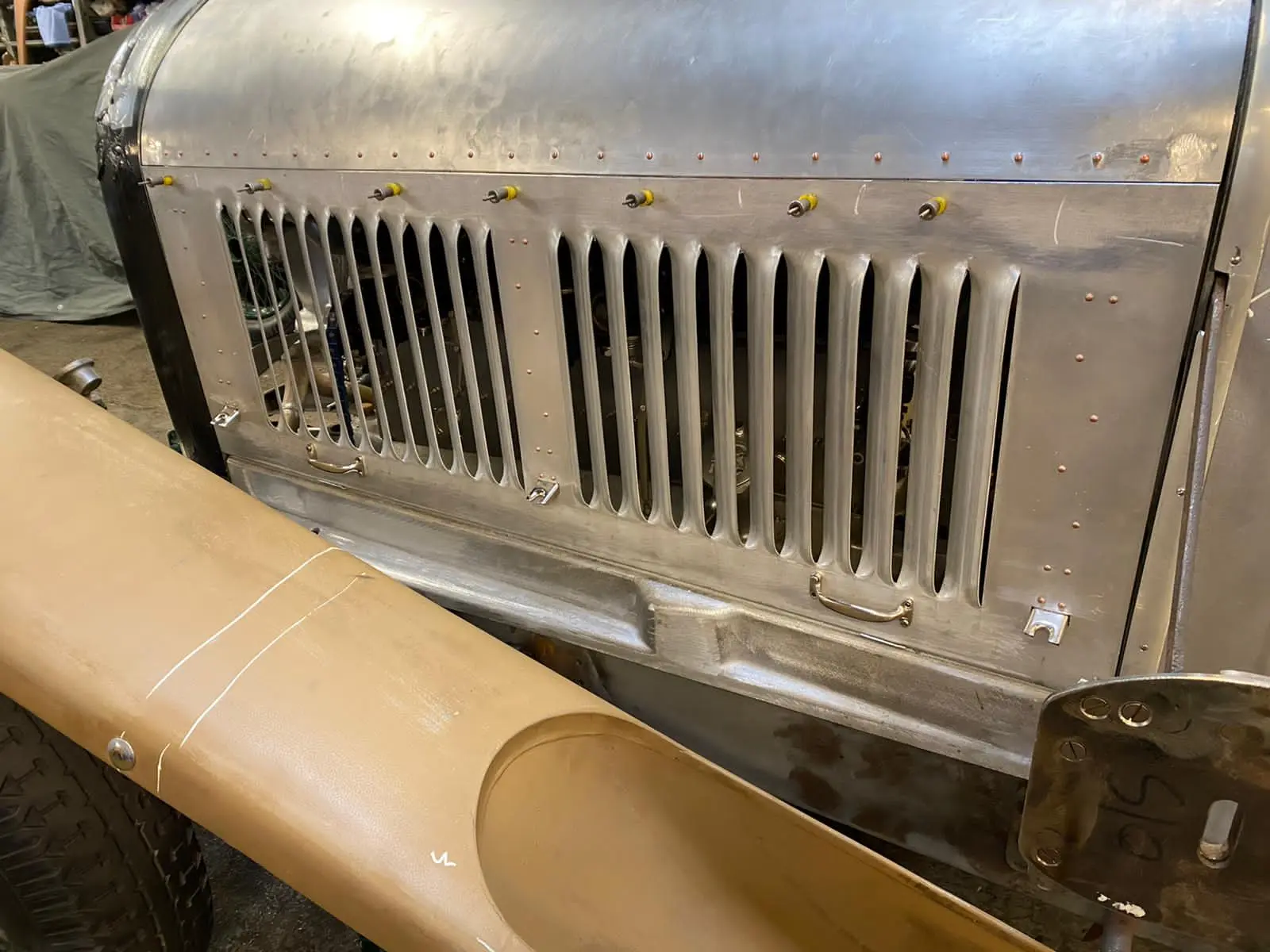
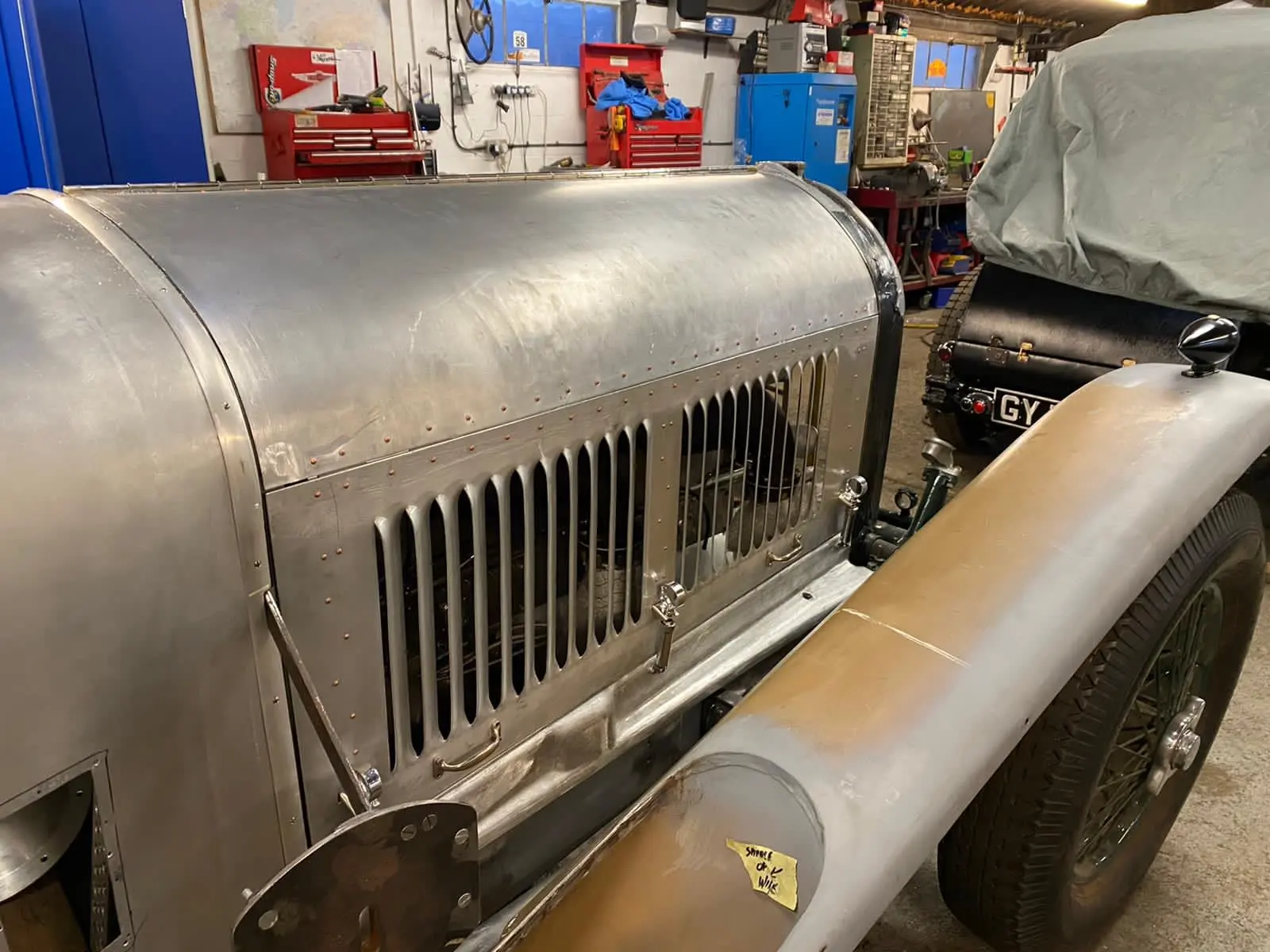
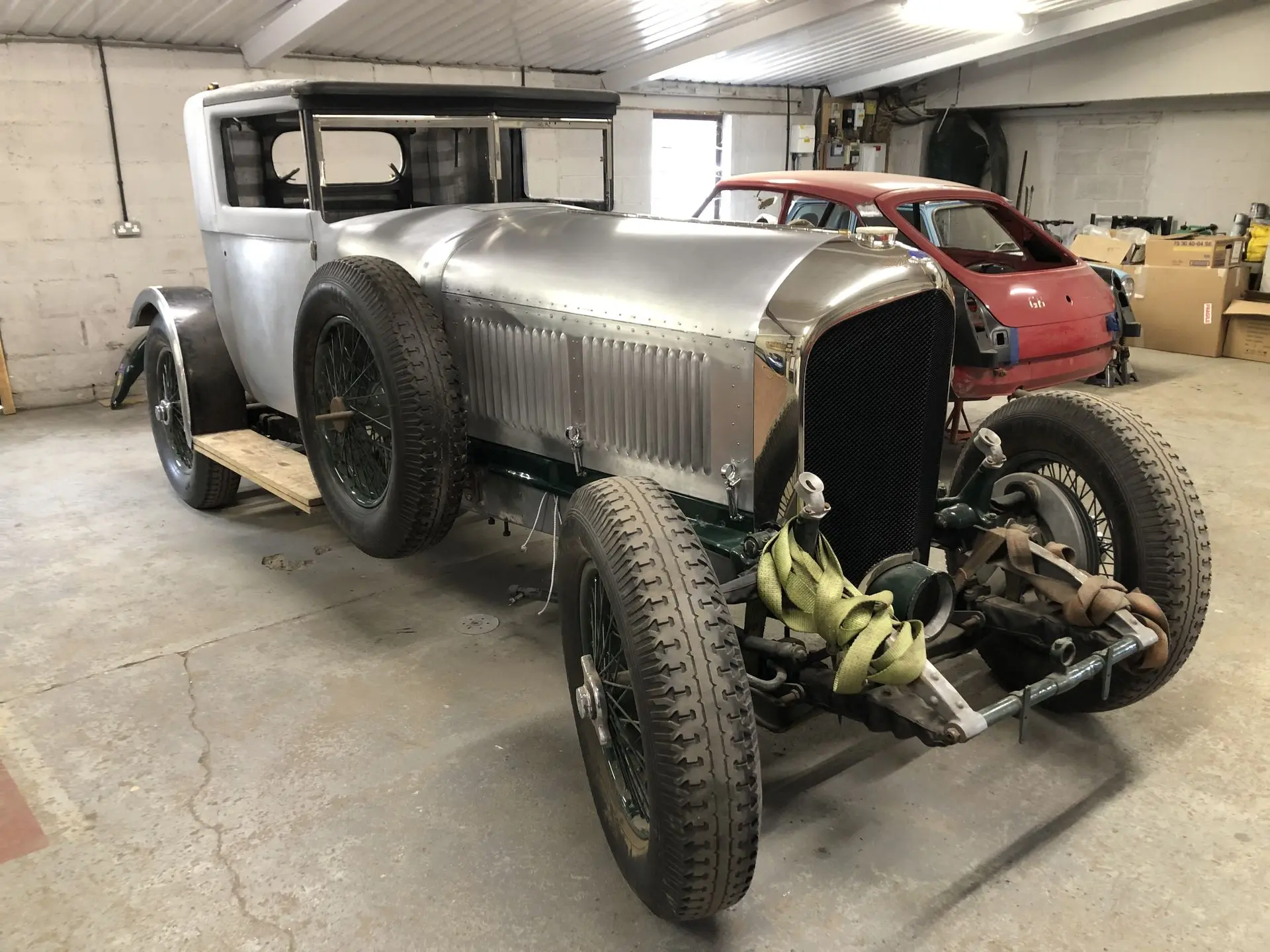
Connecting YF 2186’s radiator to the Harrison body are exquisitely crafted bonnet and side panels. In keeping with the rest of the coachwork, these panels were formed in aluminium and went through numerous design iterations to ensure the lines flowed naturally from the radiator shell through to the tail.
The result is a long, continuous sweep that unifies the car’s profile and emphasises the elegance and coherence of the final design.
Wings and running boards
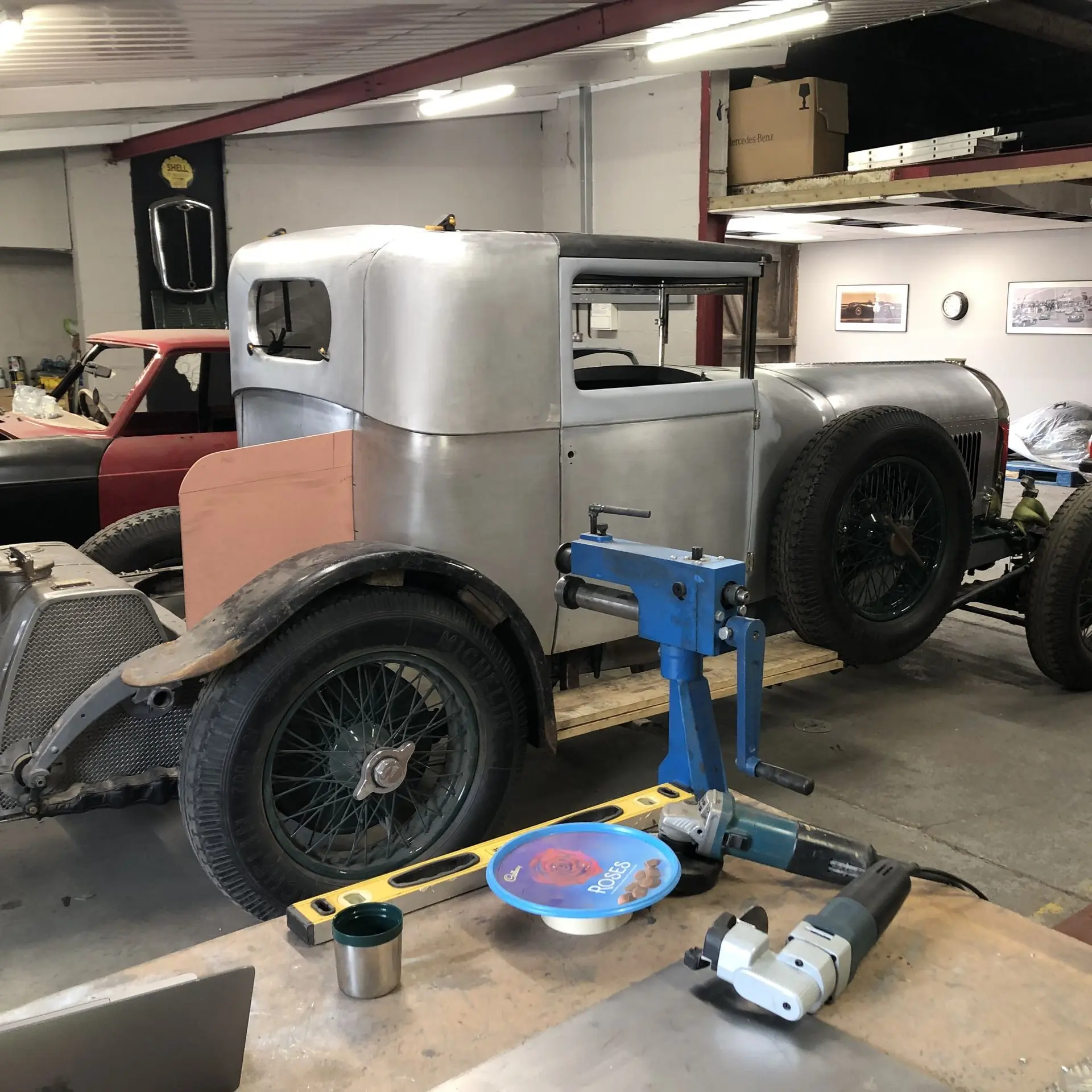
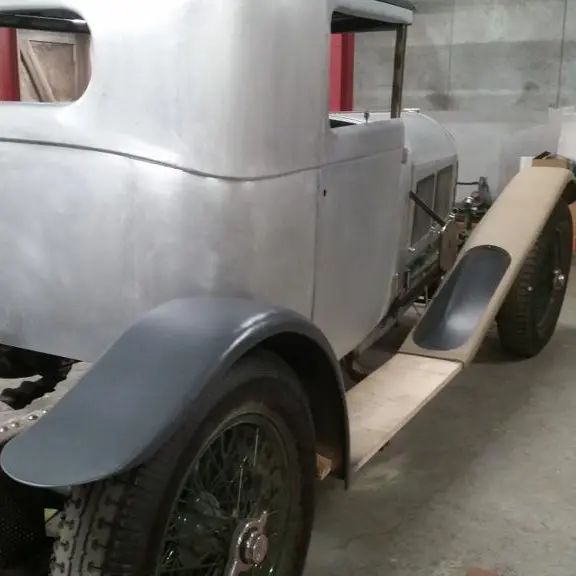
The wings and running boards were elements that had to be entirely new, yet absolutely correct in character. From the outset, David Ayre was clear that the running boards should be simple, unadorned and functional, while the front wings needed to carry spare wheels on both sides. This was essential to underline the sporting intent of the Le Mans coupe.
David was also responsible for the rear wing design, which rises very slightly as it reaches the tail of the car. The effect gives the impression of motion even when the car is stationary. The idea itself was straightforward, but achieving it in metal proved far from simple.
In practice, the wings were made twice. After the first set was completed, we reviewed the car’s profile together with Graham Moss to gain a second opinion. It became clear that the wings, particularly at the front, were too rounded across the crown. To achieve the correct period feel and visual tension, the tops needed to be flatter and more purposeful.
A dedicated jig was produced so the wings could be transported and reworked, with particular focus on reshaping the front pair. It was a time-consuming, frustrating and expensive decision, but an essential one. The wings had to be right, and they now properly complement the sporting character of the two-door coupe body.
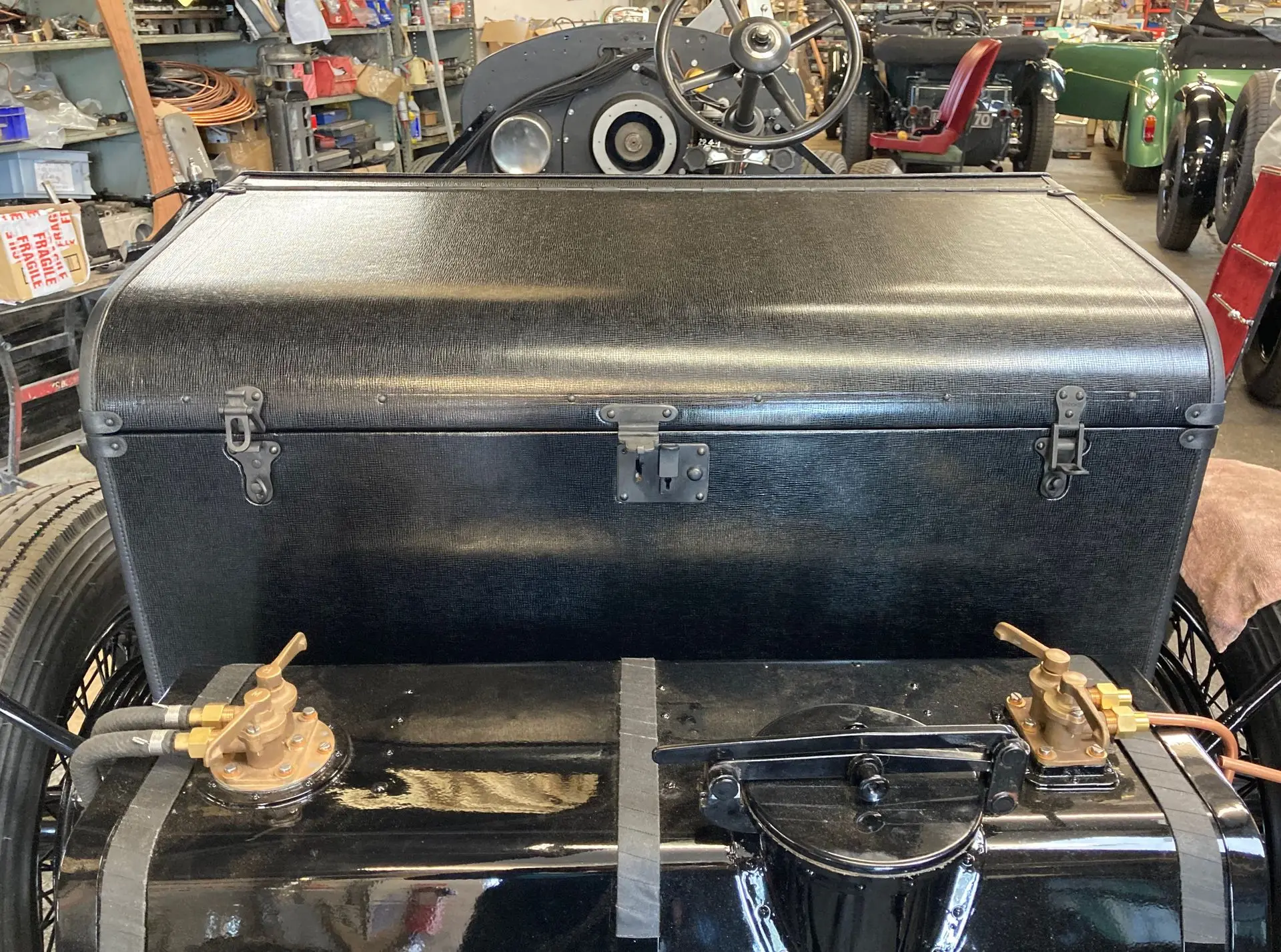
The Le Mans tank & Brooks trunk
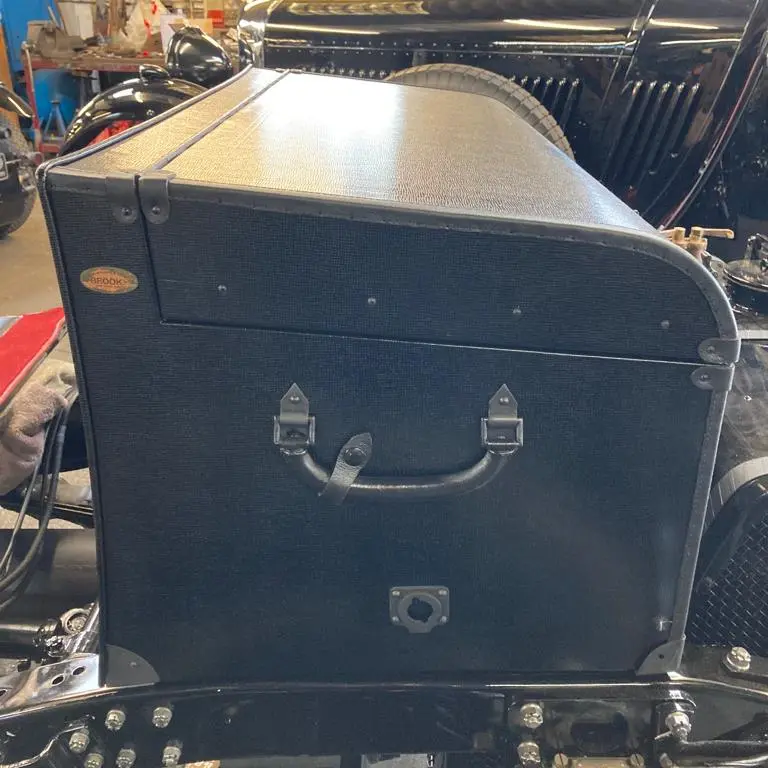
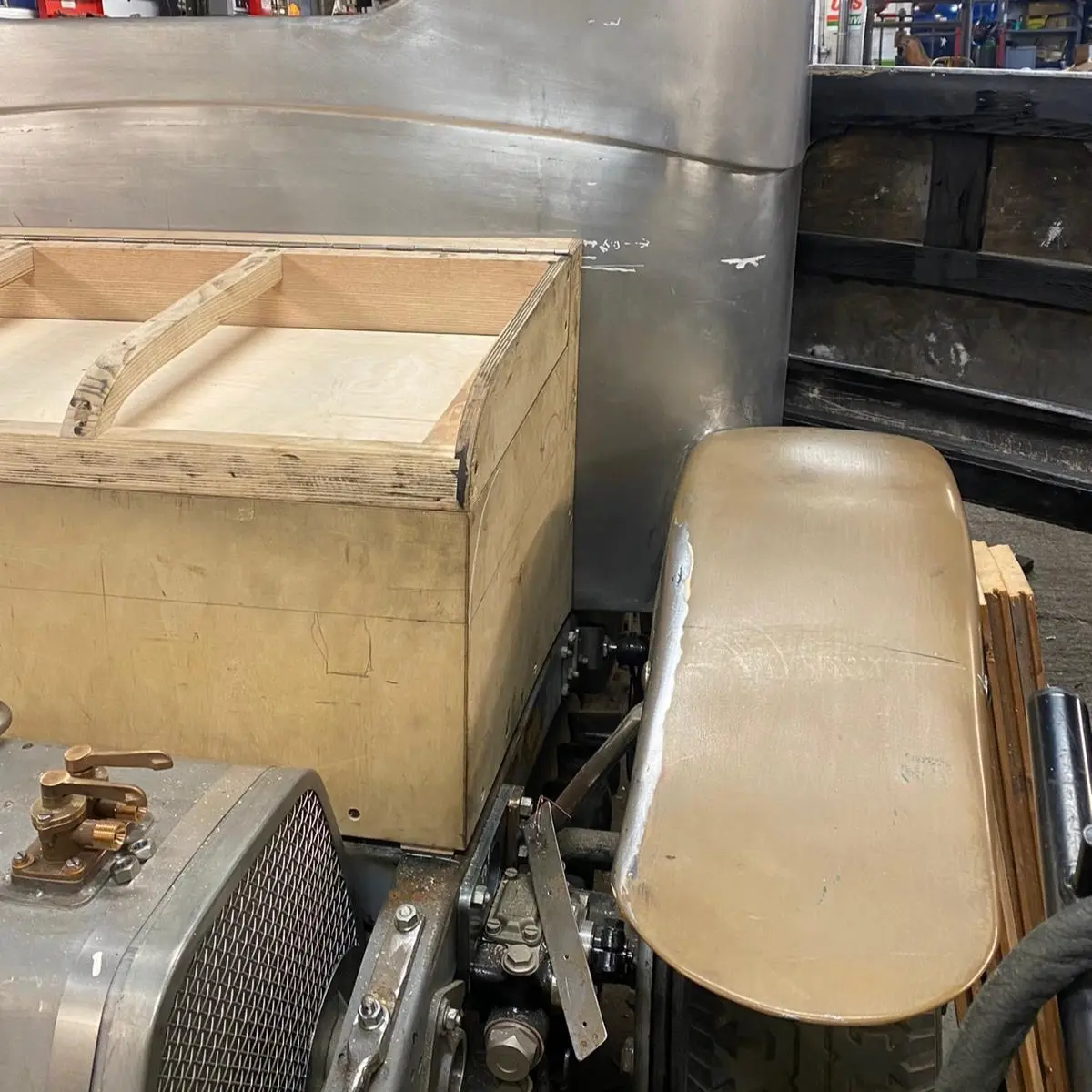
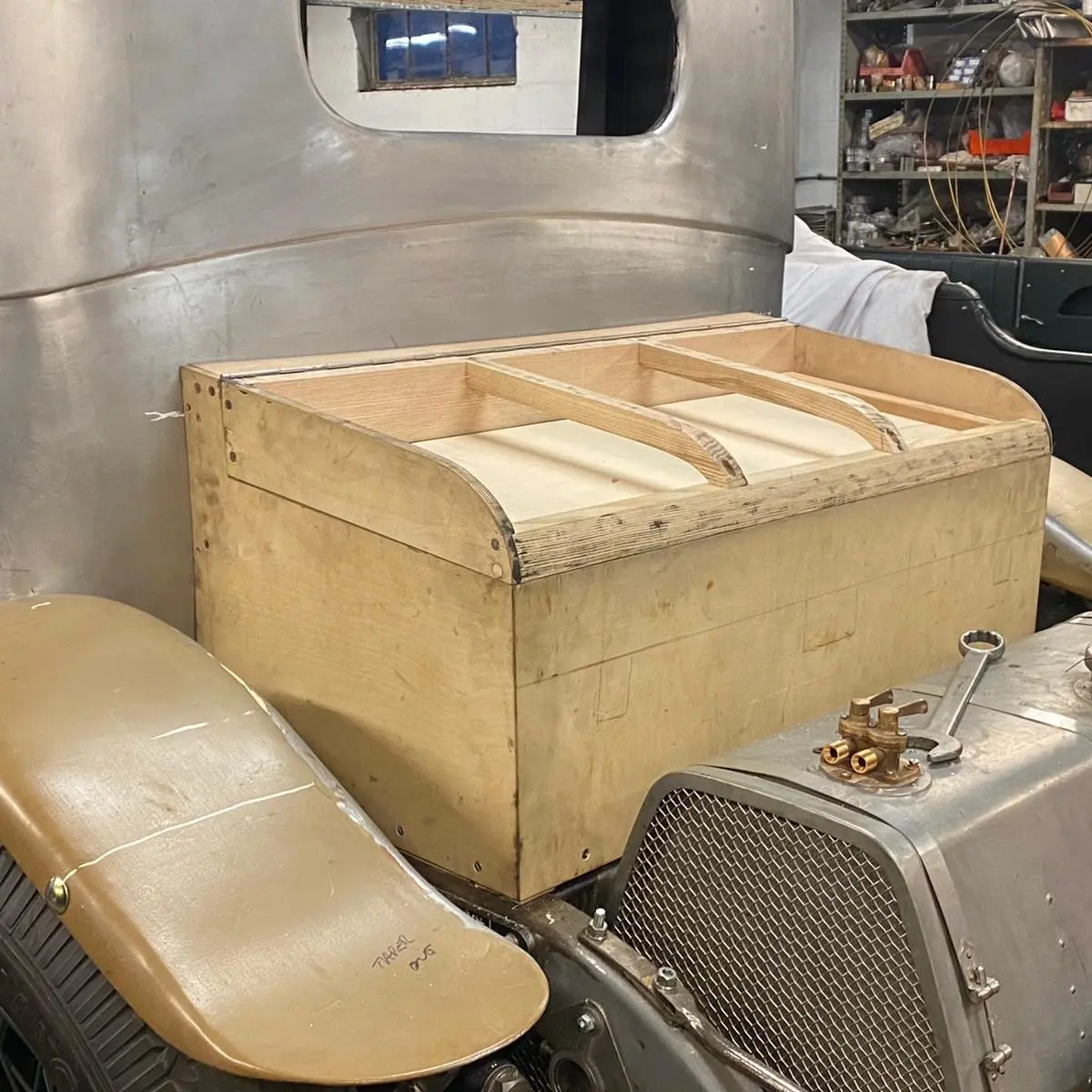
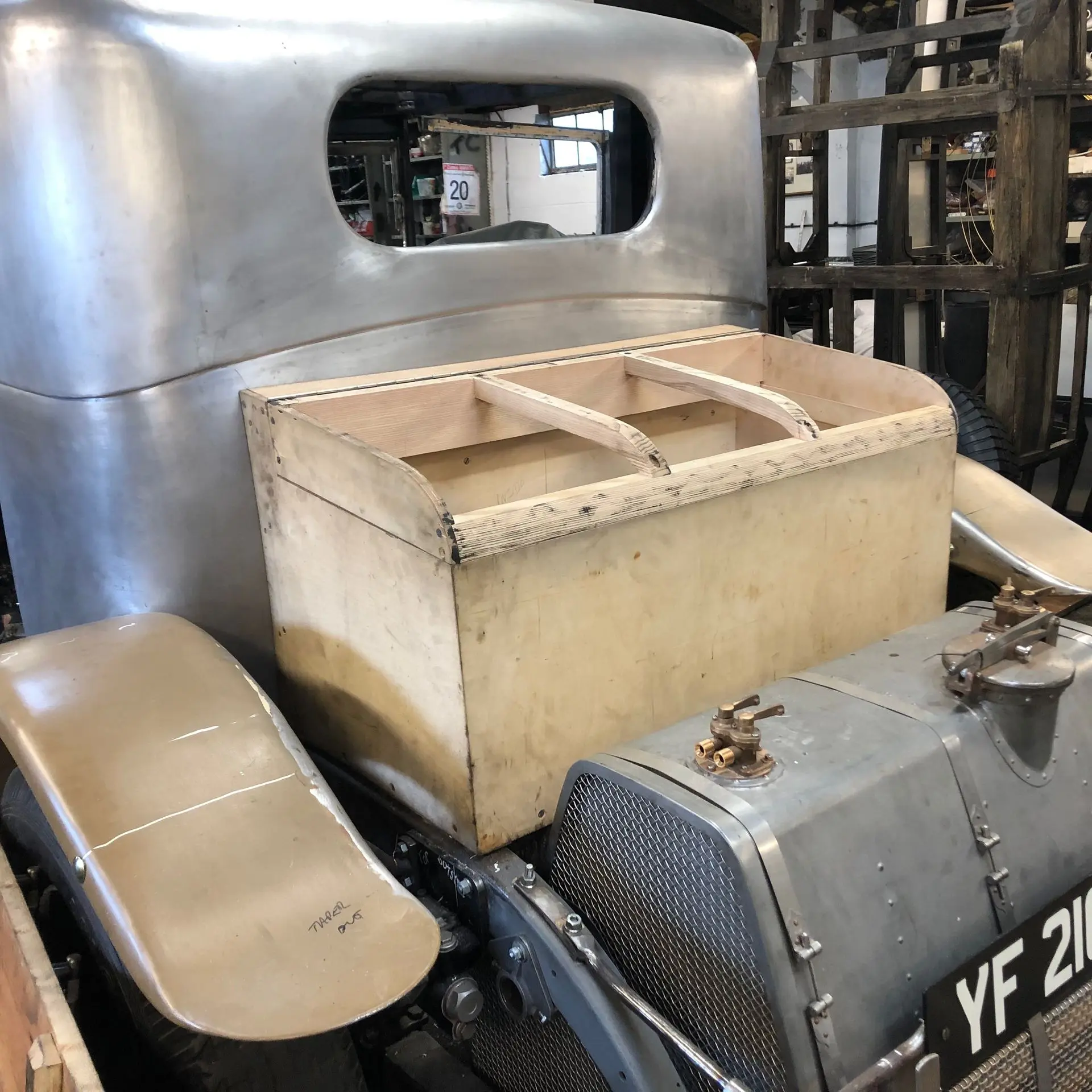
In many ways, the trunk proved to be the most challenging element of the car’s overall design and silhouette. We failed several times to achieve the right shape and eventually decided to step back and study the finest trunk designs of the 1920s, starting again from first principles.
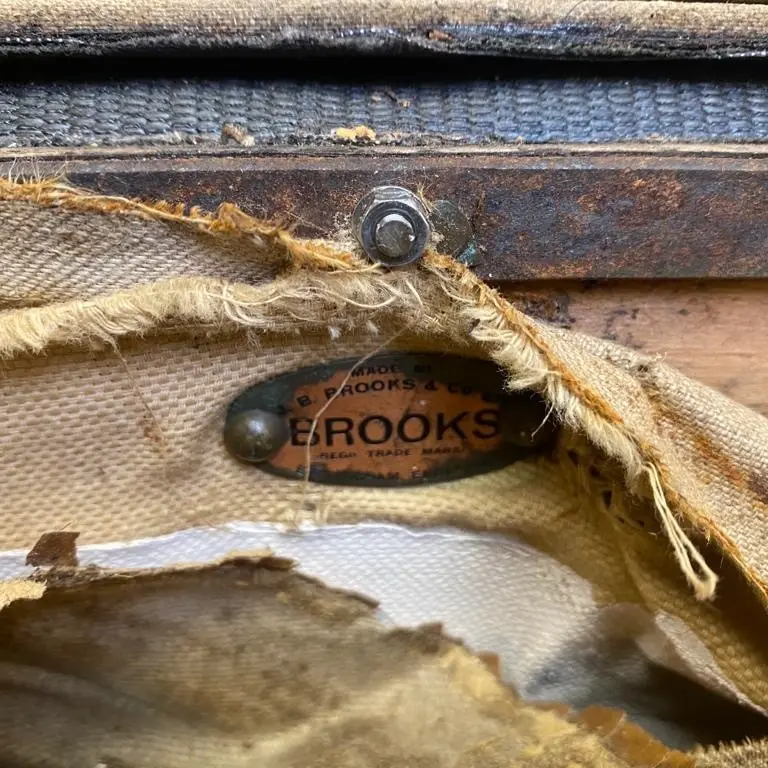
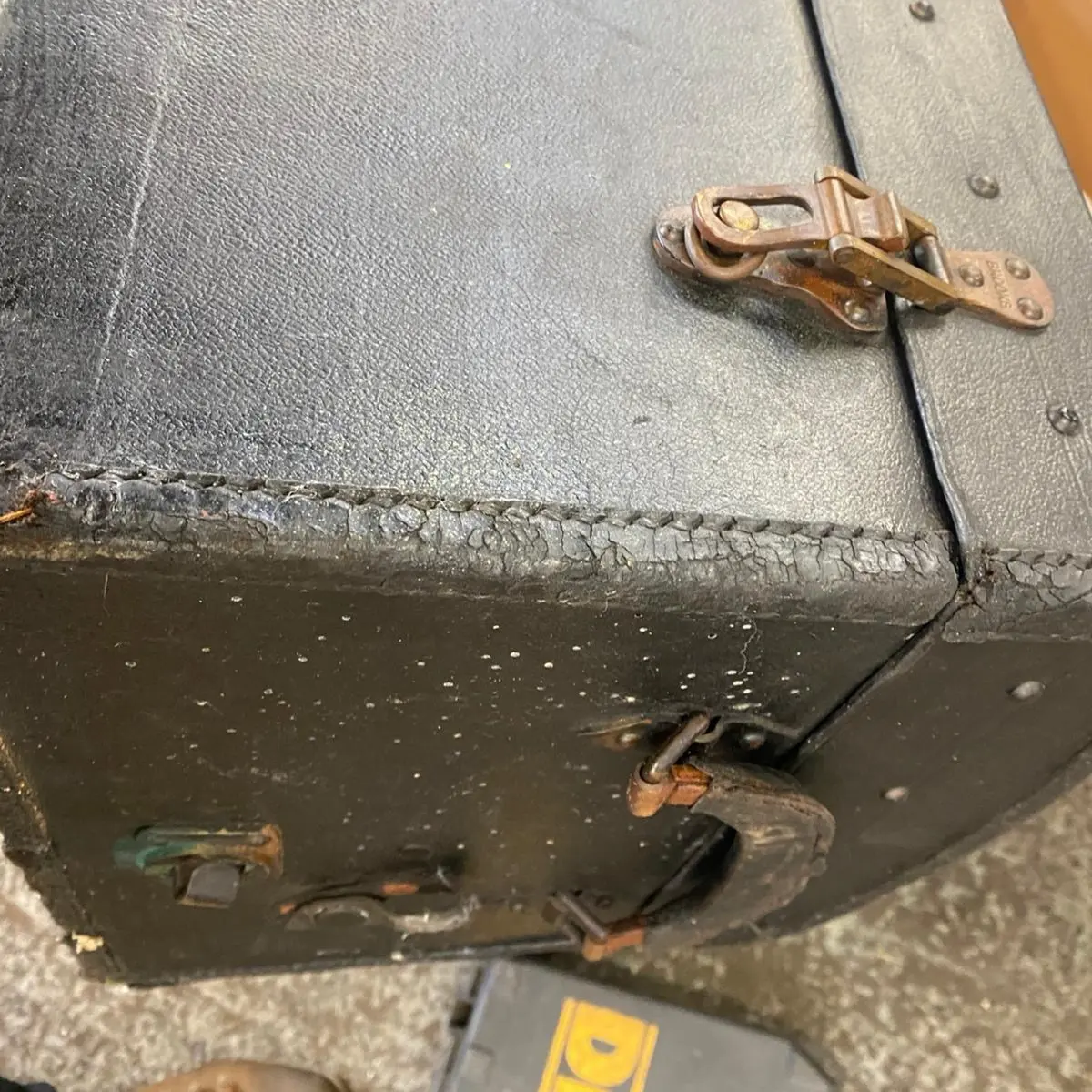
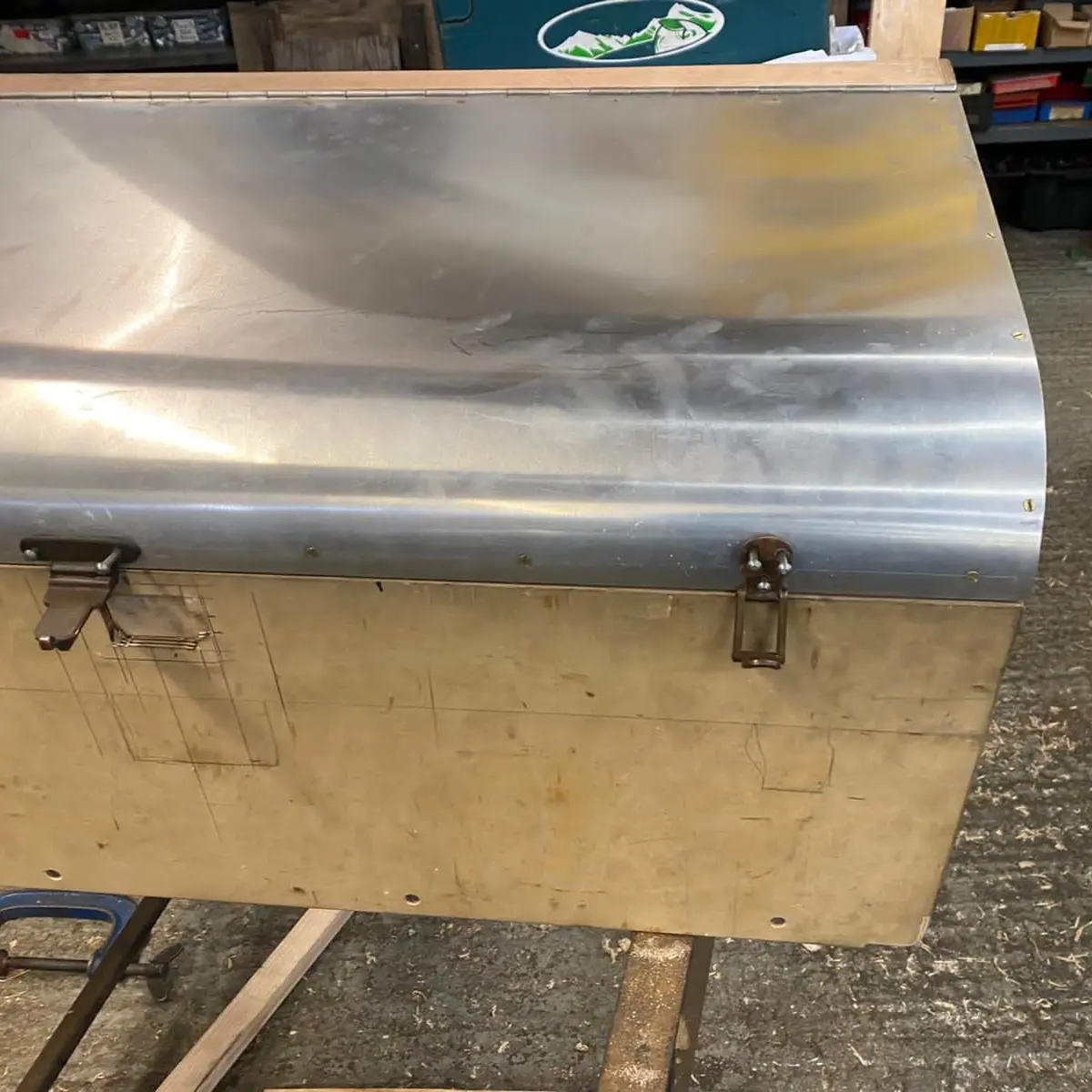
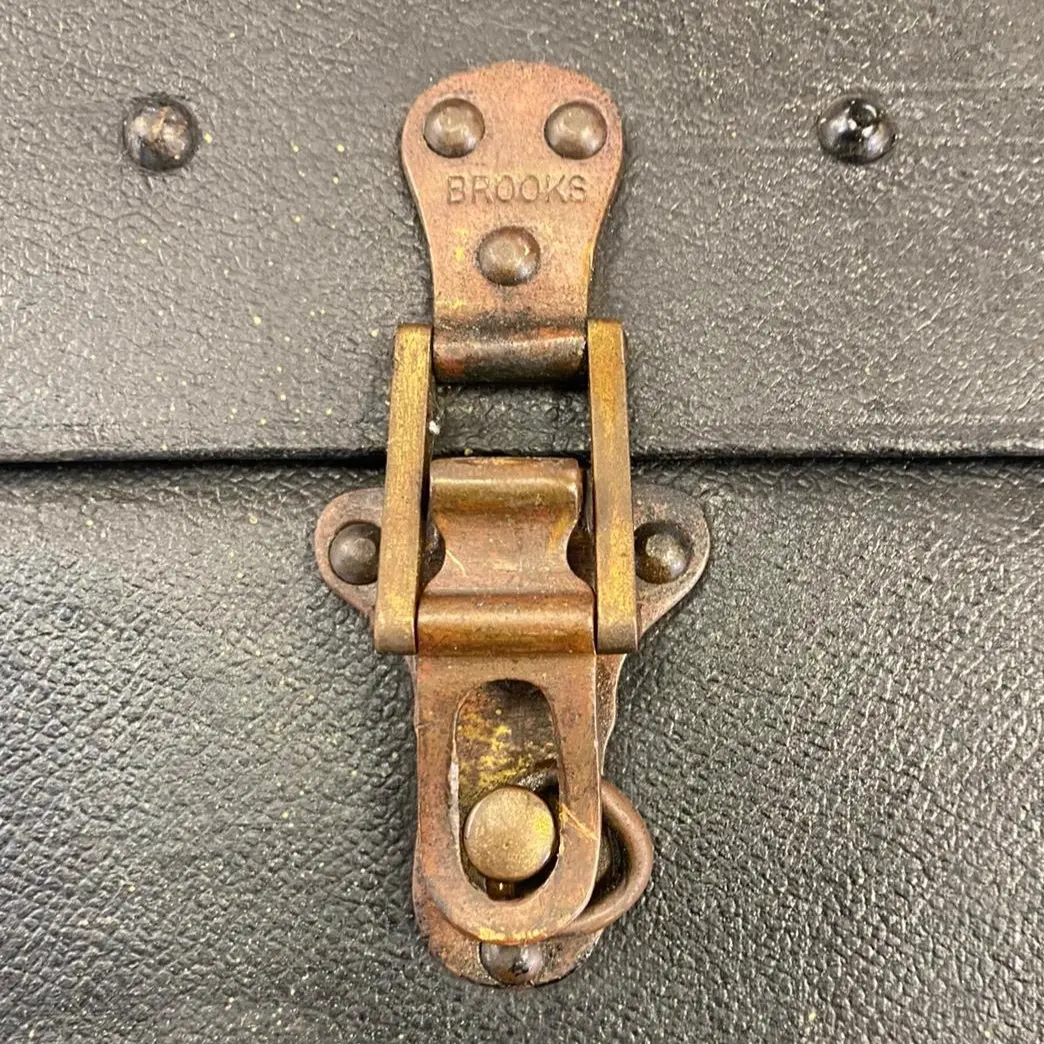
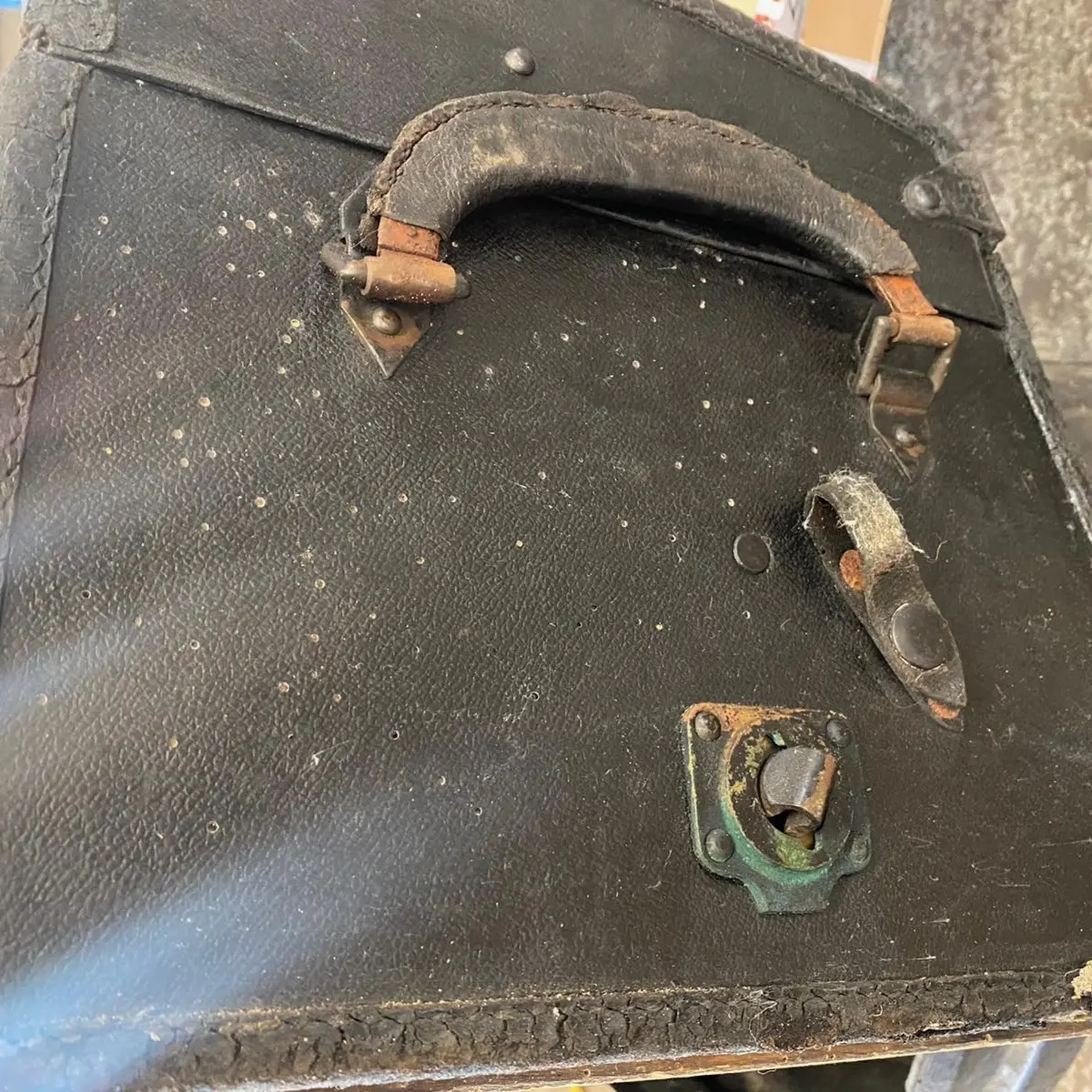
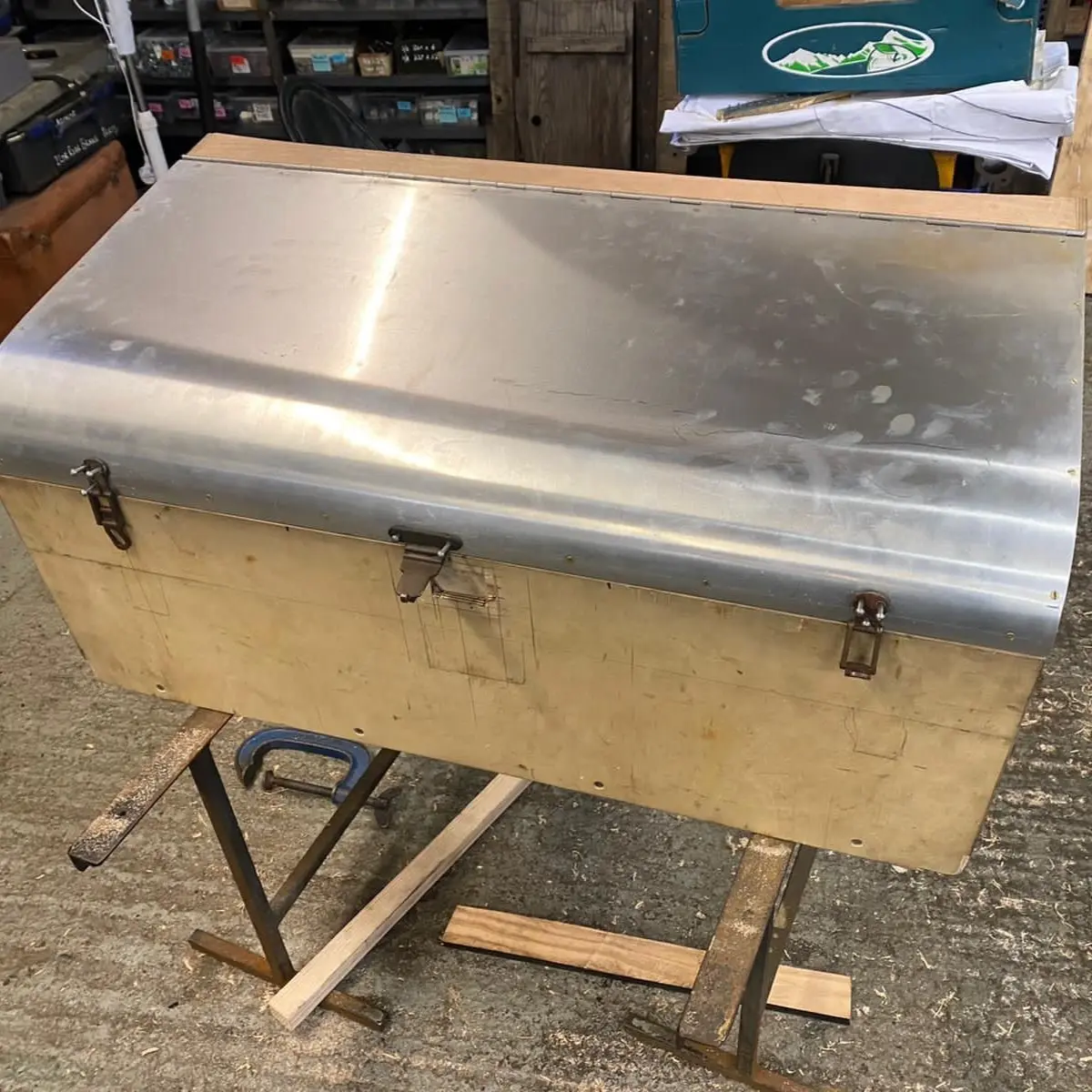
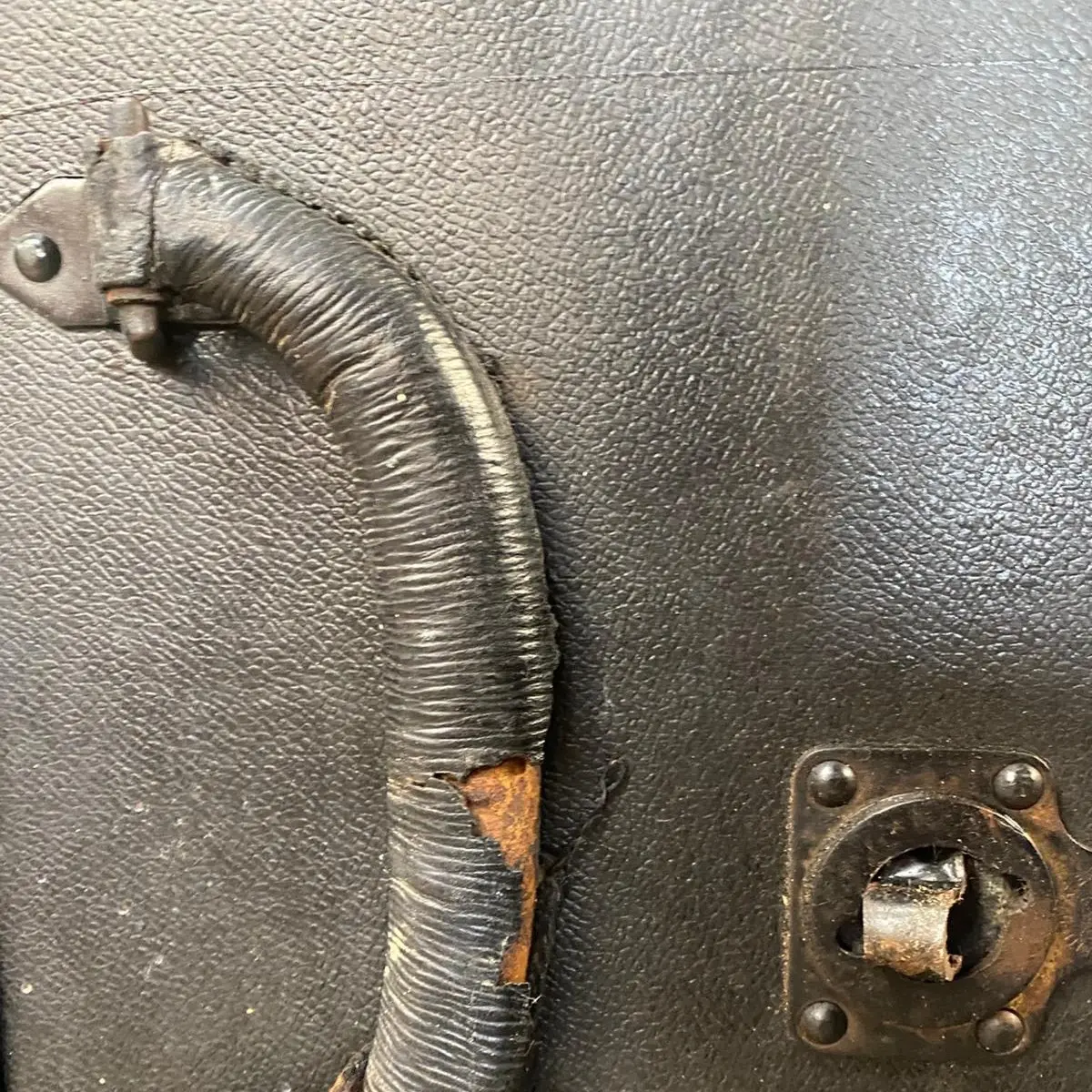
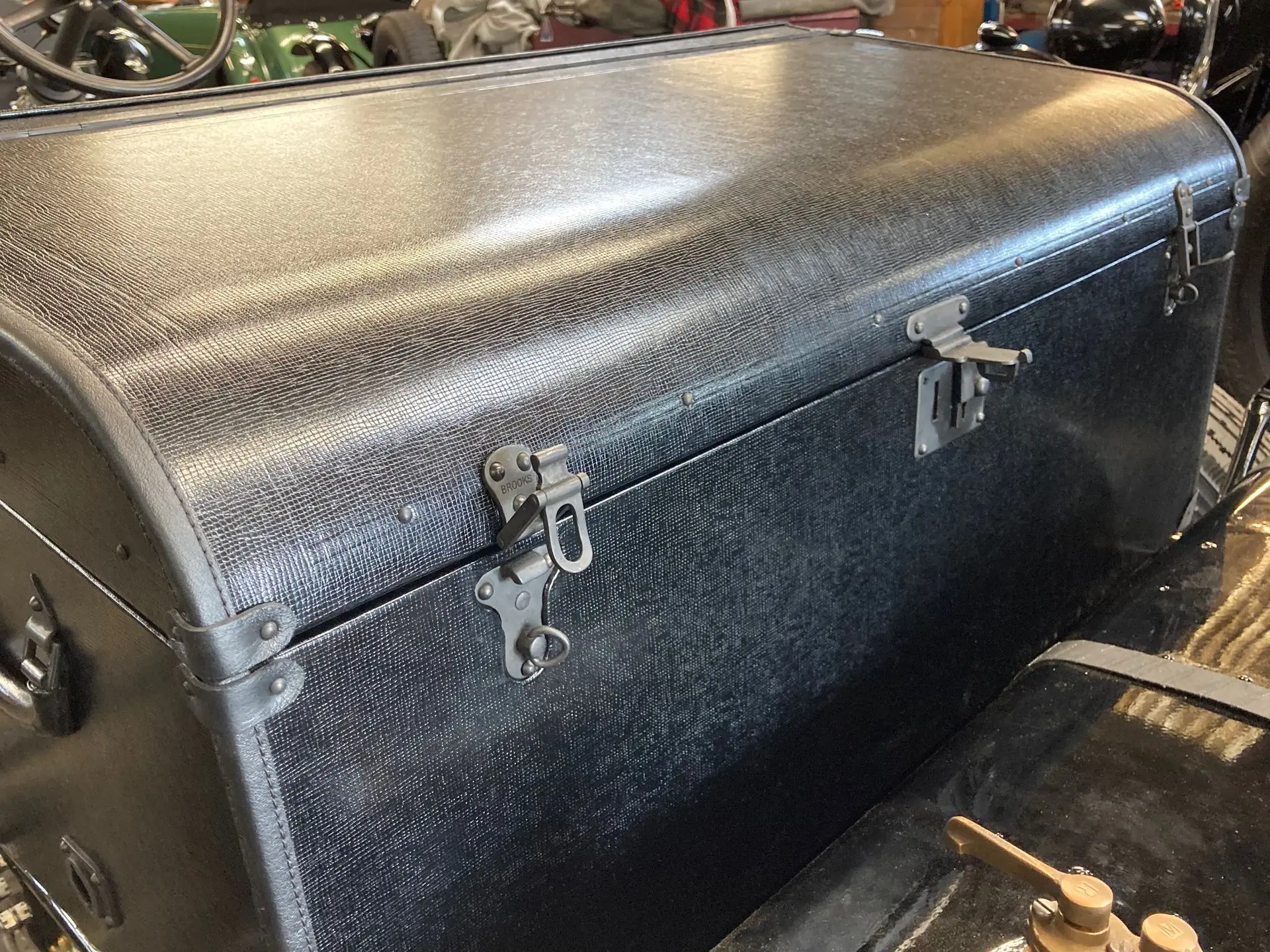
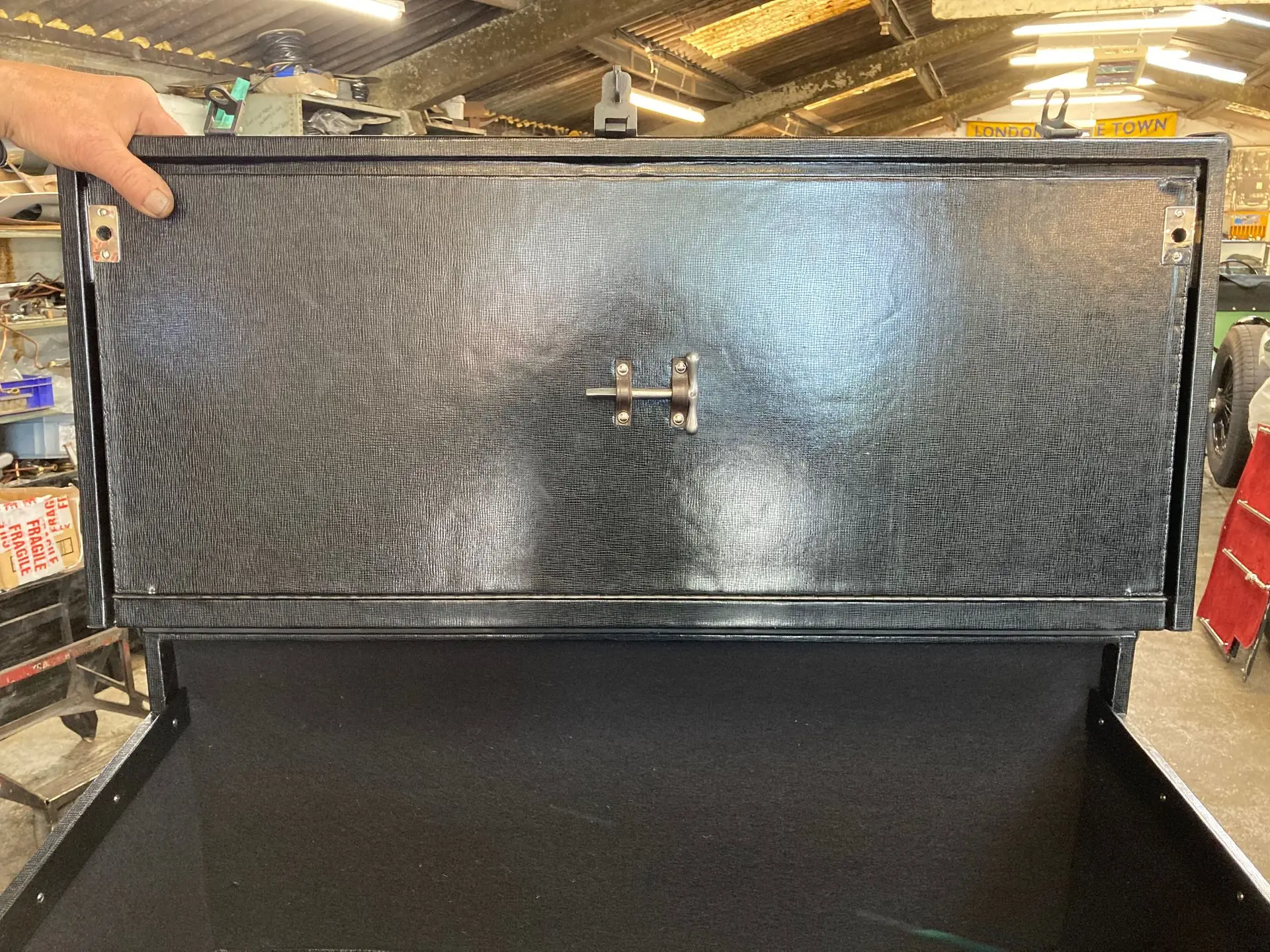
Trunks by Brooks were used by many of the most prestigious marques of the 1920s and 1930s, and everything about their design felt appropriate for this car. I managed to acquire an original Brooks trunk that was close to scrap, but crucially retained its original branding, metal handles, locks and catches. These components were carefully restored and reused on our newly made trunk.
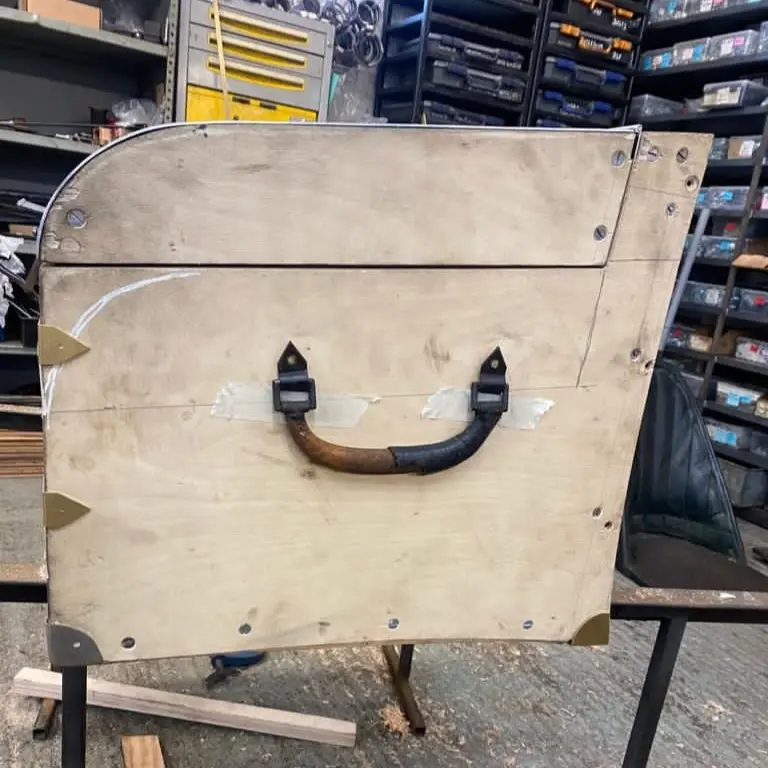
From there, we experimented extensively with form and proportion. The trunk contains no straight lines at all, dictated by the complex curves of both body and chassis. Robert Dean deserves enormous credit for the patience and skill he demonstrated in bringing the final shape to life.
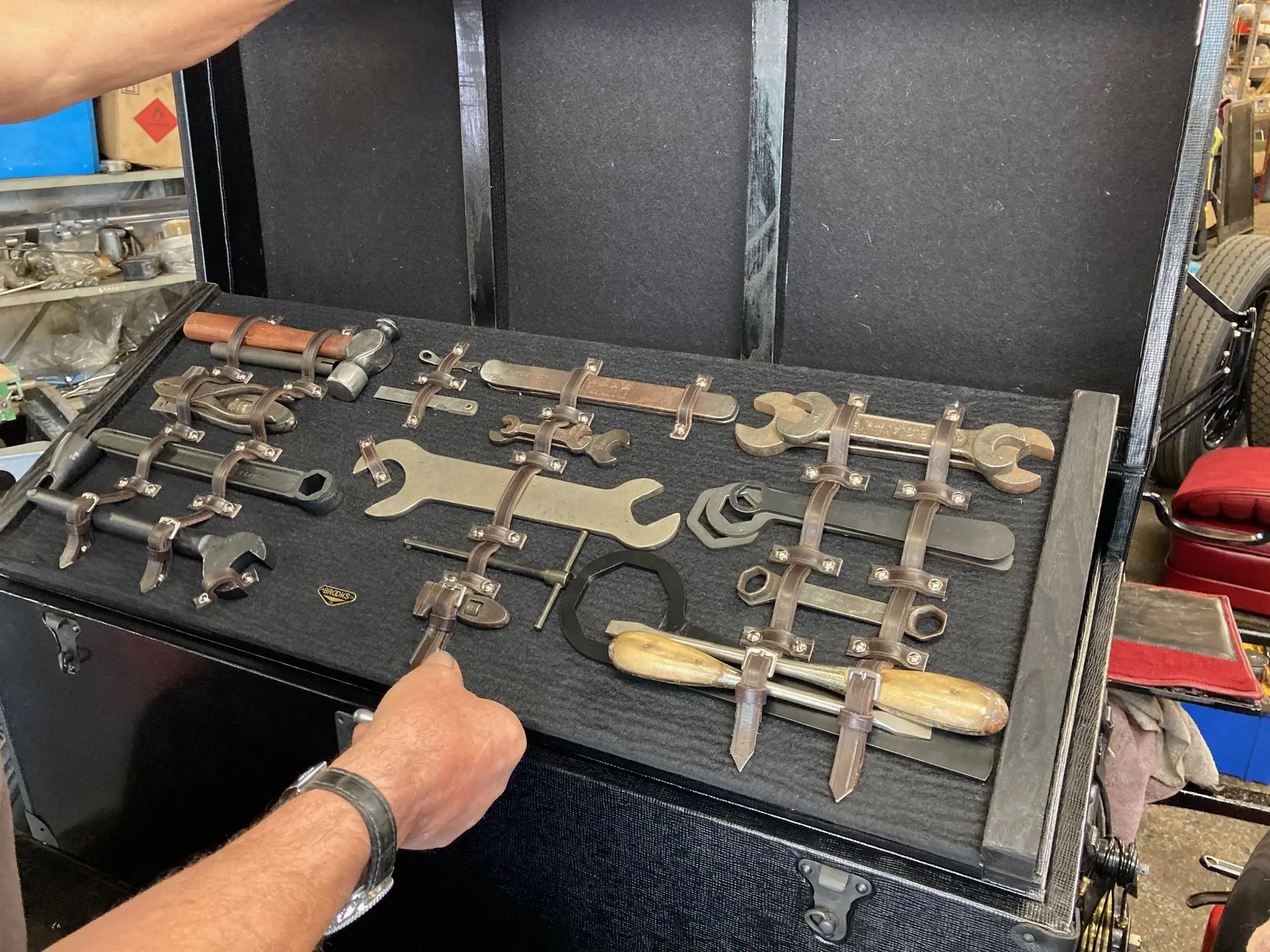
David and I debated the size repeatedly, refining it through countless small adjustments, some measured in mere millimetres. We refused to compromise and designed the lid to accommodate the full tool set. To complete this, I acquired an original Bentley 6½ Litre instruction manual from the Clare Hay collection via Bonhams, and asked Graham Moss to source and install a complete toolkit. An original Enots jack sits in the base of the trunk, complete with a hand-made handle tailored precisely to fit.
To finish the trunk, Graham covered it in Rexine. I have never totalled the cost of the trunk, although I suspect it would comfortably buy a new car. In my view, it was worth every penny. The rear of the car had to look right, and nothing less would do.
The Body Gallery
The finished body is therefore neither a modern replica of a known Bentley design nor an untouched piece of 1920s coachwork. It combines surviving original-period Harrison coachwork with extensive traditional reconstruction and newly designed elements created specifically for BX2411. Every stage of that process is recorded in the restoration photographs, drawings, invoices and time sheets retained in the YF2186 archive.

To install this Web App in your iPhone/iPad press
 and then Add to Home Screen.
